
Southern California’s two largest wildfires currently have a containment rate of zero. As a result, multiple hospitals, clinics, and nursing centers in the vicinity of the fire zones have been forced to shut down. Additionally, with air quality continuing to deteriorate, the health of local residents is facing greater risks.
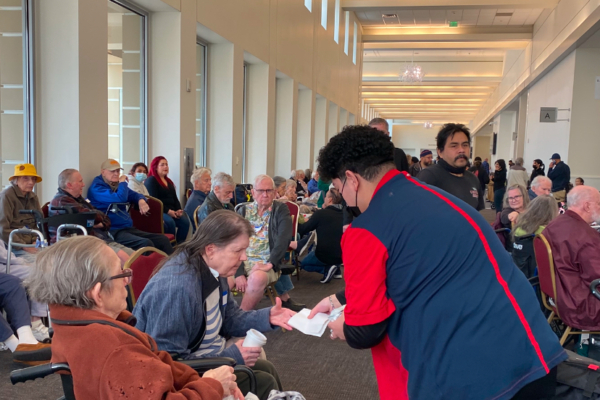
The day after the fires broke out (8th), a temporary evacuation center in Pasadena has already gathered hundreds of residents, including some from evacuated senior centers. These seniors are either sitting or lying down, with some receiving intravenous fluids. While they can temporarily seek refuge from danger, the accommodations and food here are likely not as comfortable as their homes. Uncertainty about when they can return home has left most people looking visibly worried.
Some patients seeking medical treatment have been impacted by the wildfires. The UCLA Medical Center, Los Angeles, announced on its website that as of the morning of the 9th, at least 15 clinics in areas like Malibu, Calabasas, Pacific Palisades, Pasadena, Alhambra, Santa Monica, West Simi Valley, and Thousand Oaks have been closed.
California’s largest healthcare group, Kaiser Permanente, also declared the closure of two facilities in Pasadena, medical offices in Santa Monica, a clinic in Rosemead, and medical offices on Hillcrest Drive in Thousand Oaks and Sylmar due to the fires and strong winds. However, the majority of Kaiser’s medical facilities in Southern California remain open and operational.
Cedars-Sinai Medical Center explained on its website on the 8th that due to the nearby fires, the center is facing unique and rapidly changing circumstances with non-urgent treatments scheduled for Thursday and Friday being delayed. Despite this, they are focused on assisting the patients most in need.
The center has closed outpatient departments and surgical centers in evacuation areas like Santa Monica, Brentwood, and Pasadena, with other outpatient facilities also affected by power outages beyond the evacuation zones.
Although some clinics have been closed, Cedars-Sinai Medical Center stated that its Cedars-Sinai Connect will continue to provide virtual care services for all residents, including children aged 3 to 17. Their medical team remains on standby around the clock to provide necessary support services to the community.
Furthermore, AltaMed Health Services, serving the Southern California community, has closed eight clinics. One of its medical centers in Pasadena was engulfed by a massive blaze, fortunately with no injuries reported.
Experts warn that burning homes release cyanide and carbon dioxide, while particulate matter in wildfire smoke can irritate sinuses, causing headaches, runny noses, and watery eyes. Severe cases may exacerbate risks of asthma, stroke, heart attacks, and heart failure.
According to the World Health Organization, fine particulate matter in wildfire smoke is associated with premature mortality and increased risks of lung, heart, and brain diseases.
Particle researcher Loren Wold from Ohio State University College of Medicine emphasized that the high levels of particulate matter emitted from wildfires can significantly impact human health, especially for individuals with underlying conditions like diabetes, hypertension, and obesity.
The Los Angeles County Department of Public Health advises that if you see or smell smoke, or notice particles and ash in the air, stay indoors to minimize exposure. Patients with heart or lung diseases, older adults, and children should be particularly cautious.
The department recommends keeping doors and windows closed while indoors, maintaining clean indoor air, and using air conditioning with air recirculation to filter out harmful particles. When spending extended time outdoors in smoky conditions with heavy smoke or ash, wearing N95 or P100 masks is necessary. While most masks may not block more harmful fine particles or toxic gases, they can help filter out larger particles.
For those unable to close doors and windows due to heat or lacking air conditioning at home, residents can seek cooler environments like libraries or shopping centers to safeguard themselves against harmful air pollutants. Avoid using fireplaces, candles, or vacuum cleaners at home, clean dusty surfaces with damp cloths, and prevent inhaling smoke particles.
Kaiser Permanente also reminds that evacuees who have lost their homes may suffer from traumatic emotional effects. Additionally, individuals with pre-existing mental health conditions may experience exacerbated symptoms due to the unstable environment. Even those not residing in the fire-affected areas may feel anxious upon hearing the tragic stories unfolding during this period. Therefore, if encountering emotional or psychological issues, remember to promptly contact a mental health professional for professional advice.