
China’s economic growth continues to falter, leading the Chinese Communist Party (CCP) to upgrade its “Trade-in for New” policy in an effort to expand domestic demand and boost consumption. However, the stock market did not respond positively to the new policy measures. Since its implementation at the beginning of last year, the policy has failed to have a significant stimulating effect on the economy, and has been criticized for depleting future consumption capacity and being rife with pitfalls such as fleece, fraud, and deception.
On Wednesday morning, the National Development and Reform Commission, the Ministry of Finance, and the People’s Bank of China, among three other agencies, held a press conference announcing an expansion of the categories covered under the “Trade-in for New” policy. The range of eligible household appliances has been increased from 8 categories to 12, including additions like microwave ovens, water purifiers, dishwashers, and rice cookers. Consumers purchasing new energy vehicles and fuel vehicles with a displacement of 2.0 liters or less can receive subsidies of 20,000 yuan and 15,000 yuan respectively.
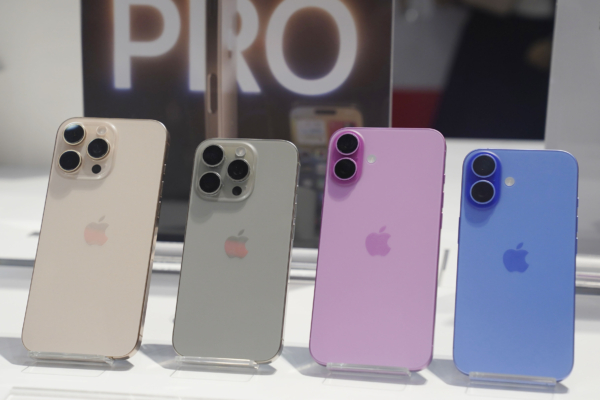
In addition, consumer electronics products such as mobile phones and tablets priced below 6,000 yuan are eligible for a 15% subsidy.
Despite this announcement, both the A-share and Hong Kong stock markets did not see a boost. The Shanghai and Shenzhen 300 indices and the Hang Seng Index initially dropped by 1.7% during trading, with closing figures showing declines of 0.14% and 0.86% respectively. The China Consumer Electronics Index also fell by 3.2% intraday.
Analysis by the Daily Economic News suggests that recent news related to the “Trade-in for New” policy has not elicited significant market responses. Companies benefiting from the policy may not necessarily see a boost in their long-term performance, and adverse effects such as delayed clearance of excess capacity are not out of the question.
The CCP initiated the Trade-in for New and equipment upgrade projects in March 2024, mainly driven by local governments, but the results have been limited. Starting in August, the Ministry of Finance allocated about 150 billion yuan from special national debts for the Trade-in for New program covering household appliances, automobiles, electric bicycles, and other goods.
Li Gang, Director of the Market Operation and Consumption Promotion Department of the Ministry of Commerce of China, stated at the press conference that the “Trade-in for New” activities last year had “achieved positive results.” However, based on indicators such as the Consumer Price Index (CPI), Producer Price Index (PPI), and total retail sales of consumer goods, the policy did not significantly boost consumption.
Data from September, October, and November showed a decline in CPI year-on-year from 0.4% to 0.2%; PPI continued its negative trend for 20 months, decreasing from -2.80% to -2.50%; and total retail sales of consumer goods fluctuated from 3.2% to 4.8% and then down to 3.0% after a brief surge.
Chen Bo, a senior researcher at the East Asian Institute of the National University of Singapore, pointed out in an interview with Lianhe Zaobao that the Chinese economy is still struggling with overproduction. The official continuation and reinforcement of the Trade-in for New policy aim to improve the overall market environment by stimulating demand, but this short-term policy is unlikely to fundamentally address the issue of insufficient demand.
Moreover, profits of listed home appliance companies have not been boosted by the policy and have even shown a decrease in growth rate. According to a research report by Wanlian Securities, the home appliance industry realized a profit of approximately 90.52 billion yuan in the first three quarters of 2024, a slowdown from the first half of the year. Apart from white goods, all other categories of home appliances experienced declines, with small appliances dropping by 3.9%, appliance components by 5.8%, lighting equipment by 8%, kitchen and bathroom appliances by 31%, and black appliances by 49.3%.
The Trade-in for New policy resembles a short-term boost that may lead to lowering future expected spending on durable goods.
An official from Suning.com quoted by the Xinmin Evening News on January 6th this year, stated, “The sales in the first three months of implementing the national subsidy policy last year accounted for over 50% of the annual sales, with over 90% of the sales being Trade-in for New orders.” It is apparent that the policy was initially successful during its implementation period but later faced a prolonged downturn.
Tang Yao, Associate Professor of the Department of Applied Economics at Guanghua School of Management, Peking University, emphasized to the Voice of America that, “If you buy a car today, you won’t buy another one next year. This will have a certain inhibitory effect on future durable goods consumption and related industry investments.”
Many consumers on social media have revealed that after the Trade-in for New subsidy policy was introduced in 2024, prices on e-commerce platforms and physical stores suddenly increased. The post-subsidy prices were not significantly different from the pre-subsidy prices, with some even higher. Businesses took advantage of the opportunity to “fleece subsidies,” and more concerning practices like fraud and deception were also present.
According to a report by The Paper, after the Trade-in for New policy for home appliances was announced in Beijing, a university student named Xiao Rui (alias) found a computer priced at over 9,000 yuan on a certain e-commerce platform, which would cost just over 7,000 yuan after the subsidy. However, three days later, she noticed an average price increase of 200 to 400 yuan for the same computer.
Some physical stores enforced the purchase of bundles for consumers using the Trade-in for New subsidy. “If you buy a phone with 512GB of memory, you must also purchase a 499 yuan phone case and data cable; if it’s a 256GB phone, then you need to buy accessories worth 799 yuan. Without purchasing the bundle, the subsidy cannot be utilized.”
On October 12, 2024, the Hubei Provincial Department of Commerce issued an announcement canceling the eligibility of companies like Yichang Lan Zhixing Computer Co., Ltd. from participating in the Trade-in for New sales program, citing violations such as overselling and deception of the national policy subsidy during the home appliance exchange program.