
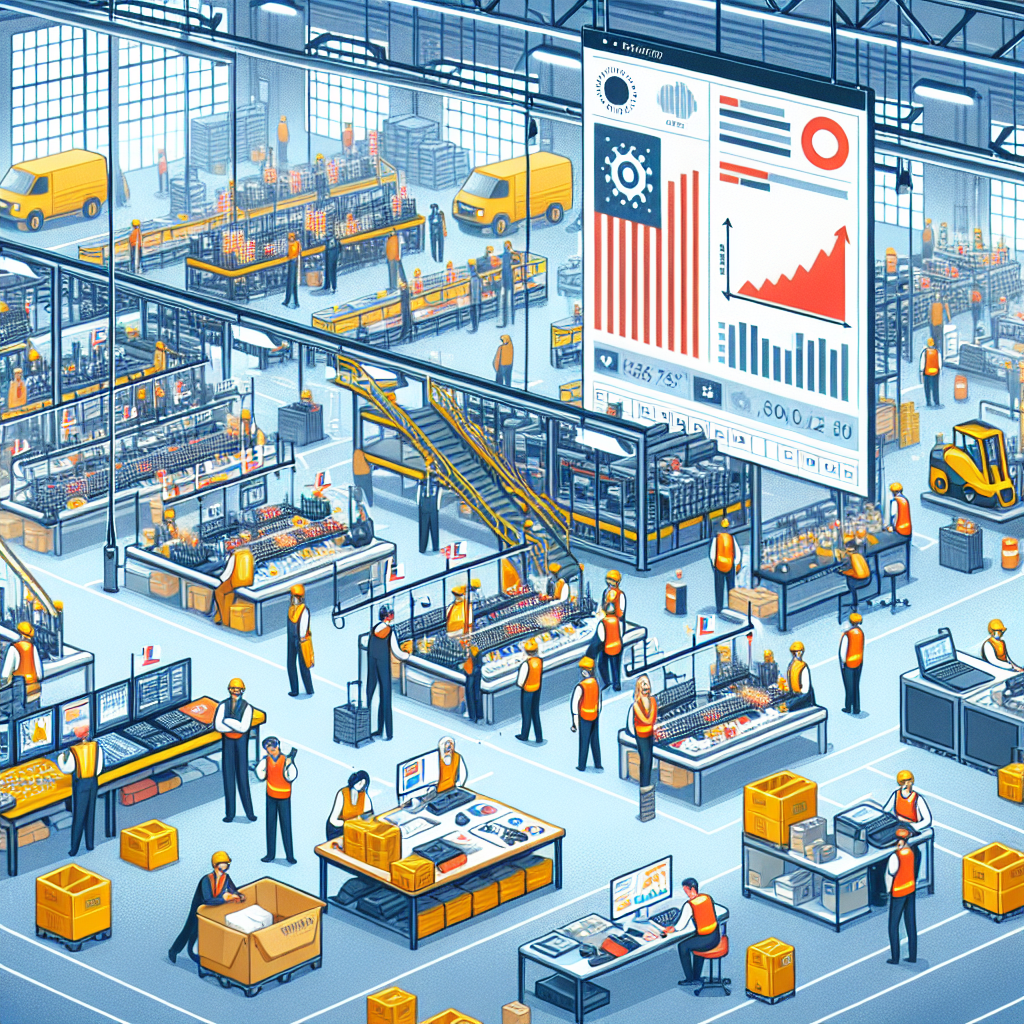
The manufacturing sector in the United States is showing signs of recovery as it approaches the end of December. Despite facing issues with rising costs at the end of 2024, factories have seen an increase in production and new orders.
According to a report from Reuters, the Institute for Supply Management (ISM) stated on Friday, January 3rd, that the Purchasing Managers’ Index (PMI) for the manufacturing sector rose to 49.3 last month, up from 48.4 in November, marking the highest level since March.
A PMI below 50 indicates contraction in the manufacturing sector, which accounts for 10.3% of the total economy. December marked the ninth consecutive month that the PMI remained below 50. Economists surveyed by Reuters had previously predicted that the PMI would remain unchanged at 48.4.
The Federal Reserve aggressively tightened monetary policy in 2022 and 2023 to curb inflation, which had a negative impact on the manufacturing sector. However, confidence indexes, including the PMI, have exaggerated the extent of the decline in factory output.
Government data from last month showed that the manufacturing sector grew at an annual rate of 3.2% in the third quarter, contributing to an economic expansion rate of 3.1% for the same period.
The US Federal Reserve has been cutting interest rates, lowering the benchmark overnight rate by 25 basis points last month to a range of 4.25% to 4.50%. This marks the third consecutive rate cut by the Federal Reserve since it began easing monetary policy in September of last year.
The policy rate by the Federal Reserve was raised by 5.25 percentage points in 2022 and 2023.
President-elect Trump (Trump) promised to cut taxes upon taking office, which could potentially boost the manufacturing sector. However, other policies he promised, including increasing tariffs on imported goods, may lead to higher raw material prices.
The Federal Reserve expects to cut interest rates twice this year, fewer than the four times predicted in September, citing economic uncertainties and the impact of the new Trump administration’s policies.