
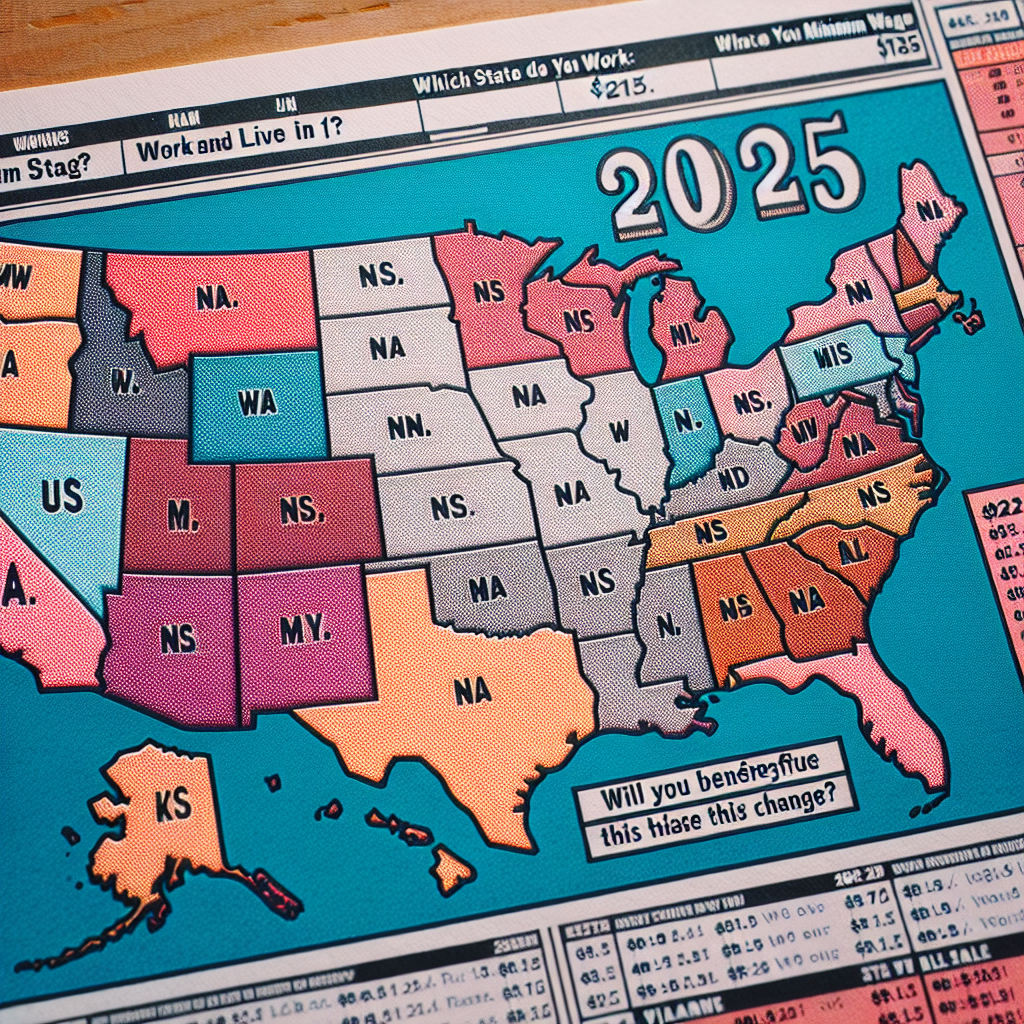
Entering the year 2025, it is expected that over twenty states in the United States will raise their minimum hourly wage during this year. It is anticipated that more than ten states will have a minimum wage of $15 or higher. Which state do you work and live in? Will you benefit from this change? Let’s take a closer look.
Starting from January 1, 2025, the minimum hourly wages in 21 states in the U.S. will increase. Additionally, Oregon and Florida are expected to raise their minimum wages in July and September, respectively. Washington D.C. may also see an increase in wages in July.
By 2025, Washington will have the highest minimum wage at $16.66, followed by California at $16.50. Oregon is poised to surpass $16 after adjusting its wages in 2025.
Delaware, Illinois, and Rhode Island will see their statewide minimum wages rise to $15 for the first time.
States with minimum wages exceeding $15 include:
– Connecticut ($16.35)
– New York ($15.50)
– New Jersey ($15.49)
States where the minimum wage will remain below $15 after the increase include:
– Colorado ($14.81)
– Arizona ($14.70)
– Maine ($14.65)
– Vermont ($14.01)
– Florida ($14.00)
– Missouri ($13.75)
– Nebraska ($13.50)
– Virginia ($12.41)
– Alaska ($11.91)
– South Dakota ($11.50)
– Minnesota ($11.13)
– Ohio ($10.70)
– Michigan ($10.56)
– Montana ($10.55)
On the other hand, 20 states will not be raising their minimum wages. However, even though Maryland and Massachusetts have no plans to increase their minimum wages, both states already have a minimum wage of $15.
Other states that won’t see an increase but have minimum wages exceeding the federal standard of $7.25 include:
– Hawaii ($14.00)
– Nevada ($12.00)
– New Mexico ($12.00)
– Arkansas ($11.00)
– West Virginia ($8.75)
Despite not raising the minimum wage, the remaining states listed in the article have already met the federal standard of $7.25: New Hampshire, Pennsylvania, North Carolina, Kentucky, Indiana, Wisconsin, Iowa, North Dakota, Kansas, Oklahoma, Texas, Utah, and Idaho.
It is important to note that in some cities and counties within these states, the minimum wage may be higher than the overall state minimum, and wage rates in certain industries may also exceed the state-wide minimum.
As of December 2024, Georgia and Wyoming had minimum wages of $5.15, below the federal standard. Additionally, five states do not have a mandated minimum wage: Alabama, Louisiana, Mississippi, Tennessee, and South Carolina.
According to reports from “The Hill,” employers in these seven states governed by the Fair Labor Standards Act will be required to pay the federal minimum wage of $7.25.
The federal minimum wage of $7.25 has remained unchanged since 2009. It is currently uncertain whether this federal standard will be increased in 2025. President-elect Trump stated in early December 2024 that $7.25 is too low.
Senator Bernie Sanders from Vermont, a Democrat, has long been advocating for raising the federal minimum wage. He expressed his hope to work with President Trump to increase wages.
Sanders, in an interview on the NBC show “Meet the Press” earlier in December, called the $7.25 hourly wage a “disgrace.”
He proposed raising the federal minimum wage to $17 but mentioned, “I hope we can ultimately achieve this goal through bipartisan cooperation.”