
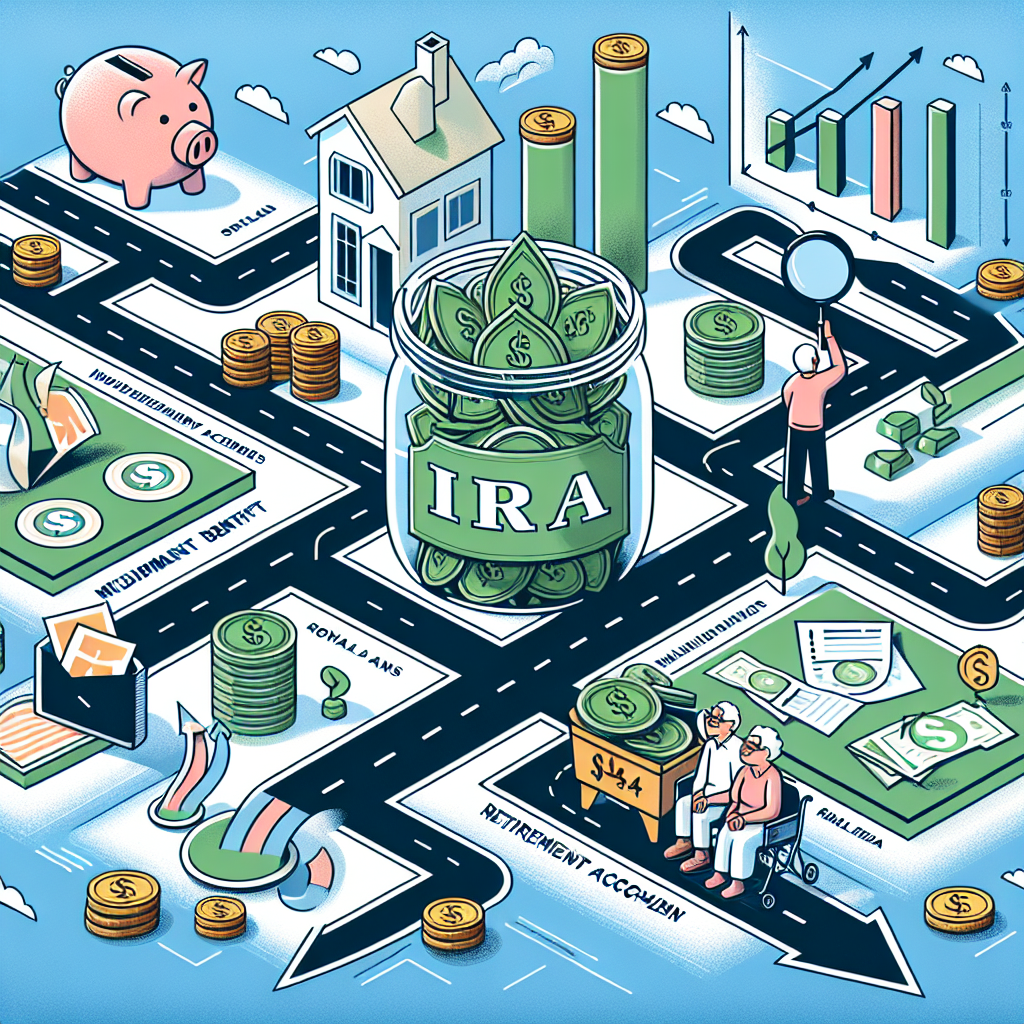
In the United States retirement benefit system, individual retirement accounts (IRAs) are a crucial component for individuals looking to have a comfortable retirement and even reach the goal of retiring with millions of dollars. Understanding and prioritizing the use of IRAs is essential for achieving financial security in retirement.
There are currently three primary forms of retirement benefits for Americans. The first is the Federal Social Security Fund, a mandatory pension plan initiated by the U.S. federal government. The second is the employer and employee shared occupational pension plan, with the 401(k) being the most representative retirement savings plan in this category. The third is personal contributions to retirement savings, with IRAs being a significant part of this third category.
Generally, Americans who are formally employed, as opposed to self-employed contractors, often enroll in a 401(k) or other retirement savings plans offered by their employers. By contributing a certain amount of their salary to their personal savings account each month, employees can benefit from additional employer contributions based on a specified matching ratio.
For example, if you contribute $4,000 annually (Employee Contribution) to your 401(k) retirement savings account, the company may match this with an additional $4,000 (Employer Contribution) on a “Dollar for Dollar” 1:1 basis. Undoubtedly, this is a lucrative investment.
Different companies have varying matching ratios. If the ratio is 1:0.5, then in the above example, the company would contribute an extra $2,000 for you. Some companies may offer a 0 ratio, where regardless of your contribution, the company does not provide any additional retirement funds. Some companies also require employees to work for three or five consecutive years to claim ownership of the company-contributed retirement funds.
Apart from the 401(k) plan, individual retirement accounts (IRAs) play a significant role in the U.S. retirement benefit system. Especially for individuals who are not formal employees of a company, or for those looking to increase their retirement savings beyond the 401(k) plan, or aiming to achieve a million-dollar retirement goal, IRAs are a necessary option.
IRAs offer flexibility in terms of savings strategy. The first decision one needs to make is how much money to contribute to the IRA account annually. These contributions are tax-deferred, hence there are limits on the amount that can be contributed each year.
Current regulations state that those under 50 years old can contribute $7,000 in 2025, while those 50 or older can contribute $8,000. Additionally, Roth IRAs have additional income restrictions.
Next, one has to decide how to fund the IRA savings. For instance, you can set up automatic monthly contributions from your salary to the IRA account, save year-end bonuses in the account, or use tax refunds for retirement savings.
Lastly, you need to consider the investment options for your IRA retirement savings. Low fees are preferable to save more of your funds. Index funds are a suitable choice.
IRAs offer significant autonomy. If you prefer to invest in other retirement accounts, not contributing to an IRA is also an option. It is essential to understand your needs and plan accordingly to achieve your retirement goals.
Curious about how much Americans across different age groups have saved in their IRA accounts? Fidelity Investments recently conducted a survey revealing the average balances in IRA savings accounts for each generation:
– Baby Boomers (1946 to 1964): $259,966
– Generation X (1965 to 1980): $101,169
– Millennials (1981 to 1996): $24,097
– Generation Z (1997 to 2012): $6,479
These results show a significant disparity between generations, with the Baby Boomers having the largest average IRA savings balance and the youngest Generation Z having the smallest.
It’s important to note that averages may not always accurately reflect the reality of a group. If one individual has a considerably higher account balance compared to others, it can skew the average significantly.
Everyone’s IRA balance varies based on their savings strategy, age, and participation in retirement plans. It is crucial to maintain a positive mindset when saving for retirement. Even if your IRA contributions don’t reach the maximum annual limit, every dollar you save will contribute to your future retirement lifestyle. Ultimately, you are saving for your own future, not competing with anyone else.