
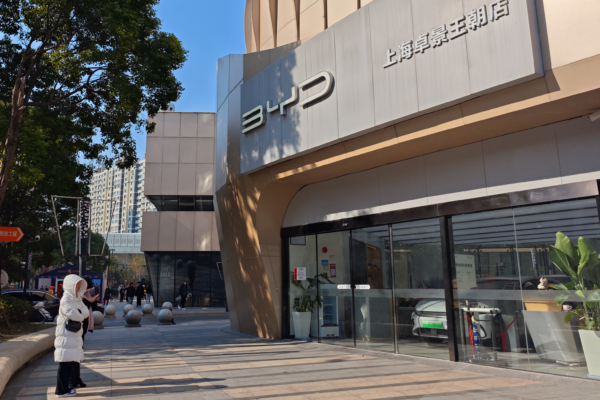
In Brazil’s BYD construction site, a large number of Chinese workers were involved in a slavery incident, prompting Brazil to stop issuing temporary work visas to BYD. BYD’s attitude has shifted from cooperation to defiance. Subsequently, Beijing announced an investigation into imported beef, targeting Brazil.
On December 27th, the Chinese Ministry of Commerce announced that, in response to the requests of representatives from the troubled beef industry in China, an investigation into imported beef would be conducted.
A spokesperson for the Chinese Ministry of Commerce stated that beef imports into China have increased sharply in recent years, with imports in 2023 65% higher than in 2019. Due to the impact of imported products, domestic industries have suffered severe damage.
The announcement outlined that the investigation began that day and typically concludes within eight months, with the possibility of extensions under special circumstances. The investigation covers the period from January 1, 2019, to June 30, 2024. The spokesperson emphasized that the investigation is not targeted at specific countries or regions and will not affect normal trade during the investigation period.
China is the world’s largest importer and consumer of meat. Customs data shows that in 2023, China’s total beef imports reached $14.2 billion. Among China’s imported beef, Brazil consistently holds the top position, accounting for 42% in the first half of 2024 and 43% in 2023.
The three departments of Brazil issued a joint statement on the same day, stating that China is the primary destination for Brazilian beef exports. In 2024, Brazil’s total beef exports to China exceeded 1 million tons, a 12.7% increase compared to the previous year. The Brazilian government, along with the exporting industry, will demonstrate that Brazilian beef exported to China will not harm Chinese industries.
It is noteworthy that while Beijing announced the investigation into imported beef, Brazil is dealing with a case of Chinese labor trafficking. Brazil has suspended the issuance of temporary work visas to the Chinese electric vehicle company, BYD.
Economic scholar David Huang stated that these two issues may seem isolated on the surface but are subtly related. With Brazil accusing Chinese companies of human trafficking and labor exploitation, a highly sensitive and serious matter, which impacts the reputation of Chinese companies overseas. Therefore, Beijing may use economic investigations to express dissatisfaction while avoiding open conflict.
Former Beijing lawyer and chairman of the Canadian Alliance, Jianping Lai, expressed that if beef imports truly harm the domestic industry, simply reducing imports would be sufficient. Beijing’s stance is essentially to show Brazil its color. The so-called investigation is a form of threat – take care of my interests, or I will cut off your resources. Waving the trade stick is a common tactic of the Chinese Communist Party.
Local Brazilian officials recently discovered 163 Chinese workers on the construction site of a BYD factory in Bahia, Brazil, working under “slave-like conditions.” The Ministry of Public Labor in Brazil rescued these workers and ordered the construction site to cease operations.
According to an announcement from the Brazilian Ministry of Public Labor on December 23rd, the living conditions of these workers were shocking. Some workers slept on beds without mattresses. With only one bathroom for every 31 workers, they had to wake up at 4 am to queue and start work at 5:30 am. The bathrooms lacked gender separation, adequate toilet seats, and suffered from severe infrastructure and hygiene issues.
The announcement also revealed severe violations on the construction site. The cafeteria failed to meet minimal hygiene requirements. Approximately 600 workers shared only 8 toilets without adequate provisions like toilet paper, water, or maintenance. Workers were exposed to intense sunlight, resulting in visible skin damage.
The announcement further stated that besides the degrading conditions, the case also exhibited characteristics of forced labor: workers were forced to pay deposits, had 60% of wages withheld, and their passports were retained by the company. Terminating the contract prematurely would lead to losses of the deposit and withheld wages, requiring the individuals to pay for return tickets and return the outbound tickets. The labor contracts stipulated ten-hour workdays without regular rest days. A worker involved in a work accident had not rested for 25 consecutive days, feeling fatigued and tired.
Labor inspector Liane Durao, responsible for the investigation, stated that the working environment of these workers was full of danger and did not meet the minimum standards of Brazilian labor laws.
Following the incident, BYD acknowledged issues on the construction site and announced the immediate termination of cooperation with the involved subcontractor. Alexandre Baldy, Senior Vice President of BYD Brazil, emphasized that BYD reaffirms its adherence to Brazilian laws, particularly regarding the protection of workers’ rights and human dignity. He stated that the company is conducting a comprehensive review of all work and living conditions provided by subcontractors.
However, the Brazilian subsidiary of Jinxiang Group, BYD’s subcontractor in Brazil, denied the allegations made by the Brazilian authorities.
The Brazilian subsidiary of Jinxiang Group stated that, as a construction subcontractor for BYD’s Brazilian factories, it has been subject to frequent inspections by the Brazilian local labor authorities. Due to cultural differences, leading questions during interviews, and language translation discrepancies, many of the information released by the Brazilian labor department may be inaccurate, particularly statements like their employees being “enslaved” or “rescued,” which do not align with reality.
On December 26th, Jinxiang Group released a video showing hundreds of Chinese employees standing together, with two representatives stating that the allegations of BYD “enslaving” workers were untrue. Terms like “slavery” were insulting to them, and the retention of passports was to assist in streamlined administrative procedures.
The images released by Jinxiang Group showed each worker pressing their fingerprint on the statement.
Zhao Lanjian, a former Chinese media person, expressed that the collective statement released by hundreds of workers cannot simply be interpreted as Stockholm Syndrome. Because they hold Chinese nationality, they and their families are tightly controlled by the Chinese government, depriving them of any freedom of speech.
Lai Jianping stated that China has long been a sweatshop, where labor is not adequately protected, and conditions are extremely harsh, resembling slavery for many workers who are pressured by their living conditions. Brazil, not considered a wealthy nation, could not turn a blind eye to this, as they have a more civilized approach, respecting individuals with basic human dignity. This incident vividly exposes China’s sweatshop conditions to the international community.
After Jinxiang Group denied the charges, BYD’s stance underwent a reversal.
Li Yunfei, General Manager of BYD Group’s Brand and Public Relations Department, reposted the collective statement of the workers on social media in China on December 26th and claimed that the related events were fabricated. He wrote that these were actions by “foreign forces” to tarnish Chinese brands, China, and disrupt Sino-Brazilian friendship.
BYD, China’s largest electric vehicle manufacturer, has Brazil as one of its major overseas sales markets. In the first 11 months of 2024, nearly one-fifth of BYD’s vehicle sales outside China went to Brazil.
On December 27th, the Brazilian Ministry of Foreign Affairs announced that Brazil had suspended the issuance of temporary work visas to Chinese electric vehicle manufacturer BYD due to allegations that some workers in the company’s factories were victims of human trafficking.
In a separate statement on the same day, the Brazilian Ministry of Justice stated that if prosecutors find any irregularities in the BYD factory, residence permits already issued to Chinese workers would be revoked.
On the same day, Beijing unexpectedly initiated an investigation into beef imports, which was immediately executed. The entire incident became even more delicate as a result.