
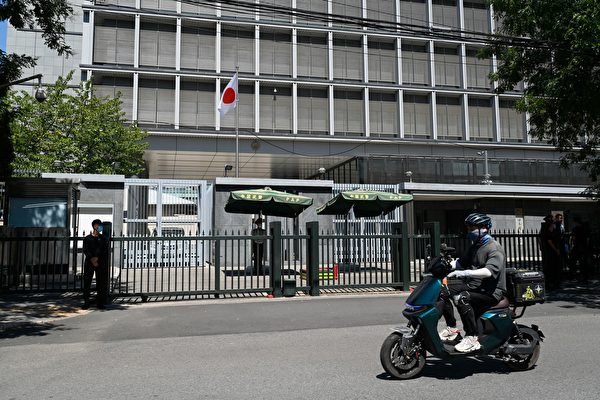
In 2015, a Japanese woman was arrested while on a business trip in Shanghai and sentenced to 6 years in prison on charges of espionage. Recently, Yasuta Akiuo, former Taipei bureau chief of the Japanese newspaper “Sankei Shimbun,” upon learning the reasons for the sentence, criticized the extensive jurisdiction of the Chinese Communist Party (CCP). He also questioned the possibility of there being collaborators from the CCP within the Japanese government.
According to a report by Kyodo News on December 30, 2024, the Chinese authorities detained the Japanese woman in 2015, accusing her of engaging in espionage activities based on her actions in Japan.
Sources from Japan and China mentioned in the report stated that the woman in her 60s had met multiple times with officials from the Chinese embassy in Tokyo between 2012 and 2013 to understand China’s perspective on the conflict between China and Japan following Japan’s nationalization of the Diaoyu Islands (known as the Senkaku Islands in Japan). She later shared the contents of these conversations with two Japanese officials, which did not involve any national secrets.
In 2015, while on a business trip to Shanghai, the woman was arrested by the Chinese authorities. In February 2019, the Shanghai High Court sentenced her to 6 years in prison on charges of espionage.
The report highlighted that this was the first time a Japanese person had been convicted of espionage by China due to actions within Japan. While the Japanese government was aware of the situation, it did not disclose it publicly.
On the evening of December 30, Yasuta Akiuo took to Facebook to denounce the situation as “absurd” and “shocking.”
He revealed that when the woman was arrested in Shanghai, he was working as a journalist in Beijing. At that time, he had written several reports, and nobody knew the reason for her arrest. Initially, there were speculations that she might have “accidentally entered restricted areas and taken some inappropriate photos.” The revelation that she was charged for her actions in Japan came as a surprise.
Yasuta Akiuo viewed the matter as extremely serious and highlighted three key issues.
First, he criticized the CCP’s extensive jurisdiction, which had crossed borders into foreign territories. According to international norms, each country’s laws should apply within its sovereign boundaries, yet the CCP disregarded this understanding.
Second, the fact that the contents of the woman’s conversations with Japanese government officials were obtained by the Chinese side indicated the possibility of collaborators from China within the Japanese government.
Third, China’s stance on the Diaoyu Islands (Senkaku Islands) issue is frequently mentioned by the Chinese Ministry of Foreign Affairs and does not involve any national secrets. Arresting someone based on this premise was unjust and an attempt to fabricate a crime.