
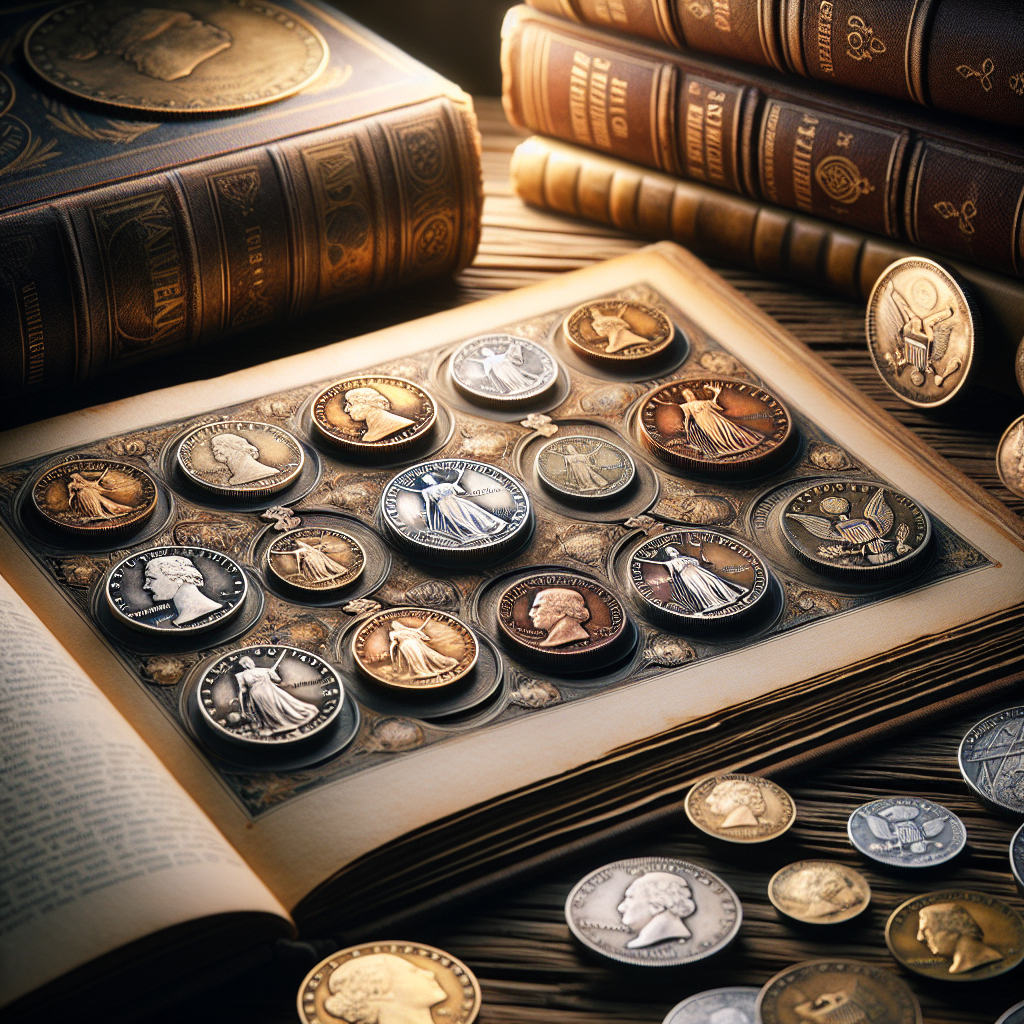
Over time, some coins are becoming increasingly valuable for collectors. Even a small minting error at the Mint Bureau could significantly increase the value of a coin. At least 10 types of American coins are becoming more sought after by collectors, with their values reaching millions or even tens of millions of dollars. What are the characteristics that make these coins so valuable?
In general, the auction value of coins depends on factors such as rarity, condition, and the historical stories behind the coins. Moreover, some defective coins that came out of the Mint Bureau decades or even hundreds of years ago are becoming more and more attractive.
GOBankingRates has conducted in-depth research on some incredibly precious coins coveted by collectors. They have compiled a list of 10 high-value American coins, including the 1933 Double Eagle $20 gold coin, the 1907 Ultra High Relief Double Eagle $20 coin, the 1913 Liberty Head Nickel, the 1804 Draped Bust Silver Dollar (Type I), the 1794 Flowing Hair Liberty Dollar, the 1787 Brasher Doubloon “EB” punch on eagle’s breast $15 gold coin, the 1885 Trade Dollar, the 1861 Paquet Reverse Version $20 Double Eagle gold coin, the 1804 $10 Gold Coin, and the 1822 Capped Head $5 Half Eagle Gold coin.
Although the 1933 Double Eagle gold coin may not have as long a history as some other rare coins and over 445,000 were minted at the time, this coin is extremely rare.
So, what’s the story behind this? It all goes back to American history. In 1933, then-US President Franklin D. Roosevelt decided to abandon the gold standard for the dollar, no longer making gold coins the circulating currency. The authorities ordered the already minted Double Eagle gold coins to be melted down into gold bars for storage, leaving only two preserved by the Smithsonian Institution. However, a few of these coins accidentally made their way into private hands.
According to information released by the coin grading service companies PCGS and Stack’s Bowers,
A Secret Service investigation in 1944 determined that these coins that slipped out were stolen from the mint and they were seized from the owners. One of them was purchased by King Farouk of Egypt, becoming a part of his magnificent collection. The social and political upheaval in Egypt led to King Farouk’s abdication, and he was exiled to Italy, during which many of his possessions, including this 1933 Double Eagle coin, were lost. For decades, the whereabouts of this coin remained uncertain until 1996 when British coin dealer Stephen Fenton brought this coin to New York for potential transactions. The Secret Service, through a confidential informant, received intel and confiscated the coin.
What followed was a five-year legal battle.
Fortunately, just before the July 2002 Stack’s/Bowers auction, the US government officially monetized and issued this 1933 Double Eagle coin, making it the only one legally able to be privately held. This designation has made it the Holy Grail of the coin collecting world. In June 2021, at a Sotheby’s auction, this 1933 Double Eagle $20 gold coin changed hands for nearly $18.9 million.
The Extremely High Relief $20 coin is made up of 90% gold and 10% copper. It is estimated that only 15 of these coins are known to exist. In February 2021, one of them was sold for $3.6 million at Heritage Auctions.
Sometimes referred to as “Ultra High Relief,” this coin’s design is extraordinary, making it impractical for mass production.
According to the description on the NGC website, the 1907 Ultra High Relief Double Eagle coin is considered one of the most popular coins ever minted by the US Mint. Its sculptural appearance is believed by many to be one of the most beautiful regular issue gold coins ever made. Unfortunately, due to production challenges, the coin was redesigned by Charles Barber later that year.
As per the American Numismatic Association, there are only five surviving 1913 Liberty Head Nickels, named after the McDermott, Eliasberg, Norweb, Olsen, and Walton nickels.
The exact circumstances of how and why these five coins were produced remain unknown. During the years 1883 to 1912, numerous coins featuring the Liberty Head were minted. In 1913, these coins were supposed to switch to Buffalo Nickels (Indian Head nickels), making the existence of these Liberty Head Nickels in 1913 a mystery. Some experts suggest that the Liberty Head Nickels of 1913 were struck accidentally, or as many historians believe, possibly minted by Samuel W. Brown, a US Mint employee in Philadelphia.
It is this aura of mystery that has kept collectors fascinated with these coins.
Over the years, these rare coins have passed through various hands. GreatCollections reports that in 1962, the Walton nickel was found in a fatal car accident and remained stored in a descendant’s closet for decades. In 2013, this coin was auctioned for over $3.17 million. In 2022, the Walton nickel sold for $4.2 million.
Though there are rarer coins, among the Federal series coins, none can challenge the reputation, tradition, and glory of the 1804 silver dollar. Aptly called the “King of American coins,” the 1804 silver dollar, though only valued at $1, fetches a hefty price.
According to Stack’s Bowers, there are an estimated 15 surviving 1804 silver dollars, with 8 being Class I, 1 being Class II, and 6 being Class III. Over the years, the majority of these coins have been handled in transactions by the auction house. Each release of a coin has caused a sensation.
In August 2021, a Class I 1804 silver dollar was sold at Stack’s Bowers Galleries auction for $7.68 million.
Despite the 1804 date on these rare silver dollars, they were not minted in that year. The Class I coins were specifically minted in 1834 for diplomatic purposes as gifts to foreign monarchs by the US State Department. The Class II and Class III 1804 silver dollars were later produced to satisfy collectors’ demands, with these coins having their own intriguing stories behind their minting process.
This coin not only bears a poetic name, but also holds immense value. According to Atkinson’s Bullion and Coins data, this coin is made up of 90% silver and 10% copper, featuring designs of Lady Liberty and the Eagle on the obverse and reverse sides.
The Flowing Hair Liberty Dollar $1 coin was first minted in 1794, making it the first $1 silver coin issued by the US federal government.
In January 2013, at Stack’s Bowers auction, an exceptionally unique 1794 Flowing Hair Liberty Dollar $1 coin with a “silver plug” in the center was sold for over $10.01 million.
This coin is considered unique as it features a “silver plug” in the center. Some experts and famed numismatists believe that this coin is actually the first official $1 coin ever minted. It is reported that this coin was minted on October 15, 1794, and has remained in pristine condition, never coming into contact with any other coins or being put in a bag.
David Hall, co-founder of the coin grading service company PCGS, mentioned that of the known seven Brasher Doubloons with the “EB” initials, six have the initials on the eagle’s wings, and one has the initials on the eagle’s breast.
This unique Brasher Doubloon coin with the “EB” punch on the eagle’s breast was sold at a Garrett auction in March 1981 for $625,000. Subsequently, it was auctioned off at a Heritage auction in January 2005 for $2.99 million. One side of the coin showcases the eagle design, while the other side depicts the sun rising over the mountains.
In 2021, an eagle wings “EB” Brasher Doubloon from 1787 was sold at a Partrick auction for $9.36 million.
The coin collecting community highly values Brasher Doubloons as they were among the early gold coins minted during the early stages of American independence.
The $1 Trade Dollar coin was minted by the Philadelphia Mint. In January 2019, one of these coins was sold at Heritage auction for $3.96 million.
According to Heritage, the 1885 Trade Dollar is one of the rarest and most mysterious coins in American numismatics. These coins were likely minted in the first half of 1885 but were not publicly known until 25 years later. Only five are known to exist, making them as rare as the famous 1913 Liberty Nickels (five known) and even more scarce than the more renowned 1804 $1 coins (15 known). As esteemed institutions such as the Smithsonian and the ANA do not have this coin in their collections, it is rarely exhibited.
Heritage notes that unlike the records for the 1884 Trade Dollars, there is no official disclosure of the production of the 1885 Trade Dollars in the mint’s records. The Mint Director’s annual report for that year also makes no mention of them. However, all evidence indicates that these coins were minted in 1885 at the Philadelphia Mint. The lack of documentation suggests that these coins were possibly minted secretly.
The $10 Deep Relief Gold Coin minted by the Philadelphia Mint is estimated to have only three known to exist. In January 2021, one of these coins was sold by Heritage Auctions for $5.28 million.
According to Heritage, much like the more famous 1804 $1 coins, this $10 Gold Coin from 1804 was minted in the mid-1830s as diplomatic gifts for foreign dignitaries. Only four were minted at the time, with just three being known today.
The rare $5 Half Eagle Gold Coin from 1822 is expected to have only three known to exist, with one held privately. In March 2021, this privately-owned coin was auctioned by Stack’s Bowers Galleries for $8.4 million.
The $20 Double Eagle Gold Coin is extremely rare, with only two known to exist. In August 2021, one of these coins was sold by Heritage Auctions for $7.2 million.
Heritage mentions that in recent years, coins from the Civil War era of 1861 to 1865 have become a more popular theme for coin collectors. This 1861 coin has evidently become the centerpiece of outstanding coins in this category.