
【Epoch Times, December 26, 2024】
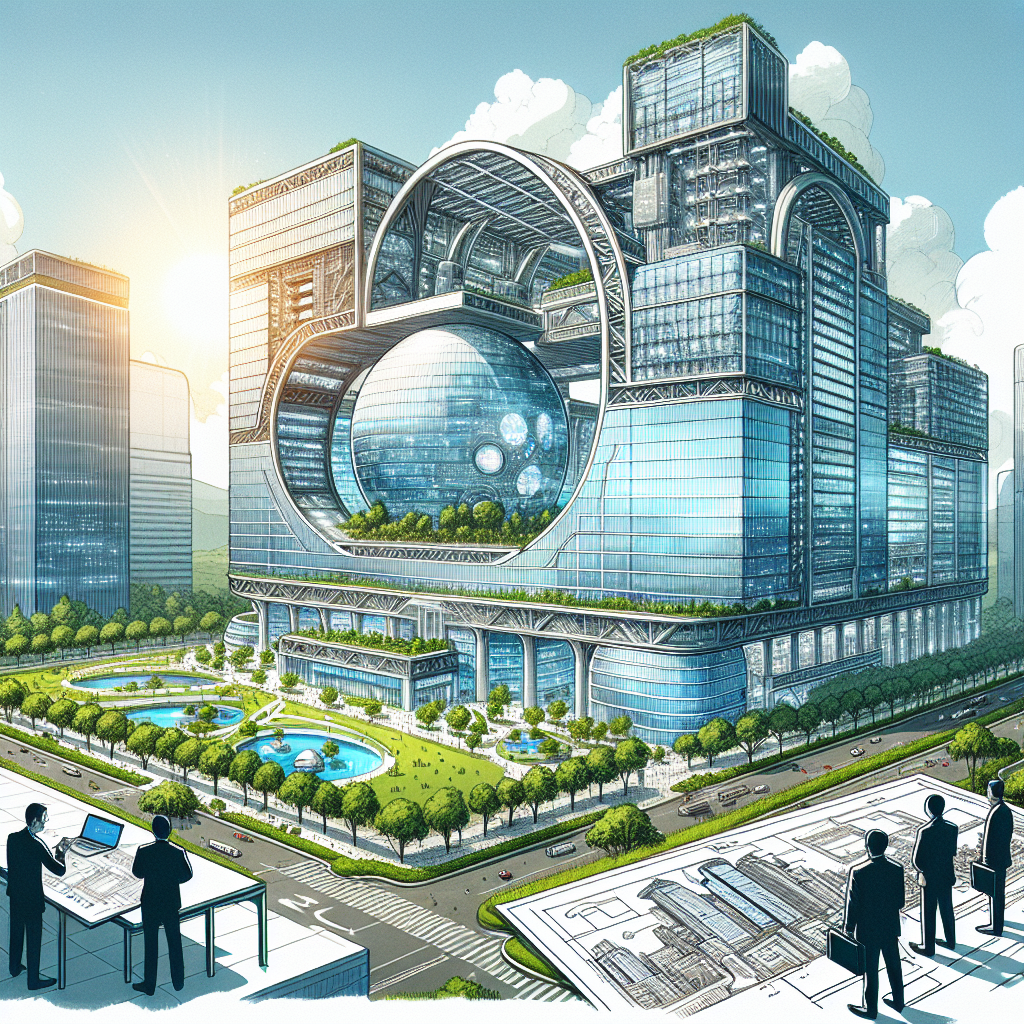
AI chip giant NVIDIA is reportedly planning to establish an overseas headquarters in Taiwan, mirroring the scale of its headquarters in Silicon Valley, USA. This news has sparked widespread discussion, with various mayors in Taiwan eagerly preparing for potential opportunities. NVIDIA’s expanded investment in Taiwan is expected to elevate the country’s overall role in the international technology supply chain.
NVIDIA CEO Huang Renxun, in an interview with Wired magazine on the 18th, mentioned that the production of GB200 is in full swing and progressing smoothly. With the next-generation GB300 expected to debut in the first quarter of next year, the morale within Taiwan’s supply chain remains stable.
The tech behemoth NVIDIA considering Taipei City for its overseas headquarters has garnered significant attention. Experts believe that from the perspective of local government cooperation, industry clustering effects, and transportation convenience, Taipei City is the top choice for NVIDIA. However, the limited available land in the city may necessitate a compromise, possibly through the city government offering land-use rights on public properties.
Regardless of the final decision on the headquarters location, observers are keen on understanding the factors influencing NVIDIA’s site selection and the potential economic benefits for Taiwan.
NVIDIA collaborates closely with Taiwan’s supply chain, utilizing chips manufactured by foundry giant TSMC, with companies like Quanta and Wistron responsible for server assembly. Other critical components, including heat sinks, power supplies, and chassis, also come from Taiwanese manufacturers. By establishing an overseas headquarters in Taiwan, NVIDIA can enhance communication efficiency with the supply chain.
NVIDIA’s first research center in Taiwan, located in Neihu Science Park, will relocate to the larger Yu Cheng office building in Nangang Run Tai in the future. Spanning from the 3rd to the 17th floor, NVIDIA will lease the entire building. Nangang, a convergence point for the high-speed rail, Taiwan Railway, MRT, and bus networks, offers excellent transportation advantages linking Nangang with Nei Ke, Nansoft, and even Hsinchu Science Park. Additionally, the Nangang Exhibition Hall frequently hosts international exhibitions, aiding in expanding operational reach.
Furthermore, the Taipei-1 supercomputer processing center, established by NVIDIA, is situated in the Asia New Bay Area in Kaohsiung. The city government is actively pursuing both the Taipei-2 supercomputer and NVIDIA’s second research center to be based in Kaohsiung.
Liu Peizhen, director of research at the TaiEcon database, noted that NVIDIA’s plans to expand investment in Taiwan reflect the country’s prominent position in the global AI supply chain. Taiwan’s attractio nd continues to allure NVIDIA, AMD, and major US cloud computing firms to expand their presence in the region. The establishment of an overseas headquarters in Taiwan by NVIDIA signifies a deepening collaboration with the local supply chain.
In comparison to the scale of NVIDIA’s Silicon Valley headquarters, the company is seeking a land area exceeding 3 hectares (about 9,075 ping) in size. This is larger than the vacant land left after the demolition of the first funeral home in Taipei, which was over 6,000 ping. Whether NVIDIA’s future base will be in Nangang or another administrative district in Taipei, it is challenging to find such a large public land area. If Taipei does not offer a suitable location, NVIDIA may need to explore New Taipei City, Taoyuan City, or other areas in northern Taiwan.
Xu Jiaxin, executive director of the commercial real estate planning and research department, emphasized that for foreign companies investing in Taiwan, the paramount concern is effective communication and cooperation with the local government where the operational base is located. While land acquisition is essential, foreign companies place greater value on communication with local authorities to avoid potential future administrative costs.
Xu noted that another critical aspect foreign companies consider is industry clustering. For example, TSMC is located in Hsinchu Science Park, and the majority of precision technology industries are concentrated in Taichung City. The benefit of industry clustering lies in easy access to manufacturers, facilitating smoother communication within the supply chain. Moreover, with the emergence of new technologies, companies are less likely to be isolated from the information loop. Objective environmental factors such as transportation convenience, land acquisition, and talent availability are also important considerations.
The Taipei City Government has formed an inter-departmental project team actively engaging with NVIDIA to understand their site requirements and provide full assistance. The New Taipei City Government has offered multiple land parcels in Xindian and Linkou exceeding 3 hectares and provided relevant incentives for NVIDIA’s evaluation. The Taoyuan City Government has also submitted a planning proposal for a foreign enterprise headquarters to NVIDIA.
Xu believes that Taipei City is the most ideal location for NVIDIA’s overseas headquarters, except for the challenge of securing a large land area. Although Taoyuan City has land availability, it lacks an industry cluster. New Taipei City, with the Far Eastern Telecommunications Park in Banqiao where Google is located, seems more suitable. Xu recommended that local governments consider offering land-use rights on public properties to meet NVIDIA’s land demands.
According to Liu, Taipei City is indeed the prime option for NVIDIA to establish its overseas headquarters. However, due to limited land availability and space in Taipei City, the selection range may expand to other areas in northern Taiwan, including Taoyuan City and Hsinchu County and City.
Plans for NVIDIA to set up an overseas headquarters in Taiwan, akin to Google’s office building in Banqiao, appear to signal the emergence of a research and development hub. This not only attracts more foreign investments but also fosters talent aggregation domestically and internationally.
Industry insiders note that in recent years, both central and local governments have been actively seeking investments from tech giants to strengthen the concept of a “Silicon Shield.” This effort aims to increase reliance on Taiwan’s technology supply chain and bolster areas with insufficient defense capabilities, further promoting industrial upgrades in Taiwan, culminating in a comprehensive positive impact.
(Translated from Central News Agency)