
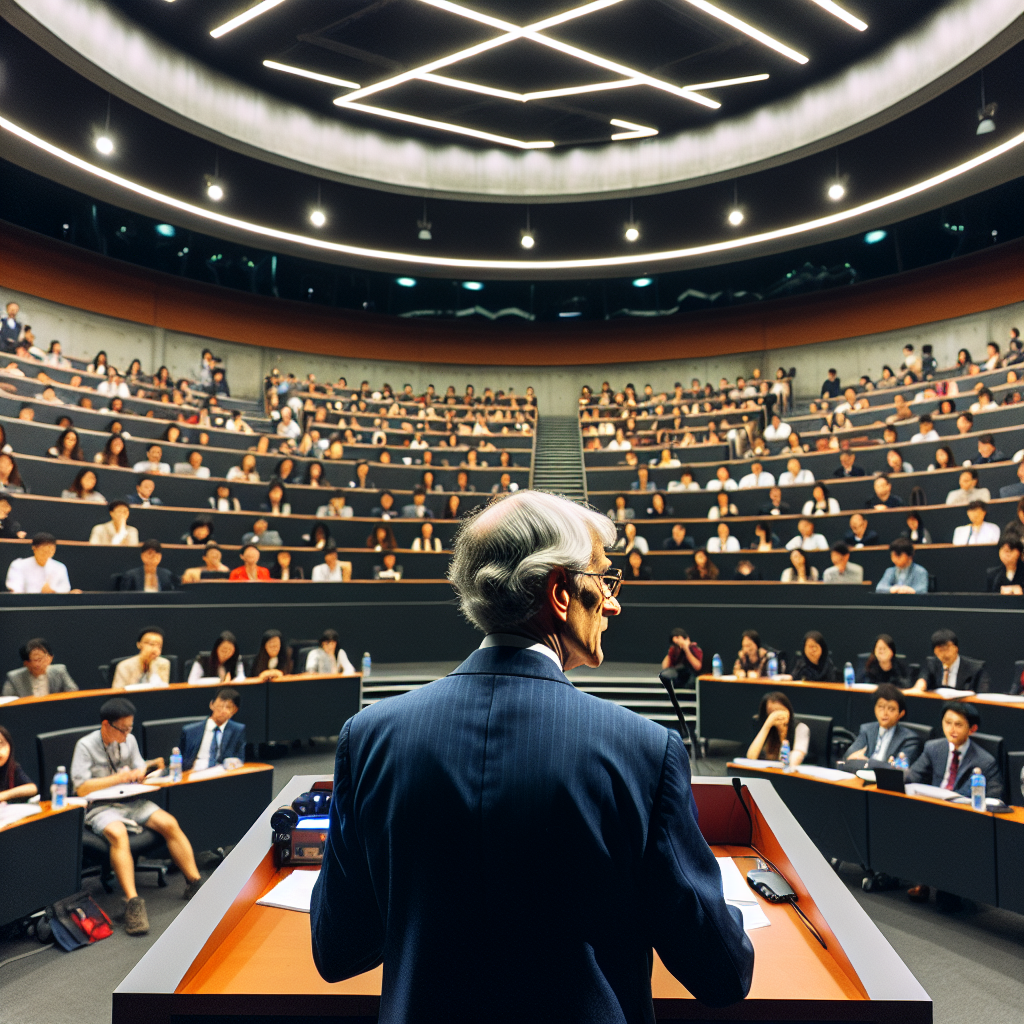
Taiwan’s public policy organizations and think tanks jointly held a seminar on the topic of “Infinite Creation or Infinite Confusion? How AI-Generated Content is Changing the Way We See the World” on the 18th. Scholars and experts were invited to analyze the implications.
Host and Professor of Law at Soochow University, Hu Boyan, expressed, “AI (Artificial Intelligence) has entered our lives, bringing more innovation, opportunities, and value, but also increasing risks, challenges, and even chaos. We should pay attention to how vulnerable groups adapt to this new technology and the new way of life it brings, ensuring that they can fully understand and use AI to avoid reinforcing existing inequalities.”
Deputy Executive Director of a Taiwanese think tank, Dong Siqi, stated, “AI-generated content is profoundly changing the way we view the world, with its innovation and convenience, yet it also comes with challenges of distinguishing truth from falsehood and information manipulation. From Deepfake technology to automated news generation, AI can inspire infinite creativity while also intensifying cognitive chaos.” He emphasized that in the era of dual transformation in energy and digital realms, the youth should not only be the core drivers of technological innovation but also bear the responsibility of setting technological ethics and norms. They must possess media literacy and AI literacy and actively participate in promoting transparent, fair, and accountable technological development.
Dong Siqi further commented, “The future of AI depends on how we define and utilize this technology. If used properly, AI can be a significant force for social progress, but if uncontrolled, it may trigger cognitive crises and social conflicts.” He urged that the foundation of technology always lies in humanity and Taiwan, known for its prowess in semiconductor industries, should actively promote a “human-oriented” AI development strategy, assisting the youth in finding their positions in global technological competition and creating more opportunities and value for Taiwan in the wave of digital and energy transformation.
Professor Jiang Yaqi from the School of Law and Politics at National Yang-Ming Chiao Tung University pointed out that AI and humans are not inherently opposed concepts. She stressed that the development of AI relies on a great deal of human wisdom and effort, and due to the close connection between AI and humans, “human issues will also manifest in AI.” For example, studies have shown significant disparities in facial recognition accuracy among different genders and skin colors, indicating that human biases and inequalities have evolved into “technological racism.” She called for a comprehensive approach to governing artificial intelligence with a focus on risks and a “human-oriented” perspective to effectively manage this new technology.
Analyst and International Group Leader at the Taiwan Artificial Intelligence Association, Wu Dingqian, analyzed that the disparity in the degree of digital transformation is a key pain point for industrial AIization. Companies face challenges such as difficulties in data collection, inability to grasp the cost-effectiveness of implementing AI tools, and the challenges AI poses to organizational culture. He emphasized that internal conflicts within organizations cannot be fully resolved by AI alone, and the ability to think critically remains essential. He stated, “In the future, the ones who can survive are those who can think. AI helps us create but also brings confusion; we should return to basics, utilize AI tools to solve problems, and make life better.”
Associate Professor Yu Jiamu from the Department of Electrical Engineering at Yang Ming Chiao Tung University highlighted that AI-generated content is rapidly changing how we understand the world. Specifically in information dissemination and cognitive formation, AI-generated content can create realistic images, text, and videos, blurring the line between reality and falsehood and posing challenges to media literacy. While deep fake face-swapping images are common in Europe and the US, Taiwan has recently seen an increase in AI-generated voice scams, catching the public off guard. He cautioned vigilance against strange texts, sounds, and images in daily life, raising awareness to prevent falling victim to such scams.
Professor Wang Weijing from the Department of Mass Communication at National Taiwan Normal University believed that artificial intelligence brings risks and challenges such as privacy, behavior control, digital narcissism, digital biases, emotional AI, and more to human society. AI, through big data collection and analysis of human behavior, influences personal choices, potentially infringing on privacy, limiting autonomy, challenging human free will and independence. Furthermore, AI’s extensive use in finance, education, and the judiciary sectors may lead to biases and negative impacts on vulnerable groups. AI may also obstruct public discourse through the spread of misinformation, resulting in societal chaos. Wang emphasized that “humans should be the master of technology,” addressing the ethical challenges posed by AI and exposing and supervising AI risks to ensure that AI promotes human well-being and creativity.
Assistant Professor Chen Bingxun from the Institute of Science and Technology at National Chengchi University explained that AI has impacted human creations such as writing, drawing, and music, but the foundation of copyright law has always been based on human creativity. Thus, there is currently no satisfactory response to the debate on the originality of AI and the protection of contents created with AI assistance. This could lead to creators being infringed upon without recourse. He suggested strengthening the infringement identification criteria in copyright laws to protect creators and potentially deter the creation and spread of false information, preventing societal chaos caused by AI-generated fake governmental documents.
Following the discussions, the host and the youth raised questions on topics such as “how to safeguard vulnerable groups in AI life,” “inequalities caused by AI disparities,” and “how to ensure the benefits of AI outweigh the drawbacks.” The speakers delved into these questions to provide in-depth analysis and responses.