
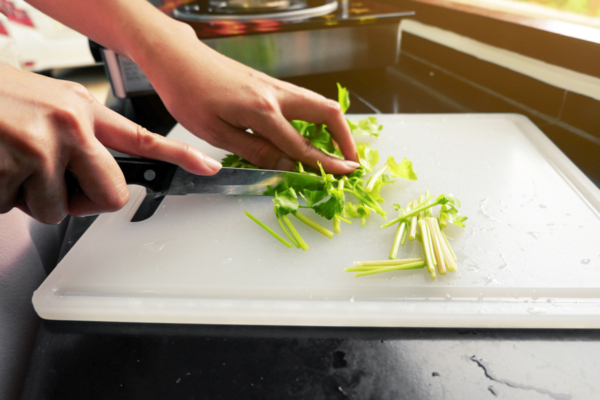
In addition to ingredients and cooking methods, excellent chefs also pay attention to the techniques of chopping vegetables and meat, which are considered as part of culinary skills. So, do the techniques of chopping vegetables and meat affect the taste of dishes? Let’s take a look at what experts have to say.
American freelance journalist Carolyn Beans published an article on National Public Radio (NPR) years ago, stating that she had discussions with several food experts about whether slicing, dicing, and shredding techniques affect the taste of food. The answer from these experts was “Yes!”
Brendan Walsh, director of the Culinary Arts Department at the Culinary Institute of America, pointed out that they teach students from the beginning that the way food is chopped can enhance its palatability and make it taste better.
Leslie Brenner, food critic, chef, and blogger at The Dallas Morning News, emphasized the importance of chopping techniques, as the surface area of vegetables can affect their flavor.
She explained that chopping vegetables finely can enhance the cooking process, generating more reactions. For example, she mentioned okra and how cutting them vertically in half, then grilling both sides, gives them a wonderful charcoal flavor.
She noted that cutting vegetables in such a longitudinal way increases the surface area, enhancing the charcoal flavor. Finely chopped vegetables will react more with other ingredients in the dish, such as butter, salt, or marinade.
However, Pete Snaith, co-founder of a culinary school in Virginia and a knife skills instructor, believes that chopping techniques have less impact on taste than cooking time. If you’re adding carrots to a dish, chopping them into small pieces and adding them towards the end of the cooking process will result in quick cooking.
Snaith also mentioned that chopping techniques affect the texture of food. Some food experts argue that texture influences taste, or at least our perception of taste.
Walsh said, “When you put a round vegetable in your mouth, your brain usually thinks of something meaty.”
He mentioned that square-shaped, serrated-edge foods provide more chew and give an impression of roughness or toughness. A smoother texture in food can lead your brain to perceive it as delicious.
Chef Bill Fuller from a restaurant in Pittsburgh agrees on this aspect. He said, “Taste is what’s in your mouth, but it also partly depends on the texture.”
Aroma also enhances taste. Fuller explained that different chopping techniques can alter the scent of certain fruits and vegetables. “For tomatoes, if you slice them thinly and lay them out, you’ll smell more of the tomato essence than if you cut them into quarters and stack them.”
He emphasized that the taste of a single slice of tomato differs from that of a whole tomato.
Charles Forney, a physiologist at Agriculture and Agri-Food Canada specializing in agricultural product research, stated, “Each type of agricultural product differs in chemical composition and its reaction to cutting or crushing.”
Forney explained that when you cut a tomato, you break open the cells, releasing an enzyme. This enzyme triggers a chemical reaction, producing most of the scents associated with a fresh-cut tomato.
He referred to this scent as the “green aroma” of tomatoes. Forney noted a similar reaction in freshly cut grass. The thinner you slice a tomato, the more enzymes it releases, resulting in a stronger “green aroma.”
He further stated that chopping onions or garlic follows a similar process. When you chop onions or garlic, they release an enzyme called alliinase, creating the aroma of onion or garlic. This scent does not exist in its complete form.
Forney said, “Enzyme reactions create scents—so the finer the cut, the more scents released.”
In conclusion, Beans emphasized that for many vegetables and fruits, chopping techniques do indeed affect the taste, cooking process, texture, aroma, and perhaps even some unseen elements.