
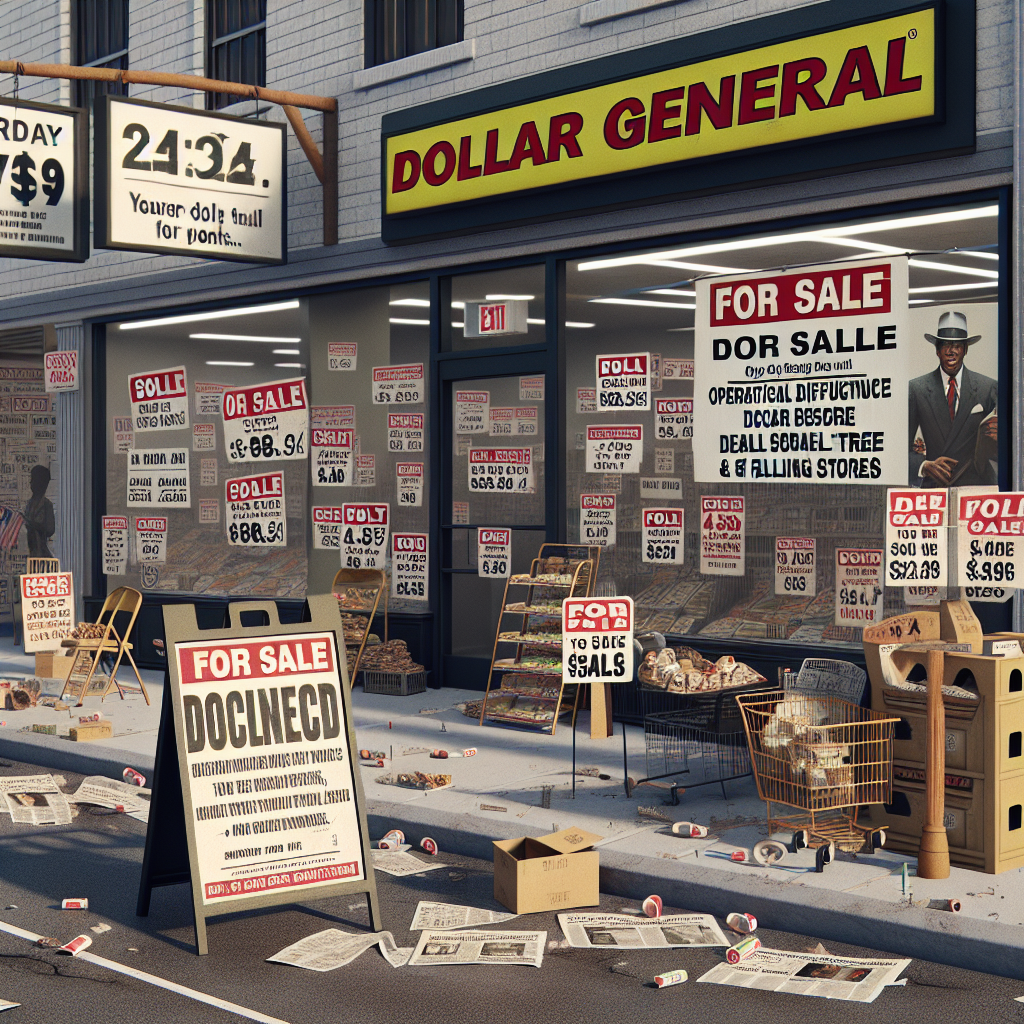
In the United States, the performance of dollar stores has been disappointing this year, leading to operational difficulties and a significant decline in stock prices by 2024. Due to sales falling short of expectations, both Dollar General and Dollar Tree have revised their annual financial forecasts. The CEOs of Dollar General and Dollar Tree have both resigned, with Jeff Owens from Dollar General stepping down in October 2023 and Rick Dreiling from Dollar Tree resigning on November 4 this year. Dollar Tree is also considering selling its grocery brand, Family Dollar.
The discount stores used to have a good return on investment and were once considered darlings of Wall Street. So what has led to their current lackluster performance?
According to Peter Keith, a retail analyst at the investment firm Piper Sandler, several factors have contributed to the poor sales performance of discount stores. First, inflation has had a significant impact on shoppers at dollar stores, as these customers typically have lower household incomes. Additionally, these stores have been cutting costs by reducing wages, leading to understaffing and impacting store appearance and service quality. Lastly, physical stores face strong competition from e-commerce giants like Amazon.
For decades, dollar stores have provided affordable and diverse products, catering to consumers on tighter budgets. In the U.S., Dollar Tree and Dollar General are two major discount retailers.
Dollar Tree consists of two brands – Dollar Tree itself and Family Dollar. While Dollar Tree stores are located in suburban shopping centers and offer a wide range of seasonal and non-essential items such as party supplies and toys, Family Dollar stores primarily focus on food and essential household items. However, Family Dollar has seen weak sales this year, prompting Dollar Tree to announce the closure of approximately 1,000 Family Dollar stores in March and the potential sale of the brand.
Dollar General, on the other hand, targets rural customers with stores in small towns or residential areas where major retail outlets are scarce. In recent years, Dollar General introduced a new brand concept store called pOpshelf, focusing on non-essential items like cosmetics, candles, and throw pillows, targeting middle to high-income customers.
Despite their different marketing strategies, both chains rely on a model of rapid expansion – Dollar Tree currently operates over 16,000 stores, while Dollar General has nearly 20,000 locations. In comparison, Walmart has around 4,600 stores nationwide and Target has nearly 2,000 stores, significantly fewer than Dollar Tree and Dollar General.
However, the “neighborhood store” model has recently faced significant challenges for several reasons. First, the primary customer base of discount stores consists of low-income individuals, with 60% of Dollar General’s sales coming from families earning less than $30,000 annually. Inflation hits low-income shoppers the hardest, often leading them to tighten their budgets and reduce consumption.
Moreover, dollar stores struggle to attract middle to high-income consumers. During the 2007-2009 financial crisis, these consumers turned to discount stores to save money, but the situation has changed. While prices continue to rise, the low unemployment rate means that higher-income individuals still have job security and do not need to cut back excessively. Faced with rising prices, they opt for value options offered by retailers like Costco, Walmart, Aldi, and Trader Joe’s.
Furthermore, consumer behavior shifted during the pandemic, with many people embracing online shopping. The convenience of ordering with a few clicks on a laptop or mobile app and having items delivered to their homes, along with the ability to continuously compare prices, has made it difficult for physical stores to compete. Dollar Tree and Dollar General have struggled to keep up with e-commerce giants like Amazon in this changing landscape.