
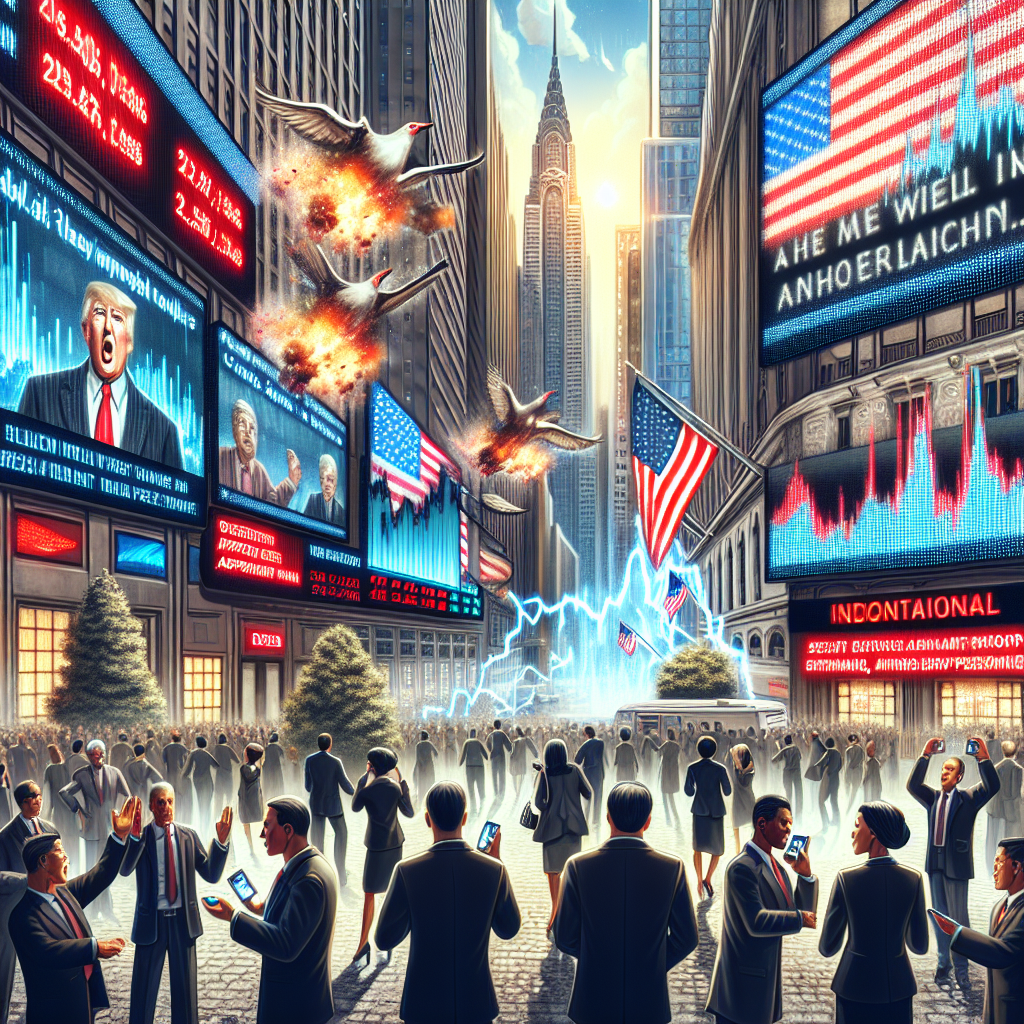
In a recent development, President Trump’s new appointments have sent shockwaves through the business world on Wall Street. The situation in South Korea continues to be volatile, with North Korea showing signs of restlessness, putting a spotlight on the U.S. Indo-Pacific strategy. Meanwhile, the Prime Minister of France has been impeached and forced to step down. The U.S. ban on semiconductor exports has dealt a heavy blow to China’s economic vulnerabilities in the South China Sea, prompting international vigilance to contain Beijing’s influence. In addition, NATO has increased its support for Ukraine.
The global stage is witnessing a series of significant events that are reshaping the geopolitical landscape and impacting various regions around the world. As countries grapple with political changes and economic challenges, the balance of power is shifting, leading to heightened tensions and strategic realignments.
President Trump’s latest appointments have raised eyebrows in the business community, particularly on Wall Street, where investors are closely monitoring the implications of these decisions on the financial markets. The ripple effects of these appointments are being felt not only in the United States but also globally, as the business world adjusts to the new leadership dynamics.
The ongoing turmoil in South Korea, combined with North Korea’s provocative behavior, has underscored the importance of the U.S. Indo-Pacific strategy in maintaining stability in the region. With tensions running high, all eyes are on how the Trump administration will navigate this complex geopolitical landscape and address the escalating tensions on the Korean Peninsula.
In Europe, the political landscape is also undergoing significant changes, as the French Prime Minister faces impeachment and steps down from office. This development has sent shockwaves through the European political establishment, raising questions about the stability of the region and the future direction of European politics.
Furthermore, the U.S. ban on semiconductor exports has exposed China’s vulnerabilities in the South China Sea, where its economic interests are heavily concentrated. The impact of this ban is reverberating across the region, prompting concerns about China’s economic resilience and its ability to withstand external pressures.
As international tensions escalate, there is a growing emphasis on strengthening vigilance and containment measures against Beijing’s expanding influence. Countries around the world are closely monitoring China’s activities and taking steps to counter its growing assertiveness in the global arena.
In response to the evolving security situation, NATO has decided to bolster its support for Ukraine, signaling a unified front against Russian aggression in the region. This move reflects a broader strategy to deter further destabilization in Eastern Europe and uphold the principles of territorial integrity and sovereignty.
In conclusion, the geopolitical landscape is experiencing a period of unprecedented change and uncertainty, with significant developments unfolding across various regions. As countries navigate these challenges and adapt to the shifting dynamics of global politics, cooperation and strategic alliances will be crucial in maintaining peace and stability in an increasingly complex world.