
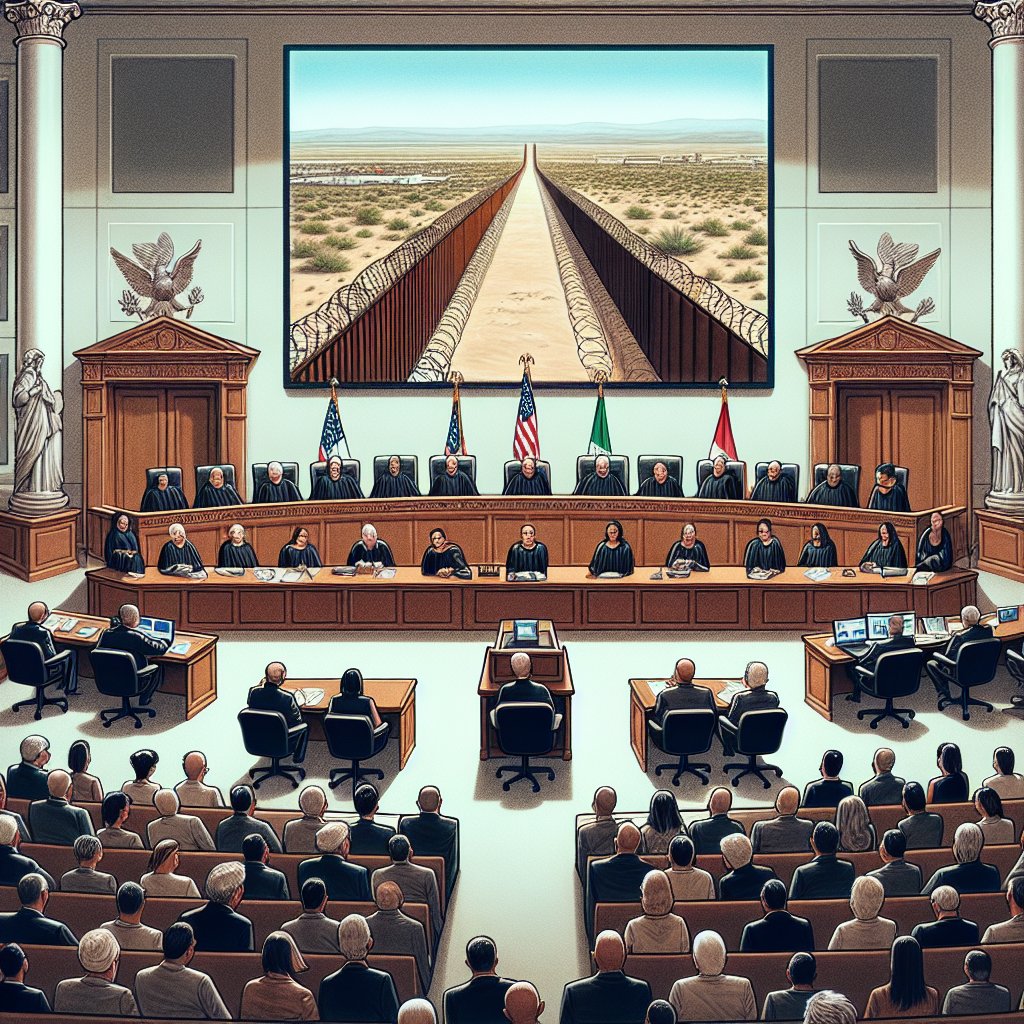
In a ruling on Wednesday (November 27), the United States Federal Appeals Court declared that Border Patrol agents do not have the authority to cut the barbed wire installed by Texas along the Eagle Pass on the US-Mexico border.
Over the past year, Texas has erected barbed wire along approximately 1,200 miles of the border with Mexico. The court ruled 2-1 to issue an injunction against the Border Patrol, prohibiting them from damaging the barbed wire in Eagle Pass.
According to Politico, this decision by the Fifth Circuit Court of Appeals is a victory for Texas and reflects the long-standing disagreements between the state and the Biden administration on immigration policies. The Biden administration had previously attempted to dismantle the floating barriers set up by Texas on the Rio Grande.
Texas Governor Greg Abbott, a Republican, responded to the ruling on social media platform X, stating, “We will continue to increase more border barbed wire barriers.”
This ruling signals an ongoing legal battle between Texas and the federal government over immigration enforcement measures. The clash between the state and the Biden administration underscores the broader debate surrounding border security and immigration policies in the United States.
The decision by the Federal Appeals Court has ignited discussions about the extent of states’ rights in implementing border security measures and the role of federal agencies in enforcing immigration laws. As Texas continues to fortify its border with Mexico, the court ruling is seen as a significant development in shaping the landscape of immigration policies in the country.
The impact of this ruling goes beyond just Texas, with implications for the broader national conversation on border security and immigration control. The diverging approaches between the state and federal government highlight the complexity and challenges in finding common ground on immigration issues.