
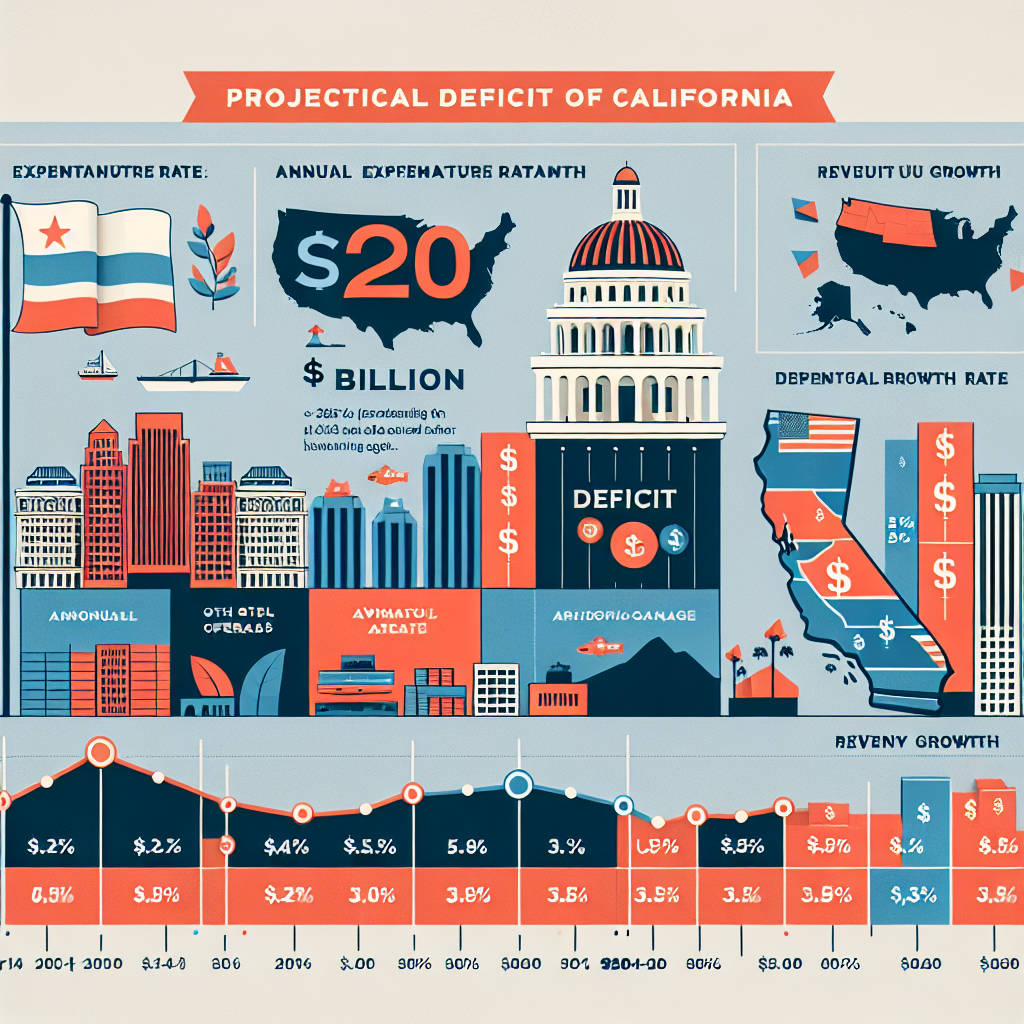
According to the California Legislative Analyst’s Office (LAO), California may be facing a $20 billion deficit in the 2025-26 fiscal year. This projection stems from a higher annual expenditure growth rate of 5.8% compared to the average of other areas at 3.5%, while revenue growth is below historical averages, slightly higher at 4%. It is unlikely that the revenue growth will catch up with the escalating expenditures.
In the 2024-25 fiscal year budget, the State Legislature managed to resolve the budget issues for that year and made proactive decisions to address the following year’s budget. This includes solutions for around $11 billion in expenditures and $15 billion (incorporating $5 billion in temporary income and withdrawing $7 billion from the state emergency fund) to balance the 2025-26 fiscal year budget.
The report highlights that income growth has outpaced overall economic development in California. The state’s economy has been largely sluggish in the past two years, with soft labor markets and consumer spending. However, the incomes of high earners have been rapidly increasing, leading to robust growth in California workers’ total wages and a subsequent rise in income tax revenue. With this year’s tax withholding totaling 10% higher than the previous year.
The growth is primarily stimulated by the stock market, posing uncertainties. It is anticipated that stock market earnings will exceed the budget by $7 billion in 2023-24 and 2025-26. Income tax revenue is expected to be 20% higher by the end of this year compared to the past two years.
There are two potential pathways for a broader economic recovery: lowering interest rates and expanding funds available for loans and investments. A key factor in California’s recent economic downturn was the Federal Reserve’s efforts to curb inflation by raising interest rates and reducing money available for loans and investments. However, the Federal Reserve has recently shifted its policy. Another potential pathway is the continuous strength of the stock market.
On November 15th, Legislative Analyst Gabriel Petek emphasized in a press release that the forthcoming report provides an independent evaluation and analysis of the budget situation for the California Legislature. Petek affirmed the nonpartisan nature of their income estimates, offering an alternative trustworthy basis for budget decisions, potentially differing from the Governor’s proposals. He highlighted that their process aims to facilitate the Legislature in assessing their risk tolerance, suggesting using the median income from their report for forecasting.
Established in 1941, the LAO was created by the state legislature to seek independent sources of information and analysis. Petek noted that the office’s existence inspired similar establishments in states nationwide, eventually leading to the establishment of the Congressional Budget Office in 1974. This independence is crucial for promoting informed debate, ensuring transparency, and maintaining the integrity of the state budget process.
The $20 billion budget deficit may undergo changes in the coming months, but California faces escalating expenditure commitments and revenue heavily reliant on uncertainties brought by high-income earners.
Petek mentioned that California has several expenditure commitments for expanding government projects, in addition to costs exceeding $8 billion from recent ballot measures. The Governor has proposed some expenditure plans, including tax exemptions for Hollywood, funding for government lawsuits following policy changes after Trump’s presidency, and potentially establishing disaster relief funds. He suggested that the Legislature and Governor may need to cut projects, utilize savings, or implement new taxes to secure additional funds for these changes.
Governor Newsom criticized Petek and his legislative office last year for overestimating the budget deficit. According to KCRA, Newsom’s spokesman H.D. Palmer stated that the government and the legislative office generally agree on a balanced budget, expenditure commitments, and uncertainties for the future.
“We believe the analyst’s report serves as a reasonable starting point for discussing next year’s budget,” Palmer said. However, he highlighted the potential impacts of Trump’s administration on California’s finances, questioning how tariff changes and other federal policy shifts may affect industries like technology and agriculture, remaining as unknown variables.
Democratic State Assembly Speaker Robert Rivas emphasized in a statement that California must prepare for any challenges, including those from Washington. He stressed that now is not the time to expand projects but to protect and uphold measures that truly benefit all Californians.
Democratic State Senate Interim President Mike McGuire stated the need to trim expenses, underlining the importance of maintaining a balanced budget and ensuring policies are in place to make residents’ lives more affordable.
Republican Vice Chair of the Senate Budget Committee Roger Niello stressed the importance of oversight, particularly in the face of a sizable deficit, implying a stringent assessment of existing plans. He questioned the efficacy of plans that have not been effective, expressing doubts about their sustainability.
Republican House Leader James Gallagher remarked on California being the state with the highest tax rates in the nation, yet still facing billions of dollars in deficits. He criticized the Democrats for putting the state in a predicament, expressing skepticism about their ability to address issues without causing significant distress for Californians.