
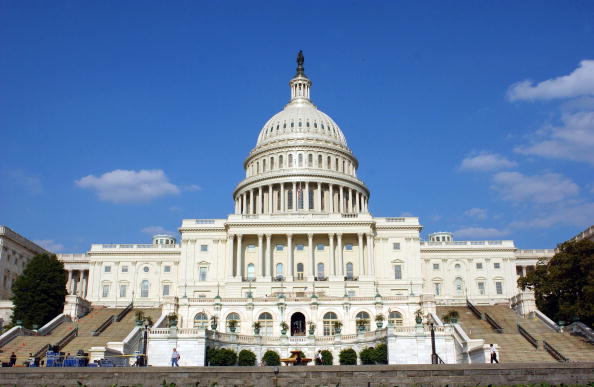
The Republican Party is expected to continue to control the House of Representatives, meaning that when Donald Trump returns to the White House in January next year, the GOP will have full control over both the executive and legislative branches.
According to Decision Desk HQ, the GOP is projected to win the 219th seat in the House on Monday, surpassing the 218 seats needed to become the majority party in the chamber.
This outcome marks a significant victory for Republican House Speaker Mike Johnson, who has risen from an obscure congressman to become the leader of the House Republicans, playing a crucial role not only in legislation but also in campaigning.
Several vulnerable incumbent Republican representatives successfully defended their seats, such as Representatives Don Bacon and David Valadao, while defeating some vulnerable Democratic incumbents. State Representative Ryan Mackenzie defeated Democratic Representative Susan Wild, and businessman Rob Bresnahan defeated Democratic Representative Matt Cartwright.
These results offset some losses for Republicans.
Several New York Republican congressmen, including Anthony D’Esposito, Marc Molinaro, Brandon Williams, and Oregon Republican Representative Lori Chavez-DeRemer, all failed in their reelection bids.
While some races in California are still being tallied, the final seat count in the House of Representatives remains uncertain. However, Decision Desk HQ estimates that the likelihood of Republicans holding a narrow majority in the new House of Representatives is over 99%.
Edison Research and the Associated Press have not yet predicted control of the House of Representatives. They both estimate that Republicans already have at least 214 seats, with 2 seats successfully flipping from Democrats. Democrats have at least 205 seats, with 16 seats still undecided.
Last Wednesday, during a victory speech in Palm Beach, Florida, Trump also praised House Speaker Johnson, saying, “It looks like we will continue to control the House of Representatives. I want to thank Mike Johnson. I think his work has been outstanding.”
House Majority Leader Steve Scalise and House Republican Conference Chair Elise Stefanik also celebrated the victory at Mar-a-Lago with Trump, indicating solid support for the Trump administration among House Republicans.
For months, House Republican leaders have been working with Senate colleagues to draft legislative plans in order to swiftly submit them to Trump for signing into law within the first 100 days of complete Republican control.
These legislative plans include extending tax policies passed during Trump’s first term, increasing border wall funding, repealing climate initiatives, and promoting school choice, among others.
However, Republican legislative agenda may face numerous obstacles.
With only a narrow advantage in the House of Representatives and continued internal party disputes in the past two years, the ousting of former House Speaker Kevin McCarthy has led to a series of chaotic situations. Concerns linger that similar turmoil may unfold under Johnson’s leadership.
Johnson has explicitly stated that if Republicans achieve full control, he will seek to be Speaker again. However, he has faced opposition from some staunch conservatives earlier this year when Representatives Marjorie Taylor Greene and Thomas Massie attempted to oust him.
To retain the speaker’s gavel, Johnson will need to secure a majority vote when the House reconvenes on January 3, 2025, requiring near-unanimous Republican support.
The election results are likely to impact the final weeks of the 118th Congress legislative agenda.
Hardline conservative Republicans may try to delay necessary bills for consideration until the new year, when the Republican Senate and White House could support more conservative policies and lower spending levels.
(This article references reports from Reuters and The Hill)