
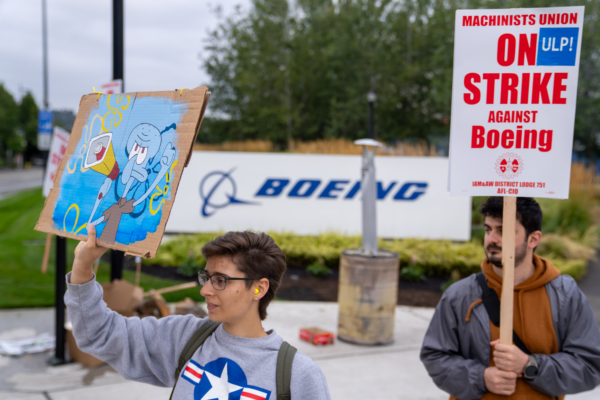
Last Friday, following a strike by around 33,000 machinists, Boeing has halted all recruitment and taken significant actions to conserve cash. This includes considering temporary furloughs for many employees, managers, and executives in the coming weeks.
According to Reuters, Boeing’s Chief Financial Officer Brian West said, “The strike poses a serious threat to our recovery, and we must take necessary actions to preserve cash and sustain our collective future.”
In addition to the freeze on recruitment at all levels within Boeing, the aircraft manufacturer has also suspended most business-related travel for employees, paused non-essential capital expenditures and facility expenses, and plans to “significantly reduce supplier spending, halting most supplier purchase orders for the 737, 767, and 777 projects.”
Meanwhile, the new CEO, Kelly Ortberg, is seeking solutions to reach a deal acceptable to Boeing union members. Last Thursday, they overwhelmingly rejected a proposed contract by 94.6%, a contract that would have raised their wages by 25% over four years. Additionally, 96% of participating members voted in favor of the strike.
According to the Ohio-based newspaper Weirton Daily Times, Boeing stated that the current average annual salary for machinists is $75,608 (excluding overtime pay), which would increase to $106,350 at the end of the four-year agreement. Under the rejected contract, workers would have received a one-time compensation of $3,000 in addition to the wage increase, and a reduction in healthcare cost-sharing.
The strike by 33,000 machinists is not expected to immediately disrupt airline flights, but it is anticipated to halt production of Boeing’s best-selling aircraft.
The striking machinists are responsible for assembling Boeing’s popular 737 MAX passenger jet, as well as the 777 jet and 767 freighter. The strike may not affect the production of the Boeing 787 Dreamliners, which are manufactured by non-union workers in South Carolina.
The halt in aircraft production could come at a high cost for struggling Boeing, depending on the duration of the suspension. Boeing’s last strike occurred in 2008 and lasted for eight weeks, resulting in approximately $100 million in deferred revenue losses per day. The 1995 strike lasted for 10 weeks.