
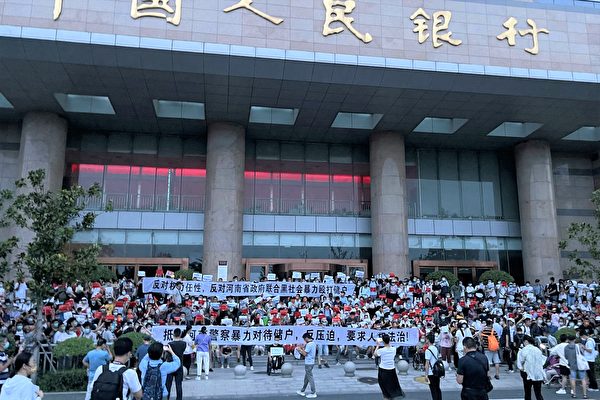
In news from Epoch Times on September 1, 2024, more than sixty rural banks in China have either dissolved or merged since the beginning of 2024. Experts say this reflects the weakest link in China’s debt-driven growth model, as the heavily indebted rural banks in China have far-reaching social impacts beyond their own size.
According to Lynette H. Ong, a China researcher at the US think tank Asian Policy, the most vulnerable segment in China’s financial sector is the 3,800 small and medium-sized regional banks located in rural areas, including urban commercial banks, rural commercial banks, town banks, and rural credit cooperatives. These smaller banks, with total assets of around 55 trillion yuan, account for 13% of the total bank assets.
Over the years, these small banks have accumulated a significant amount of non-performing loans related to real estate. Particularly vulnerable are the smaller rural banks as they rely solely on local depositors’ savings. Additionally, Chinese banking regulations prohibit them from establishing branches or offering online services to clients registered outside their province, leading them to cooperate with government-related projects, especially in lending to real estate developers and projects, exposing them to the current real estate crisis.
Some smaller banks have disclosed that up to 40% of their loan portfolios consist of non-performing loans.
For the past two decades, real estate has dominated China’s debt-driven growth model, accounting for 23% to 30% of the total Chinese economy.
With the Chinese Communist Party setting “three red lines” to restrict banks from extending low-cost loans to the real estate sector, the funding chain for property developers has been severed. The Chinese real estate market started to rapidly decline around 2021, with some major developers declaring bankruptcy or filing for restructuring.
The funds that have been driving China’s rapid urbanization and extensive construction mainly come from ordinary people who deposit their lifelong savings in Chinese banks. It is only now that these household depositors and retail investors who ventured into complex financial products promising high returns are realizing that their money has been channeled into risky real estate projects.
An article in The Economist in July stated that “cleaning up this mess is an extremely challenging task. Many of these (small) banks were established to serve small businesses, especially in the poorest regions of China. However, banks drowning in toxic debts now struggle to provide new loans to businesses, which in turn could harm fragile businesses and local economic growth.”
The worrying aspect for the Chinese authorities is that the failure of underperforming small banks may pose a threat to social stability. A large-scale fraud at a rural bank in Henan province led several banks to freeze deposit withdrawals in 2022, forcing depositors to take to the streets to demand a resolution. Authorities subsequently dispatched police to maintain order and arrest protesting depositors.
According to Lynette H. Ong, the social impact of this incident has exceeded the expected impact based on their asset size.
She mentioned that the expansion and contraction of rural banking institutions in China reflect the growth cycles and economic downturns of the country over the past few decades. The Chinese government tends to allow local banking institutions to proliferate during prosperous times to facilitate credit expansion. During rapid expansion periods, these smaller lending institutions are quickly established, often with corporate governance and reserve requirements being considered only afterwards. When the economy falters, Chinese banking regulatory agencies are forced to clean up the aftermath.
After this event, Chinese citizens no longer trust the government to guarantee their savings, leading to a sense of distrust in the banking system.
A Reuters follow-up report at the end of June mentioned that some depositors involved in the rural bank collapse in Henan faced unusually harsh treatment by authorities—being detained for months instead of the previous few days. This may reflect the growing sensitivity of Chinese officials to an increasing number of economically related protest activities.