
For over a year, the question of whether the U.S. economy is heading towards a recession has been a focal point of economists and the media. With the decline in U.S. employment data, rumors of an impending economic recession are not likely to disappear in the short term.
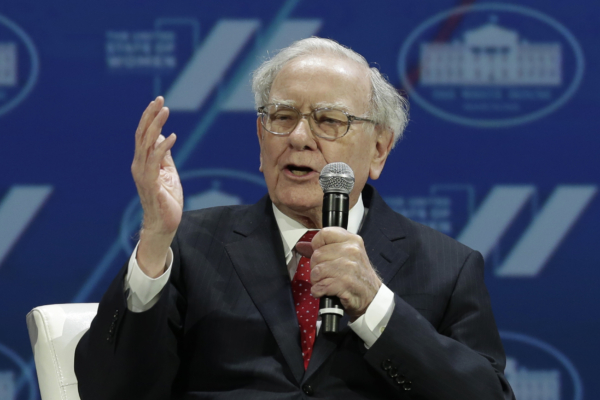
Regardless of whether or not a recession is on the horizon, it never hurts for the average person to make some preparations. Throughout the past century, the United States has experienced over a dozen economic recessions, some lasting as long as a year and a half. Reflecting on Warren Buffett’s remarks on economic downturns offers insights into how this renowned investor and philanthropist approaches recessions.
Earlier in August, Goldman Sachs raised the probability of a U.S. economic recession from 15% to 25%. However, Jan Hatzius, the chief economist at Goldman Sachs, stated in a report on August 17th that they have now lowered the likelihood from 25% to 20%, mainly due to data from July and early August not showing signs of a recession since August 2nd.
Morgan Stanley, in an article on August 15th, indicated that they have increased the probability of a U.S. and global economic recession starting by the end of 2024 from 25% in July to 35%.
Investment research firm BCA Research also believes that the economy is teetering on the edge of a recession, anticipating an imminent rate cut by the Federal Reserve but not sufficient to steer the market out of a recession.
Garry Evans, the chief global asset allocation strategist at BCA Research, highlighted signs of economic slowdown, including the deteriorating labor market in the United States. The U.S. Department of Labor reported a slight increase in the unemployment rate in July to 4.3%, the highest level since October 2021, with a key indicator of U.S. manufacturing activity hitting an eight-month low in the same month.
Evans stated, “Several rate cuts won’t prevent an economic recession. The average recession lasts for 10 months… It takes about a year for Fed rate cuts to genuinely start revitalizing the economy.”
“The market expects the federal funds rate to be 3% by the end of next year. It is currently at 5.3%. This won’t happen unless there is an economic recession,” he added.
Typically, when a country’s real GDP declines for two consecutive quarters, an economic recession is declared. While the U.S. has not officially slipped into a recession yet, a survey by Affirm revealed that about three-fifths of Americans believe the U.S. economy is already in a recession.
Gobankingrate compiled several actions suggested by Buffett to take before an economic recession hits.
As reported by financial website Motley Fool, Buffett told CNBC’s Becky Quick earlier in 2023 that his strategy ahead of an economic recession is to “have plenty of cash around so that people can continue to make wise decisions rather than be forced to make decisions.”
While individuals may not accumulate billions of dollars in cash like Berkshire Hathaway, taking measures such as avoiding assets that may tie up your cash is prudent.
During an economic recession and a bear market, blue-chip stocks suffer losses like other stocks, so caution should be exercised when investing in a company facing a slowdown and plummeting stock prices.
Buffett once said, “Most great companies are going to be worth more money in 5, 10, and 20 years.”
Buffett advised CNBC to stick with the “business as usual” approach before an economic recession, avoid abruptly halting investments, and refrain from over-investing by buying stocks one wouldn’t usually consider.
“We just want to buy businesses at reasonable prices run by people we like and trust. We’ll continue to do that,” Buffett told CNBC.
Prior to an economic recession, individuals often tend to park all or most of their funds in low-risk checking and savings accounts seeking a safe financial harbor, though funds in these accounts have minimal growth potential.
Buffett once wrote that stocks “will almost certainly outperform cash over the next decade.”
(Disclaimer: This content is for general informational purposes only and is not intended as a recommendation. Epoch Times does not provide investment, tax, legal, financial planning, real estate planning, or other personal finance advice. For specific investment matters, consult your financial advisor. Epoch Times does not assume any investment responsibility.)