
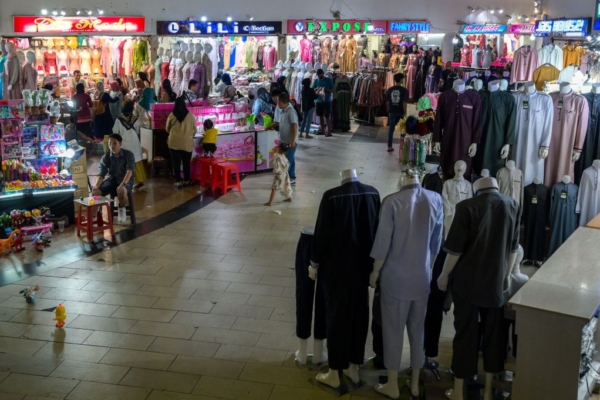
A large number of Chinese products have flooded into Indonesia, dealing a heavy blow to local manufacturers and prompting the Indonesian government to seek ways to both appease domestic producers and avoid angering its largest trade partner.
The influx of low-cost clothing and textile products from China, coupled with a surge in online shopping, has exacerbated the situation, leading Indonesian clothing manufacturers (including both home-based workers and factories) to seek assistance from the government.
Zulkifli Hasan, the Minister of Trade of Indonesia, stated that the massive imports have led to the closure of textile factories and large-scale layoffs, creating a very serious situation.
According to the Nusantara Trade Union Confederation, from January to July 2024, at least 12 textile factories have ceased operations, resulting in over 12,000 workers being unemployed.
Neng Wati, the manager of manufacturing company Asnur Konveksi, mentioned that in the region of Bandung in West Java, known for its batik, handwoven fabrics, and silk, the import of Chinese products has caused thousands of workers to lose their jobs and stable income.
He said, “Now they take turns working; the number of workers remains the same, but the work is divided, not everyone has a share; some have been off work for two weeks, some for a month.”
Nandi Herdiaman, the head of a local small business organization, stated that many workers have shifted to e-commerce to make ends meet after suffering a heavy blow from the COVID-19 pandemic. Only 60% of the association’s 8,000 members are currently working.
The industry organization indicated that the biggest challenge currently comes from the influx of cheap imports from China. In the past two months, domestic industrial production has dropped by 70%.
Protests by workers in Jakarta prompted Zulkifli to announce in July that the government will impose import duties of up to 200% on certain products from China, particularly textiles, clothing, footwear, electronics, ceramics, and cosmetics, to protect local businesses and prevent layoffs.
Zulkifli stated, “If the United States can impose 200% tariffs on imported ceramics or clothing, we can do the same,” aiming to ensure the “survival and development” of micro, small, and medium enterprises and industries.
Furthermore, in December of last year, Indonesia issued a regulation to strengthen supervision over more than 3,000 imported goods, including food ingredients, electronic products, and chemicals. The regulation was later revoked after domestic industry feedback indicated that it hindered the flow of imported materials needed for local production, prompting the government to consider significantly increasing tariffs.
However, China is Indonesia’s largest trading partner, and bilateral trade in 2023 is expected to exceed $127 billion. Imposing higher tariffs could lead Chinese manufacturers to invest in Indonesia and potentially trigger retaliatory actions from the Chinese government. Consequently, the Indonesian government announced the establishment of a special task force in July to monitor and address issues related to certain imported products.
Jany Suhertan, the general manager of PT Eksonindo Multi Product Industry, a company in West Java producing backpacks and bags, expressed hope for the government to raise import duties on finished products from China but not on the raw materials required for Indonesian production.
Nearly half of the raw materials used by his company come from China. He mentioned, “I disagree with imposing higher tariffs on raw material products because the government should protect the supply chain. If the supply chain is insecure, it will affect production.”
In Thailand, industry groups are also increasingly concerned about the influx of cheap Chinese products, which severely harm the competitiveness of local Thai producers.
The Thai government implemented an emergency measure imposing a 7% value-added tax on all imported products, changing the previous regulation that taxed only imported products with prices exceeding 1,500 Thai Baht (about $44). This policy, effective from July to December this year, aims to give the government time to study the issue and find longer-term solutions.
According to RFI on June 28, “From Brazil to Vietnam, emerging countries are worried about the overwhelming influx of Chinese products.” Due to overcapacity in multiple industries, China has increased exports to countries in the Global South, leading these countries to raise tariff barriers to protect their economies. For example, in the steel industry, as China’s real estate sector slowed down, the country sought to sell excess steel stocks overseas. In 2023, Chinese steel exports grew by 33%, prompting countries like Chile, Brazil, and Mexico to immediately raise tariffs, while India, the Philippines, Vietnam, and Turkey initiated anti-dumping investigations.
(The article was adapted from a report by The Associated Press)