
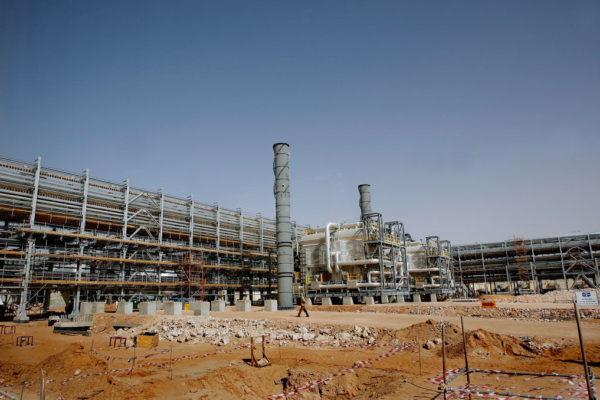
Saudi Arabia announced on Sunday that a east-west oil pipeline, which was attacked during the conflict with Iran, has now fully restored its transport capacity. This channel, which exports oil through the Red Sea, was quickly restored, helping to alleviate the pressure Iran’s blockade on the Strait of Hormuz has brought to Saudi Arabia and the global oil market.
According to Saudi Arabia’s energy ministry, the crude oil transport capacity of the East-West Pipeline has been restored to around 7 million barrels per day. The kingdom recently assessed the damages caused to its energy sector during the Iran conflict a few days ago.
The energy facilities and the east-west pipeline that were attacked during the conflict have now been repaired and their operational capacities restored, the Saudi energy ministry stated on Sunday.
Saudi Arabia did not specify who was behind the attack, but in recent weeks, the kingdom has intercepted numerous missiles and drones launched by Iran.
These attacks have disrupted the operations of crucial oil, natural gas, refining, petrochemical, and power facilities in Riyadh, the Eastern Province, and the Yanbu Industrial City.
Saudi Arabia stated last Thursday that these attacks led to a reduction of approximately 600,000 barrels per day in its oil production capacity, and decreased the transport volume of the east-west pipeline by about 700,000 barrels per day.
During the closure of the Strait of Hormuz, the east-west pipeline remained Saudi Arabia’s sole crude oil export channel. According to Reuters, Iran launched an attack on this oil pipeline shortly after agreeing to a ceasefire with the United States and Israel.
The production from the Manifa oil field has also been restored, following a previous attack that led to a daily production decrease of around 300,000 barrels.
The restoration of the full capacity of the Khurais oil facilities is still ongoing, after the facility was attacked, further reducing Saudi Arabia’s daily production by about 300,000 barrels.
The energy ministry stated that the swift recovery of these oil facilities’ capacities will enhance the “reliability and sustainability of local and global market supplies.”
Since the conflict with Iran erupted at the end of February, Saudi Arabia has tripled the export volume of crude oil shipped from its Red Sea ports to cope with the nearly complete closure of the Strait of Hormuz.
(This article references reports from Reuters.)