
On Saturday, April 11, Italy confirmed that it has implemented multiple restrictions on China’s Sinochem Group in order to address the governance dispute of Pirelli, in order to protect Pirelli’s right to enter the US market and to avoid the US imposing restrictions on Pirelli due to Sinochem’s involvement.
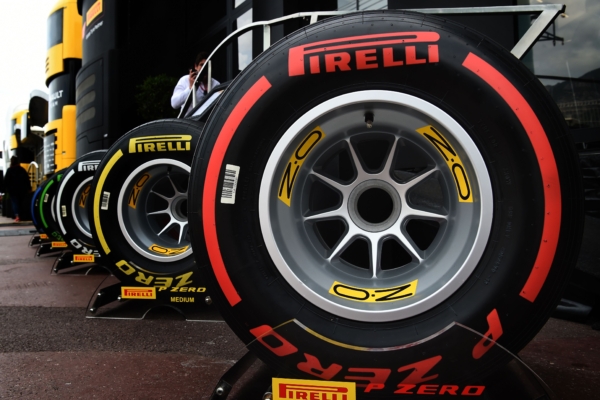
Pirelli, as a global high-end tire manufacturer, serves luxury car brands such as Ferrari, Lamborghini, and provides tires for F1 racing cars. The United States is a key market for Pirelli’s high-end tire business, with approximately a quarter of its sales coming from the US.
Controlled by Beijing, Sinochem Group is Pirelli’s largest shareholder, while Marco Tronchetti Provera’s Camfin company in Italy holds about 26% of the shares and plans to increase its stake to 29.9%.
In a statement, Pirelli indicated that as long as Sinochem Group holds more than 9.99% of Pirelli’s shares, the restrictions will remain effective. This indicates that Italian authorities hope Sinochem Group will reduce its 34% stake.
The Italian government invoked the “golden power” rule and approved the latest restrictions on Sinochem. This rule gives Italy the power to protect strategically important assets.
After shareholder negotiations failed to reach a compromise, the Italian government chose to limit Sinochem Group’s involvement in the Pirelli tire company’s board of directors. The government determined that Sinochem Group can only recommend up to three candidates to the board of Pirelli, and these candidates cannot hold the positions of chairman or CEO. While there is no nationality restriction for the candidates, at least two out of the three candidates must be independent of Sinochem Group.
Currently, the Pirelli board of directors has 15 members, with 8 investors from China.
Pirelli will hold a shareholders’ meeting in June to reorganize the board of directors. Pirelli outlined that members of Sinochem Group’s board cannot hold senior positions in Pirelli, such as chairman or CEO.
The Italian government reiterated that based on the regulations implemented in 2023, Sinochem Group must avoid exerting any influence on Pirelli. Pirelli also stated in the announcement that there is no need to share sensitive information with Chinese investors.
The newly implemented restrictions also require Sinochem Group to inform the Italian government of any share transfers, with the transferee not allowed to be related to or controlled by the Chinese government.
In March of this year, the US Department of Commerce officially implemented new regulations prohibiting the sale of internet-connected cars in the US that use critical hardware and software manufactured in China. Although Pirelli is an Italian brand, its “Cyber Tyre” technology, which allows real-time data transmission between embedded sensors and vehicle systems, is seen as a potential security risk by the US. Due to Sinochem Group holding around 34% of Pirelli’s shares and becoming the largest shareholder, the tire giant faces the risk of being shut out of the US market.
Both Pirelli and Camfin have urged the Italian government to impose restrictions on Sinochem Group, stating that Sinochem’s shareholding status complicates Pirelli’s expansion plans in the US, as the US government is tightening restrictions on Chinese automotive technology. In January of this year, Camfin also stated that it would not renew the shareholder agreement with Sinochem Group, paving the way for a new round of Italian government intervention.
Italian authorities first intervened in Pirelli’s affairs in June 2023, imposing restrictions on its governance structure and the role of Sinochem Group. At that time, the Italian government stated the need to protect the strategic technology and data related to Pirelli’s “Cyber Tyre” sensors.
The “Cyber Tyre” technology is of strategic importance as it expands Pirelli’s business from manufacturing to vehicle software and data fields. This system embeds sensors in tires and integrates them with Pirelli’s proprietary software, transmitting detailed information about tire conditions and road conditions to vehicles.
Pirelli also mentioned that this technology has been launched and is further developing on high-end and luxury vehicle platforms, and can be applied to road monitoring infrastructure.
Since Prime Minister Meloni took office, Italy has gradually distanced itself from Beijing and exited the Belt and Road Initiative.
(This article partly references reports from Reuters and Bloomberg)