
After the temporary ceasefire agreement between the US and Iran for two weeks, global markets have been in turmoil following Iran’s immediate accusations of US violations of the agreement. On Wednesday, the US stock market surged to its biggest single-day gain in a year due to the ceasefire optimism, with the Dow Jones Industrial Average rising by 1,325.46 points, a 2.85% increase, marking the best single-day gain since April 2025. The S&P 500 and Nasdaq indexes also rose by 2.51% and 2.8%, respectively.
However, after Iran accused the US of breaching the terms, international oil prices quickly rebounded from their earlier plunge. Both Brent crude and West Texas Intermediate oil saw increases of over 2.5% on Thursday, reaching around $97.14 and $96.96 per barrel, respectively.
Janiv Shah, Vice President of Commodity Markets at Rystad Energy, told CNBC that with oil prices below $100 per barrel, refiners should “take advantage of this window to resume more opportunistic purchasing.”
He added, “However, the transition period itself may pose the next challenge. If refiners postpone purchases due to expectations of further price drops while physical flows remain restricted, even as tensions ease, the tightness in product supply could worsen.”
In Asia on Thursday, after initial volatility at the opening, markets turned softer as risk aversion sentiment rose, leading investors to adopt a more cautious wait-and-see approach.
According to the latest data, the Nikkei 225 index in Japan fell by 0.56% to 55,991.52 points. The South Korean Composite Index (KOSPI) took the deepest hit, dropping by 1.5% to 5,784.21 points.
Both the Chinese and Hong Kong markets were under pressure, with the Hang Seng Index in Hong Kong declining by 0.75% to 25,699.18 points. The Shanghai Composite Index also fell by 0.7% to 3,967.26 points.
In Taiwan, the performance was relatively mixed, with the weighted index dropping slightly by 22.45 points (0.06%) to 34,738.93 points. However, the OTC index, representing small and mid-cap stocks, defied the trend by rising 3.82 points, a 1.11% increase.
Iran’s Parliament Speaker, Mohammad Bagher Ghalibaf, publicly stated that three points in Iran’s 10-point ceasefire proposal were violated by the US, including Israel’s continued strikes on Lebanon, a drone entering Iranian airspace, and Iran’s uranium enrichment rights being denied.
He bluntly expressed on social media, “Our deep-rooted historical mistrust of the United States is based on its repeated violations of various commitments—regrettably, this pattern is repeating itself.”
In response to these allegations, US Vice President JD Vance, during a visit to Hungary, commented, “Ceasefire agreements are always messy.”
Vance believes that Iran’s discontent with these three points actually demonstrates a high degree of consensus between the two sides on the remaining seven points of the agreement. He also noted that Washington still insists on not allowing Iran to enrich uranium, and that any ceasefire arrangement covering Lebanon was not originally included in the agreement.
He also questioned Ghalibaf’s statements and even remarked, “I actually wonder about his English comprehension because some of his remarks don’t align at all with the background of our negotiations.”
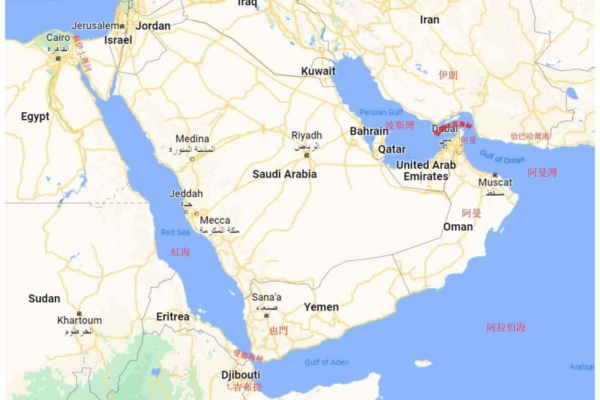
While the US and Iran are under a temporary ceasefire, according to independent monitoring data from maritime intelligence agency Windward, the number of ships passing through the Strait of Hormuz on Wednesday was roughly similar to pre-ceasefire levels.
Windward stated that all ships passing through the strait still need to coordinate with Iranian authorities. Iran demands hefty toll fees in cryptocurrency from ship owners for transporting crude oil, up to $1 per barrel. For a supertanker capable of carrying 3 million barrels of crude, this means an additional cost of up to $3 million.
Windward reported that on Wednesday, Iran continued to issue radio warnings to ships lingering in the Gulf region, stating that unauthorized passage would be met with attacks. Various signs indicate that Iran is attempting to maintain control of the waterway during ceasefire negotiations.
The agency predicted that April 8 to 10 is a critical assessment window, where if daily ship passages increase and no incidents occur, major operators will start to reconsider risks. April 11 to 14 will be the decision-making window for top operators, depending on the potential extension of the ceasefire agreement, the posture of the Iranian Revolutionary Guard Corps (IRGC), US Navy escort policies, and more.
“Even under the most ideal circumstances, it will take several weeks to transport stranded natural gas and crude oil, and it will take several months for global trade to return to pre-crisis levels. The conditions proposed by Iran—including compensations, US military withdrawal, recognition of uranium enrichment rights, and lifting all sanctions—remain unresolved. Given that the Iranian Revolutionary Guard Corps still substantially controls the strait, full normalization will not be achievable in the short term,” wrote Windward in its report.