
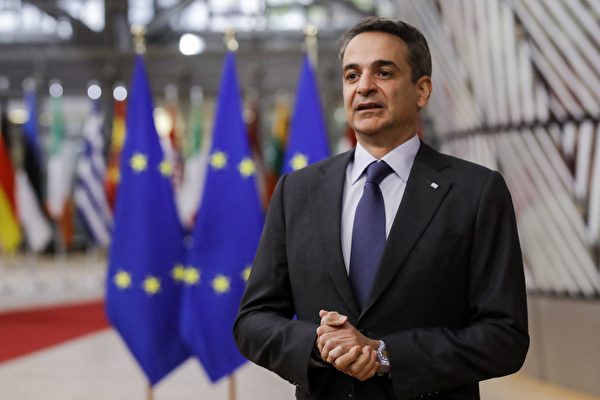
On Wednesday, April 8th, Greek Prime Minister Kyriakos Mitsotakis announced that starting from January 1, 2027, children under the age of 15 will be prohibited from using social media. This decision aims to address the increasing levels of anxiety, sleep issues, and social media addiction among teenagers.
According to a survey conducted by the Greek polling agency ALCO in February, about 80% of respondents supported this ban. The Greek government had previously banned the use of mobile phones in schools and established parental control platforms to limit teenagers’ screen time.
In a video statement, Mitsotakis stated that Greece will be one of the first countries to take such action. He added that before making this decision, he had consulted with several parents. The goal is to push the EU to move in the direction of this legislation.
Mitsotakis also wrote to the highest EU leader, President of the European Commission, Ursula von der Leyen, urging the EU to take coordinated actions. He believes that relying solely on individual country measures is insufficient to protect minors from the harms of internet addiction.
In his letter, he proposed the establishment of a “digital age of adulthood” at 15 within the EU, mandatory age verification and regular reviews for all platforms, and the creation of a unified enforcement and penalty framework. He called on the EU to establish a unified system by the end of 2026.
Greek Minister of Digital Governance, Dimitris Papastergiou, stated that social media platforms must be able to restrict users under 15 starting from January 1, 2027. Failure to comply may result in fines specified in the EU Digital Services Act, with penalties of up to 6% of the platform’s global revenue.
Australia became the world’s first country to ban children under 16 from using social media in December 2025, imposing restrictions on platforms including TikTok, YouTube owned by Alphabet, and Instagram and Facebook owned by Meta.
The Greek Parliament will legislate on this ban in mid-2026. Other countries are also tightening regulations on social media, with the UK, Malaysia, France, Denmark, and Poland considering or implementing bans.
Greek Deputy Minister of State, Akis Skertsos, stated in a press conference that national legislation within EU countries is greatly influenced by the overall EU legislation. He emphasized that without an EU legislative framework, relying solely on national legislation would be ineffective.
The Greek government mentioned that currently, they cannot mandate age verification for these social media platforms. However, they recommend that these platforms utilize mechanisms established by the EU and Greece, and encourage parental involvement.