
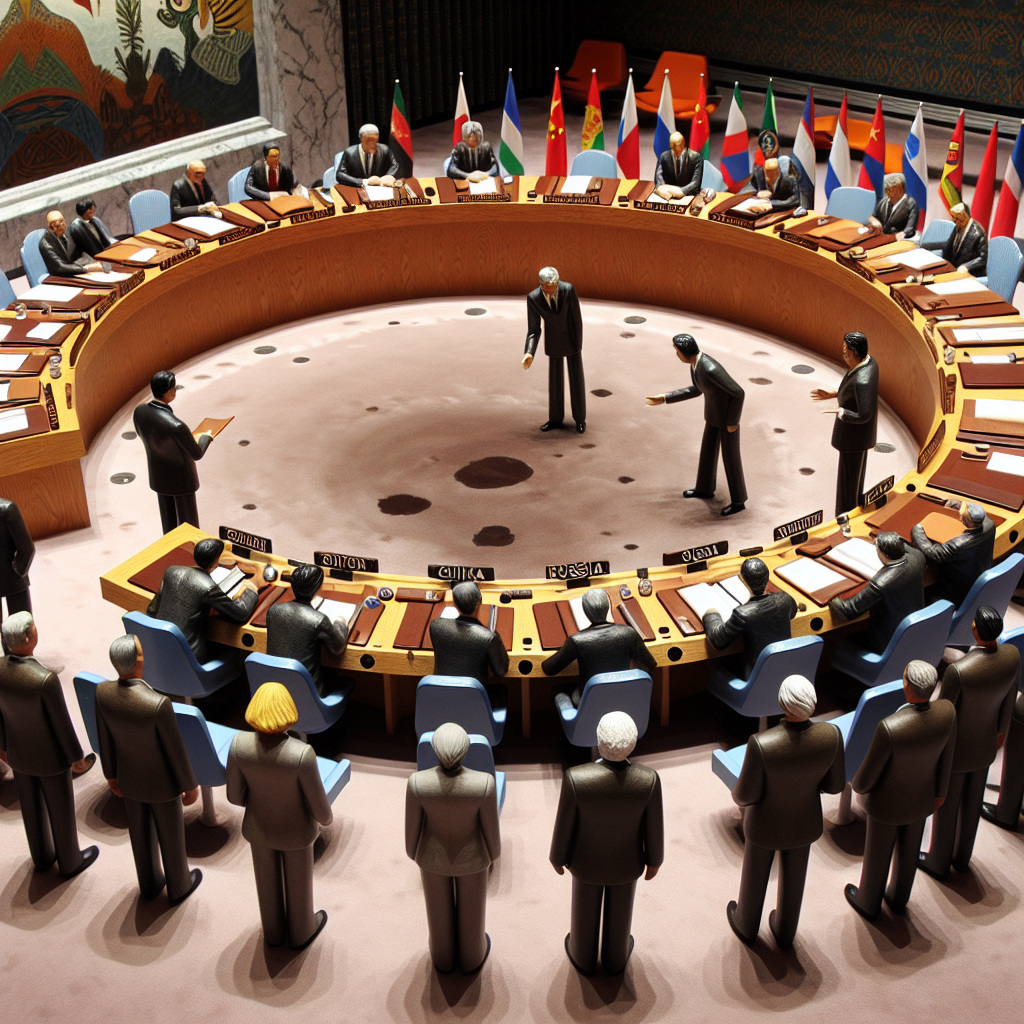
On Tuesday, April 7, a resolution draft regarding the situation in the Strait of Hormuz was vetoed at the United Nations Security Council, with both China and Russia casting opposing votes. The U.S. Ambassador to the UN criticized that China and Russia were siding with regimes attempting to coerce Gulf countries into submission through intimidation.
The resolution draft was submitted by several Gulf countries – Bahrain, Jordan, Kuwait, Qatar, Saudi Arabia, and the United Arab Emirates. In the Security Council vote, the draft received 11 in favor, 2 abstentions, and 2 against.
The voting took place before the deadline set by U.S. President Trump at 8 p.m. Eastern Time. Trump had demanded Iran to open the Strait of Hormuz, threatening to launch attacks on Iran’s power plants and bridges if they did not comply. Approximately one-fifth of the world’s oil is typically transported through the Strait of Hormuz, and Iran’s control of the strait during times of conflict has led to a surge in energy prices.
The resolution draft on the Strait of Hormuz previously weakened before being vetoed by China and Russia on Tuesday. The primary goal of the resolution was to try to secure abstentions from China and Russia, Iran’s two allies, rather than outright rejection. However, the outcome was disappointing. It is believed that even if the resolution had passed, it would have had limited impact on the ongoing conflict in Iran that has lasted five weeks.
Bahrain’s initial proposal to the UN called for authorization for countries to use “all necessary means,” including military action, to ensure the passage through the Strait of Hormuz and prevent any attempts to block the strait.
Among the 15 Security Council members, veto-wielding China, Russia, and France opposed authorizing the use of force. The resolution was subsequently modified to remove all references to offensive action, authorizing only the use of “all necessary defensive means.”
According to the published resolution draft, it reiterates that under international law, including the United Nations Convention on the Law of the Sea, all ships and aircraft have the right of transit passage through the Strait of Hormuz. It calls for Iran to immediately cease related attacks, threats, and strikes on civilian infrastructure; and encourages countries to take defensive measures (such as escorting) to ensure maritime security, while adhering to international humanitarian law and human rights law.
The draft resolution also expressed concern about the risk of a spillover of the regional situation, urging de-escalation and a return to diplomacy, stating that the Security Council is prepared to take further action as necessary. It requests the Secretary-General to regularly report on the progress of the situation to ensure continued monitoring and follow-up.
After the vote, Bahrain’s Foreign Minister Zaayani expressed regret over the Security Council’s failure to pass the resolution draft.
Speaking on behalf of the Gulf countries targeted by Iran’s attacks, he stated, “The failure to pass this resolution sends the wrong message to the world and the global citizens – that the international community can ignore threats to international waterways without taking any decisive action.”
Zaayani emphasized that the Security Council must assume its responsibility and stressed that the resolution draft aimed to ensure freedom of navigation in the strait while calling on Iran to fully fulfill its obligations and cease attacking neighboring countries.
Prior to the vote, Zaayani once again condemned Iran’s actions of attacking commercial vessels and threatening to block the strait, noting that it seriously violates international law and Security Council resolutions, posing a real threat to regional and international peace and security.
He stressed that Iran’s use of critical waterways as a political pressure tool is persistent and systematic, and if left unchecked, will weaken the authority of international law and pose broader risks, including turmoil in energy markets and exacerbated food insecurity.
U.S. Permanent Representative to the UN, Mike Waltz, stated, “The Strait of Hormuz is vital to the world, and it must not be used as a hostage, blockaded, or weaponized by any country.”
He added that the U.S. stands with the Gulf people, while China and Russia stood on the side of regimes attempting to force Gulf countries into submission through intimidation.
Waltz further emphasized that Bahrain’s request was for a simple UN resolution – Iran must stop attacking the Gulf region. He added, “When key goods transport is obstructed, causing delays, the world will clearly see who chose destruction over fulfilling duties.”
China’s permanent representative to the UN, Fu Cong, and Russia’s permanent representative, Vassily Nebenzia, criticized the resolution draft as one-sided, not condemning the U.S. and Israel for waging war on Iran, stating that the U.S. and Israel have sparked an escalating global crisis. They stated last week at the Security Council that the most urgent task is to immediately halt military actions.
Observers suggest that China and Russia are taking biased stances because of their interests in Iran and wanting the U.S. and Israel to cease military actions.
China’s and Russia’s positions were already evident when Bahrain proposed a resolution on March 11 at the UN Security Council. At that time, Bahrain condemned Iran’s “outrageous attacks” on Gulf neighbors and called for Iran to immediately cease attacks.
The resolution passed in the Security Council with a vote of 13-0, with China and Russia choosing to abstain. The resolution also condemned Iran’s actions threatening international peace and security in the Strait of Hormuz and called for an immediate end to any actions impeding navigation.