
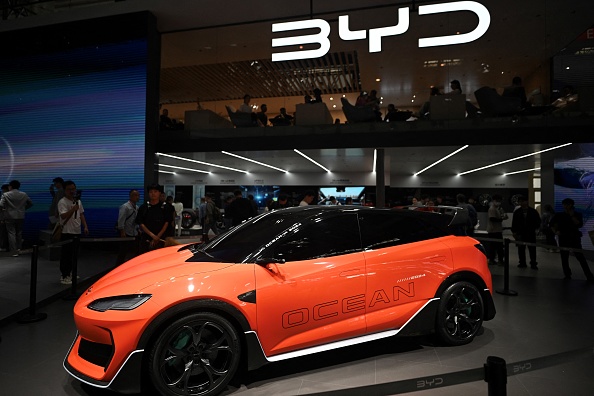
In recent years, the Chinese automotive industry has been in turmoil, with prices fluctuating and car companies facing a significant weakening in profitability. According to financial reports for the 2025 fiscal year, Japanese media found that the combined net profit of five car companies including BYD decreased by 16% compared to the previous year, marking the first decline since the outbreak of the COVID-19 pandemic in the 2020 fiscal year.
On April 7th, the Nikkei Asian Review reported that it had compiled data for five car companies with sales exceeding 1 million vehicles, which have maintained a consistent performance for over 5 years until April 4th. These companies are BYD, SAIC Motor, Geely Auto, Great Wall Motors, and GAC Group.
In the 2025 fiscal year, the combined sales revenue of these five companies increased by 7%, reaching around 2.12 trillion yuan, while the net profit decreased by 16% to about 60 billion yuan. This marked the first decline in net profit since the outbreak of the pandemic in the 2020 fiscal year.
The report noted that although sales revenue had been increasing for five consecutive fiscal years, the growth rate had slowed down. Among them, three car companies experienced a decrease in profit or losses.
The largest car company, BYD, saw a 19% decrease in net profit to 32.6 billion yuan, with a domestic business gross profit margin of only 17%, lower than the 19% of its overseas business. Geely Auto, under Zhejiang Geely Holding Group, also experienced a decline with a 8% drop in car sales revenue.
State-owned GAC Group reported a loss of 8.7 billion yuan (compared to a profit of 800 million yuan the previous year), marking its first loss since its listing in Hong Kong in 2010. The sales volume decreased by 14% to 1.72 million vehicles.
Furthermore, the overall profitability of state-owned SAIC Motor Group is also declining, with overcapacity in joint ventures and a sales volume of 4.5 million vehicles, down by nearly 40% from the peak of the 2018 fiscal year.
The report pointed out that with excessive competition in the automotive industry and the pressure of rising production costs and falling sales prices, the industry as a whole is facing a “small profit, high sales” situation, squeezing the profit margins of each enterprise.
With the declining profitability, the cash flow of each company is also deteriorating. Taking BYD as an example, it shows that operating cash flow from the main business decreased, and free cash flow (FCF) reported a deficit after 5 fiscal years.
The core difference between cash flow and free cash flow lies in “availability”. Cash flow reflects the total inflow and outflow of cash within a specific period, indicating liquidity, whereas free cash flow is the residual cash after deducting capital expenditures required to sustain the business, representing the funds that can be freely used by the company – a key indicator of its true profitability, debt repayment ability, and dividend capacity.
In mid-January this year, the China Association of Automobile Manufacturers forecasted that in 2026, China’s new car sales (including exports) would only grow by 1% compared to the previous year, indicating an overall stagnant trend in the industry.