
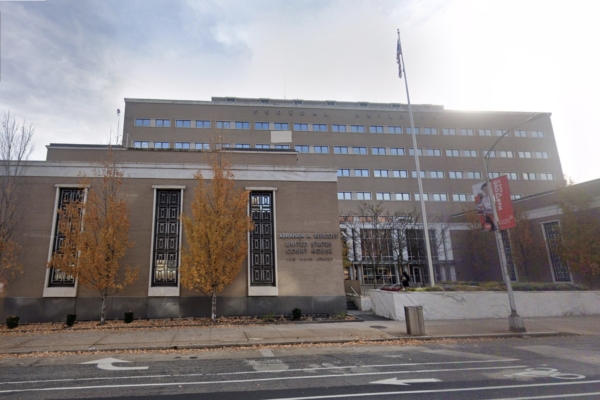
The federal prosecutor in Connecticut announced last Thursday that a Chinese man who had been residing illegally in the United States has been sentenced to 30 months in prison for his involvement in identity theft and luxury car fraud schemes. The 43-year-old Huachun Zheng, also known as Ri Yuan, lived in Queens, New York, and the case revealed how he and his accomplices used stolen identities to defraud car loans on a large scale and profit from reselling the vehicles.
According to court documents, Zheng and several co-conspirators had been stealing personal information and forging documents to fraudulently apply for car loans, purchase or lease luxury cars from dealers in Greenwich, Connecticut, and then transport the vehicles to New York for resale.
One notable case occurred on September 27, 2022, when Zheng used the identity of a victim, B.C., to secure a loan of approximately $94,742 from a bank to buy a 2019 Porsche Panamera. The car was later transported to New York for sale, but fortunately, it was recovered before being resold once the fraud was exposed.
Investigations revealed that this was not an isolated incident. In the same month, Zheng’s associates used similar methods to assume the identities of other victims to fraudulently purchase a Porsche Macan and a Mercedes-Benz S560, involving loans of hundreds of thousands of dollars and successfully reselling some of the vehicles for cash.
However, just over ten days before securing bank financing in September 2022, Zheng was arrested in Nassau County, Long Island, New York, for another fraud case. He was driving a Maserati Levante registered under B.C.’s name, with a loan of about $59,000 and plans to purchase jewelry using fake checks.
Prosecutors pointed out that Zheng’s criminal activities extended beyond car fraud. He and his accomplices had also used stolen identities to establish a shell company called “Shakuff Custom Glass Lighting,” open bank accounts, and commit check fraud. At least one victim, R.C., had his identity fully utilized, with several financial accounts opened in his name, severely damaging his credit score and facing false debts and legal repercussions.
Furthermore, in November 2022, Zheng and his co-conspirators once again fraudulently purchased a Lincoln Nautilus using a similar method, parked the car in his driveway, took photos, and attempted to sell it. Law enforcement officers found numerous stolen identity documents on his phone, and prosecutors estimated that the fraud network involved at least a dozen victims, including individuals, car dealerships, and multiple financial institutions. Most of the victims were Asian immigrants with good credit, burdened with substantial debts due to identity theft, causing severe damage to their credit records.
It is worth noting that Zheng had been using multiple aliases for a long time, such as using the name Jin Hao when arrested in New Jersey in February 2022 for obstruction of justice. He had also used the alias Yuan Ri to enter the United States with a counterfeit Chinese passport. Despite being ordered for deportation as early as 2007, Zheng had continued to live in the underground society in the U.S. for nearly two decades, engaging in black market activities and repeatedly involved in fraudulent activities.
Investigations also uncovered suspected drug-related photos and messages on his phone, indicating his activities might involve a broader illegal network.
On January 6, 2026, Zheng pleaded guilty to one count of conspiracy to commit bank and wire fraud, as well as one count of aggravated identity theft. Since his arrest in January 2025, he had been in custody. After serving his sentence, Zheng will face immigration deportation proceedings. Due to his complex nationality background (involving China and North Korea), the final destination for deportation remains uncertain, and he might continue to be held in administrative detention after completing his sentence.
In the sentencing memorandum, prosecutors emphasized that Zheng was not an occasional criminal but had systematically exploited loopholes in the U.S. financial and identity systems to profit over the long term, causing not only economic losses but also serious harm to the credit and life order of the victims, undermining societal trust.