
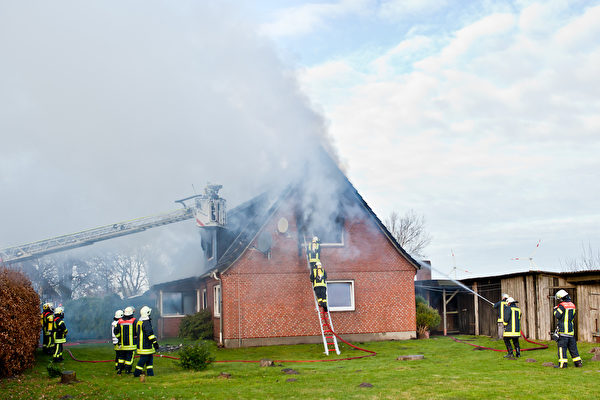
This week on Monday, the California Department of Forestry and Fire Protection (CAL FIRE) launched the annual statewide campaign “Harden Homes and Fire-Resistant Buffer Zones” to encourage and urge residents to take action in preparing to protect their homes and properties from wildfires.
Simple measures such as maintaining lawns, trimming trees, clearing dead vegetation, and using non-combustible landscaping materials near buildings can play a significant role in reducing the risk of wildfires.
CAL FIRE Director Joe Tyler stated, “Fire preparedness begins at home but does not stop there. When neighborhoods, communities, and local partners work together, we can collectively build a stronger California and better respond to wildfire disasters.”
“Data shows that when homes are hardened and fire-resistant buffer zones are properly maintained, the risk of wildfire damage is greatly reduced,” he said. “As more and more California residents take these measures, the safety and resilience of our communities will also increase.”
Fire experts believe that wildfires primarily threaten homes through three main pathways: direct flame contact, radiant heat, and flying embers (wildfire embers) igniting structures.
Especially, flying embers can travel up to 1 mile or even further, potentially igniting vulnerable areas such as rooftops, vents, decks, and gutters. Thus, disaster prevention for homes and their surrounding areas is crucial.
What is “Home Hardening”? It involves using fire-resistant and non-combustible materials to reduce the likelihood of a structure igniting. Specific measures include upgrading roofs, vents, windows, and exterior walls, sealing the space beneath eaves, and clearing potential ember entry points. Many effective home hardening measures come at a low cost, such as caulking gaps, installing ember-resistant vents, and keeping gutters free of debris.
In addition to fortifying the buildings themselves, creating “Defensible Space” is equally important, which involves establishing buffer zones around homes to slow or halt the spread of wildfires.
Defensible space is usually divided into three zones: 1) the area within 0-5 feet (about 1.5 meters) of the house that needs to be cleared of all flammable materials; 2) the area within 5-30 feet (about 9 meters) from the house where emphasis is on removing combustible vegetation; 3) the 30-100 feet (about 30.5 meters) fuel reduction zone aimed at reducing fire intensity.
CAL FIRE emphasizes that preventing wildfires is a shared responsibility, and “Harden Homes and Fire-Resistant Buffer Zones” are the most effective ways for individuals and families to reduce the risk of wildfires. Taking proactive measures can significantly increase the survival rate of one’s home in a wildfire and also contribute to the community and emergency response efforts. ◇