
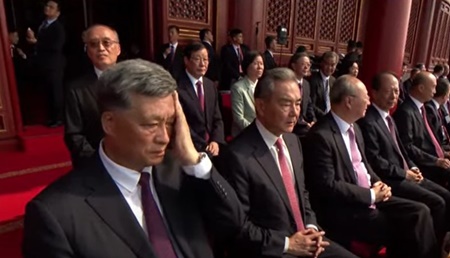
On April 3, Ma Xingrui, a member of the Political Bureau of the Communist Party of China (CPC) Central Committee, was officially announced to have been taken down from his position due to suspected serious violations of discipline and law, sparking attention to multiple corruption scandals allegedly involving a family-style corruption scheme.
Ma Xingrui’s career has been heavily involved in the military-industrial complex, with experiences in areas such as Guangdong and Xinjiang, suggesting a potential link between his corrupt activities and his professional background.
It is widely believed that Ma Xingrui may be implicated in corruption within state-owned military enterprises. Ma Xingrui previously served as the general manager of China Aerospace Science and Technology Corporation, and many of his former associates within the aerospace sector have also faced investigation and removal from their positions.
Following Ma Xingrui’s removal from his post, a series of officials linked to him or previously associated with him have been targeted for investigation or have disappeared from public view, suggesting a widening probe into corruption networks suspected of being controlled by influential figures like Ma Xingrui.
The aftermath of Ma Xingrui’s downfall has also resulted in a wave of purges within the political ranks he once governed, including officials from regions like Xinjiang and Guangdong, revealing the extent of the corruption ties that have permeated various levels of leadership under his influence.
The scandal surrounding Ma Xingrui’s alleged corruption involvement has generated significant public interest, particularly due to the suspected influence of a network of family members engaged in corrupt practices alongside him, potentially creating a complex web of illicit activities interwoven with political power.
Ma Xingrui’s ties to the city of Shuangyashan in Heilongjiang Province have also come under scrutiny, with reports indicating close connections between influential figures in the region and businesses in thriving economic hubs like Guangdong, where Ma Xingrui previously held key political roles.
In light of these developments, independent analysts have raised concerns about the far-reaching implications of Ma Xingrui’s case, suggesting that higher-ranking officials, including prominent figures like Hu Chunhua and Li Xi, could also come under scrutiny in the ongoing anti-corruption campaign spearheaded by authorities.
The intricate web of corruption allegations surrounding Ma Xingrui and his associates has drawn parallels to systemic family-based corruption networks, raising questions about the extent of their illicit activities and potential links to other senior officials in the political hierarchy.
As the investigation into Ma Xingrui’s case continues to unfold, the focus remains on the information he might disclose and the broader ramifications it could have on the political landscape, with speculations pointing to potential intervention from high-ranking officials such as Liu Jinguo, who holds key positions within the Communist Party’s disciplinary apparatus.
The unfolding scandal involving Ma Xingrui serves as a stark reminder of the systemic challenges posed by corruption within the ranks of the CPC, shedding light on the intricate networks of influence and power at play behind the scenes of China’s political elite.