
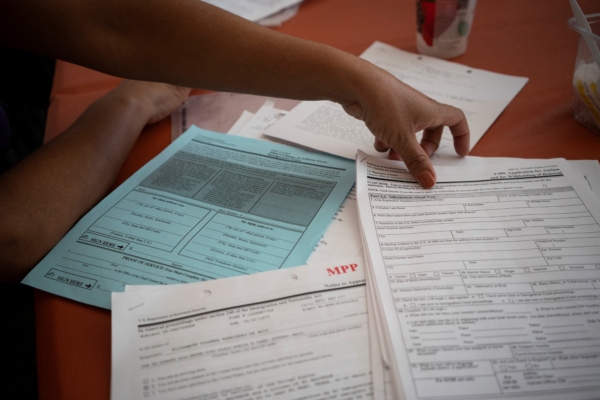
Lawyer Li Guofeng pointed out in an interview on March 18 that the I-589 form is the “cornerstone” of asylum applications, determining the foundation of the entire case. Many applicants only fill out a simple form without providing detailed personal statements and fail to submit preliminary evidence in a timely manner, leading the U.S. Citizenship and Immigration Services (USCIS) to deem the case weak and transfer it directly to immigration court, especially in cases of “credible fear” and individuals who receive deportation orders before their immigration court hearings.
Unlike practices from over a decade ago, Li Guofeng explained that nowadays, both USCIS and immigration courts require basic completeness of application materials and evidence supporting them at the first step. If the form is incomplete, contains errors, or lacks key details, it is difficult to remedy in the later stages and is highly likely to be rejected on procedural grounds rather than undergoing substantive factual scrutiny.
Li Guofeng specifically pointed out common issues among asylum applicants, such as incomplete information about countries transited and the submission of forms without detailed factual statements.
He mentioned that these situations could result in the suspension of work permits (EAD) and the entry into expedited removal proceedings. Currently, the timeframe from a master calendar hearing to a merits hearing can be as short as 3 to 4 weeks, creating intense time pressure. Many people are unable to supplement evidence in time and ultimately choose voluntary departure.
Li Guofeng introduced the process for affirmative asylum at USCIS: after submitting the I-589 form, applicants receive a receipt number and A number. When there is new evidence, they can directly mail it to USCIS (such as the Long Island asylum office in New York, which typically accepts submissions) or submit it in person by Friday before 12 p.m. at the window.
For defensive asylum in immigration court: electronic submissions can be made through the ECAS/eROP system (if able to log in) or in person at the 12th-floor window of the New York immigration court (26 Federal Plaza), with all materials needing to be simultaneously delivered to government lawyers.
Li Guofeng’s recommendations include: 1. Seek professional immigration lawyers’ assistance in filling out the I-589 form to avoid serious consequences due to minor errors or omissions; 2. Emphasize the procedural regularity in case processing – having facts alone is not enough, complete materials must be submitted at the correct time and in the correct manner; 3. Update materials in a timely manner and avoid waiting until the last minute.