
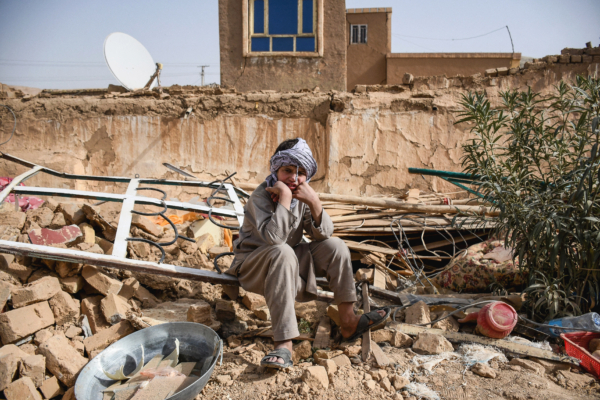
On Friday, the Afghanistan National Disaster Management Authority announced that a 5.9 magnitude earthquake struck the country, causing buildings to collapse in the capital city, resulting in 8 deaths and 1 child injured.
The German Research Centre for Geosciences (GFZ) reported that the earthquake occurred in the Hindu Kush region of Afghanistan at around 20:42 local time with a depth of 177 kilometers (110 miles).
The Afghanistan National Disaster Management Authority (NDMA) and a spokesperson for Kabul Province confirmed that the earthquake led to the collapse of a building in the capital city of Kabul, resulting in 8 fatalities. At least 1 child is known to have been injured.
Due to the depth of the earthquake, surface destructive damage was minimized, but the shaking spread farther as a result. The tremors lasted for several seconds to more than ten seconds, with strong tremors felt across many parts of South Asia.
Residents of Kabul fled tall buildings due to the intense shaking. A spokesperson for the Afghanistan Ministry of Health stated that Kabul and medical facilities in various provinces are on high alert to handle potential increases in casualties.
According to Reuters, witnesses reported strong tremors in the Pakistani capital Islamabad, Peshawar, and Chitral. Cities in India such as New Delhi, the National Capital Region (NCR), Jammu and Kashmir, and Punjab also reported tremors, with residents noting significant swaying of ceiling fans and lights in their homes.
Afghanistan sits at the junction of the Eurasian and Indian tectonic plates, making it prone to frequent earthquakes. The country sees an average of about 560 earthquake-related deaths each year, with a 6.3 magnitude earthquake in November 2025 causing at least 27 fatalities.
Afghanistan is currently in the rainy season, and recent devastating floods have already claimed 45 lives. The earthquake may exacerbate the geological instability and vulnerability of structures in the disaster-stricken area. In addition to floods, Afghanistan faces multiple pressures including economic crises, droughts, and a lack of basic healthcare and rescue resources, which could slow down the assessment of subsequent disaster situations.