
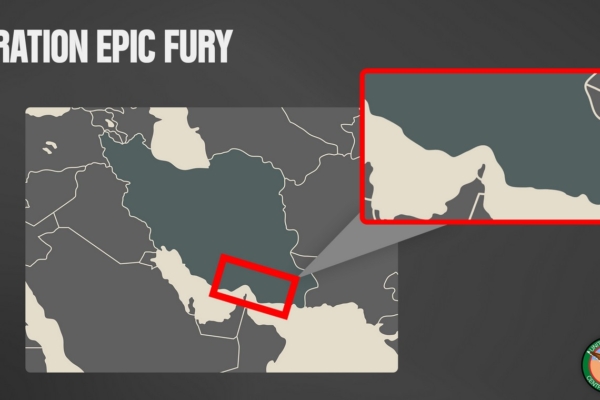
Since the outbreak of the conflict in the Middle East, Iran has gained practical control over the Strait of Hormuz, leading to a significant reduction in traffic and a severe impact on shipping. It has recently been reported that Iran is considering charging so-called “transit fees” to passing vessels, sparking concerns from the international community about maritime security, energy supply, and rising risks to the global economy. Experts believe that the feasibility of Iran’s “toll” proposal is questionable, but if normal navigation cannot be restored in the strait in the short term, the world may still face a new round of energy shocks, with China’s more fragile economy potentially becoming the main victim.
According to data from the U.S. Energy Information Administration (EIA), the average oil flow through the Strait of Hormuz in 2025 was around 20 million barrels per day, with approximately 15 million barrels being crude oil and another 5 million barrels being refined products. Bloomberg reported on March 30 that traffic through the Strait of Hormuz has shrunk by over 95% compared to pre-war levels; S&P Global’s CAS data also indicates that in mid-March, there were only 2 to 5 ships passing through on a single day.
Furthermore, on April 2, Bloomberg quoted shipping industry sources and government officials directly involved in negotiations as reporting that the Islamic Revolutionary Guard Corps of Iran has begun charging fees to passing vessels, with the starting price typically being $1 per barrel of crude oil, payable in either Chinese yuan or stablecoins. Calculated for a supertanker capable of carrying around 2 million barrels of crude oil, the one-time transit fee could reach up to $2 million.
However, many experts remain skeptical about the sustainability of this “toll” model. Jason Chua, a professor of commercial and maritime law at the City University of London, pointed out that Iran’s fee collection practice lacks clear legal basis, and shipowners and operators may face sanctions, insurance, and money laundering risks. Basil Gemond, a scholar at Lancaster University, also believes that the so-called “safe passage agreements” do not necessarily reduce risks, as they are based on the premise that Iran must continue to threaten commercial ships. Senior political and economic commentator Wu Jialong also stated that there are technical obstacles whether paying in cash or through bank transfers, and Iran may not actually have the capability to enforce this fee mechanism in the long term.
Wu Jialong recently revealed in an interview with NTD Television that the global economy can still rely on strategic oil reserves for a period of time. If the Middle East conflict can ceasefire within a few weeks, the shipping issues in the Strait of Hormuz could still be gradually addressed in post-war arrangements; however, if normal navigation cannot be restored in the short term, the global economy may face a new round of energy crisis, with oil prices likely to remain high.
Taiwan University’s economics professor Fang Jiazhong suggested that if Iran cannot achieve military superiority, it is more likely to use oil and passage disruptions to escalate regional conflicts into global economic and financial risks. This also brings to mind the oil crisis of the 1970s. However, he believes that the current situation is not entirely similar to that of the past. The United States is now a major oil producer, with a much lower dependence on Middle Eastern oil than before, so even if oil prices rise, the U.S. may not be the most vulnerable party in this oil battle.
In comparison, China may face deeper risks. Fang Jiazhong’s analysis suggests that China’s economy is already facing multiple challenges such as a downturn in the real estate market, local debts, weak consumption, employment pressures, and deflation. If international oil prices rise on top of these issues, imported inflation may not necessarily offset deflation but rather further squeeze production, impact employment and demand, plunging the economy into a more dangerous stagnant inflation situation.
Therefore, if Iran truly turns the Strait of Hormuz into a long-term oil battleground, the global economy will suffer in the short term; but in the medium to long term, the country that may be truly dragged down and find it difficult to digest external shocks could be not the United States, but the already fragile Chinese economy.