
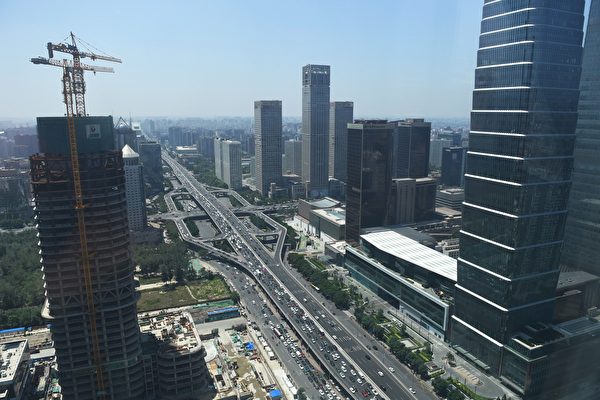
In recent years, China’s real estate market has been stuck in a prolonged slump. Economists have recently been taking turns to urge young people to buy houses under the banner of “stopping the decline and warming up” and “interest subsidies,” which has sparked ridicule among the public. Analysts believe that the Chinese property market is still in a phase of structural decline, and the calls to “buy houses” not only disconnect from reality but also raise questions about the motives behind the policies.
The vacancy rate in the Chinese property market remains high, especially in third and fourth-tier cities, where the market has long been icy. However, on March 25th, Chinese economist Jia Kang publicly stated at the Zhongguancun Forum that young people should actively consider using their own funds to purchase their “dream homes,” citing observations of signs of “stabilizing and warming up” in the real estate market.
Following that, Tsinghua University professor Li Daokui also proposed the idea of “government interest subsidies for young people to buy houses,” advocating for the government to significantly reduce bank loan interest rates from the current 4% to 1% to stimulate purchasing power.
These statements quickly gained attention in the media but were met with widespread ridicule from internet users.
Online user “AbleToEatMaster” on the platform Toutiao suggested, “Experts should lead by example and buy multiple properties,” quickly garnering over 1,700 likes. Another user, “LonelyQDancingSteps,” lamented that without considering marriage, one will likely not bear the burden of a mortgage for decades, as the recent years of falling property prices have made many people aware of the risks.
The public generally views this as another attempt by the government to manipulate the market by shifting the economic downturn pressure onto the vulnerable young population. User “BeamOfHappiness26k” wrote solemnly, “People should speak the truth and do good deeds,” garnering thousands of likes.
American economist Davy J. Wong assessed the situation, stating, “It’s clearly a directive from the propaganda department; it has nothing to do with the experts themselves, they are just carrying out tasks.”
During an interview with Da Ji Yuan, he analyzed that the current official goal of the CCP is to stabilize property prices, market expectations, and local fiscal revenues, with the crucial issue being that a property market collapse would pose systemic risks to the entire national financial system.
Professor Xie Tian of the Moore School of Business at the University of South Carolina criticized that under such political missions, the conscience of experts has been replaced by policy propaganda, aiming to induce the public to “enter the market” to fill the financial hole.
Regarding the experts’ proposal of the “1% interest rate” subsidy, Xie Tian, a senior researcher at the American Think Tank Godmode Lab, told Da Ji Yuan that while reducing the interest rate from 4% to 1% may seem to save a significant amount on interest, the “core issue lies in the future trends of property prices.”
He pointed out, “If property prices were to decline by 5% or 10% within a year or two, the interest subsidy would be of no help. In that case, (the call to buy houses) would actually only help the CCP stabilize the property market, keeping prices high and aiding the banks in granting more loans.”
Davy J. Wong shared a similar view, calculating that even with the subsidy, it would only reduce interest expenses by about 20%.
He highlighted multiple reasons why young people are not buying houses: a lack of confidence in the future, financial constraints, and inadequate social security.
Official data has already revealed the harsh reality of the market. In February, new housing prices in China fell by 3.2% year-on-year, with the decline widening from January, marking the sharpest drop in eight months.
A Reuters survey in early March indicated that China’s property prices are expected to decline by 4.0% in 2026, worse than the previous forecast of 2.8%, while property investment this year is projected to decrease by 10.3%.
Xie Tian emphasized that the so-called “signs of stabilization” are exaggerated, as the market has not yet reached its bottom amidst ongoing structural problems such as continued population decline, uncertain employment prospects, inadequate housing affordability, and excessive unsold properties.
Facing the experts’ coaxing, Ms. Fan in Fujian expressed in an interview with Da Ji Yuan that real estate agencies in Fuzhou have closed down in large numbers, purchasing power has plummeted, and young people simply lack the financial means to buy houses, relying on parental support if necessary for marriage.
Xie Tian stated that whenever the Chinese economy encounters problems, whether in the past stock market or the current property market, the authorities bring out experts to paint a rosy picture and induce the public to empty their wallets. However, this rhetoric is completely ineffective in 2026. Xie Tian noted that young people’s trust in the government and experts has plummeted, “and the people are less likely to be deceived.”
While experts advocate for house purchases, Chinese young people are voting with their feet. Official data shows that the urban youth unemployment rate soared to 16.1% in February, prompting many young people to forego the traditional path of “marriage, buying a house, and starting a family,” and move to low-cost towns.
According to the statistics from the Beijing Municipal Bureau of Statistics, from 2019 to 2024, Beijing lost approximately 1.6 million young people in their twenties and thirties, equivalent to the total population of Philadelphia in the United States. As young people migrate, the housing market is unlikely to witness another wave of strong demand.
Ms. Chen, a 28-year-old formerly working in the financial industry with an annual income of 700,000 RMB, found it hard to bear the work pressure and chose to rely on savings and investment returns to lead a frugal life.
She told the Associated Press that she moved into a “Venice Town” in Jiangsu Province, renting an apartment for a monthly rent of only 1,200 RMB.
This “Evergrande Venice on Sea” community is located in the outskirts of Qidong, Jiangsu, originally designed as seaside vacation homes for affluent Shanghai residents. With Evergrande Group’s bankruptcy and the prolonged stagnant property market, the occupancy rate has dropped to less than one-fifth.
According to the Associated Press, Chen’s experience reflects the growing trend of young people across China flocking to small towns.
Apart from moving into bankrupt properties, some young people are even relocating to resource-depleted cities like Hegang in Heilongjiang, where a four-bedroom house sometimes costs as low as 90,000 RMB, even lower than the price of a car.
In recent years, the sluggish situation in China’s property market has been worsening. S&P Global Ratings predicted last May that new home sales would decline by 3%, but revised it in October to an 8% decline. Eventually, sales plummeted by 12.6%, falling to 8.4 trillion RMB, less than half of the 18.2 trillion RMB in 2021.
According to a report by S&P on February 9th, the massive surplus inventory has trapped the Chinese property market into a “deep-rooted downturn.”
S&P analysts projected a further decline in 2026, estimating another 10% to 14% drop in the total sales of new homes, reaching around 7.2 trillion to 7.6 trillion RMB.
The analysts pointed out that this situation of “falling prices eroding homebuyers’ confidence” has created a vicious cycle, wherein developers, to survive, must continue to lower prices to clear inventory, further undermining market confidence.
The report mentioned that the unsold completed inventory has grown for six consecutive years. S&P warned that if sales continue to lag, surviving major developers, including Vanke, will once again face severe rating downgrade pressures.
Lulu Shi, Managing Director of Asia-Pacific Corporate Ratings at Fitch Ratings, cautioned that if macro policies cannot effectively boost confidence, mortgage defaults and situations of “negative assets” (where property prices are lower than loan amounts) will worsen.
With up to 70% of Chinese households’ wealth tied up in real estate, compared to around 27% in American households, a collapse of the Chinese property market would have a significant impact on livelihoods.
Davy J. Wong pointed out that if authorities genuinely want to encourage house purchases, they should focus on substantial tax reductions, increasing social security and welfare, and improving market management efficiency, rather than merely chanting slogans.