
In a recent report by the US intelligence company Strider Technologies, it was revealed that Iran is systematically evading international sanctions by utilizing a global network of shell companies and procurement channels to obtain crucial components from China to sustain and expand its fleet of kamikaze drones.
Despite facing long-standing trade restrictions, Iran has successfully acquired key dual-use components, with the report specifically mentioning Chinese and Hong Kong companies playing essential roles in the supply chain, which have not been listed on Western sanctions lists as of mid-March this year.
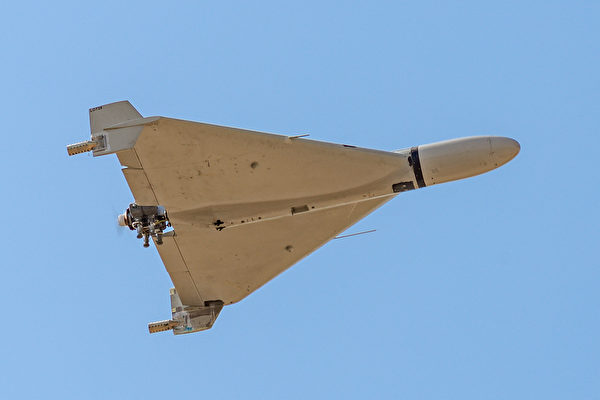
The report highlights the Shahed-136, also known as the “AK-47 of the drone world,” as a flagship weapon for Iran’s military expansion. This low-cost, easily mass-produced drone has a range of over 2,000 kilometers and has been utilized not only in the conflict in Ukraine with drones exported to Russia but also increasingly in conflicts across the Middle East. Since the escalation of conflicts at the end of February 2026, Iran is estimated to have launched around 3,600 drones at Gulf countries.
The investigation reveals that Iranian supplier Pars Aero Institute Kerman, or Pars Aero, is at the core of the procurement network, with clear connections to the Iranian military. Pars Aero collaborates with Hong Kong-based Foxtech Hobby and its affiliated company Huixinghai Technology in Tianjin to acquire dual-use components.
Research shows that Huixinghai Technology has deep ties with the People’s Liberation Army and Chinese law enforcement agencies. Additionally, the address of Foxtech Hobby in Hong Kong is identical to that of three previously sanctioned companies by the United States.
To evade international monitoring, these precision components often undergo complex rerouting. Data submitted by Ukraine to the G7 countries in 2023 pointed out Turkey, India, Vietnam, and the UAE as significant transit corridors.
A UN investigation uncovered that advanced Swedish components were shipped to Iran through an Indian “food trading shell company,” and these components were later assembled into drones used in attacks on Saudi Arabian oil facilities in May and September 2019.
Co-founder and CEO of Strider Technologies, Greg Levesque, emphasized that current compliance procedures are inadequate to address current geopolitical challenges. The latest research from Strider Technologies reveals how Iran is systematically leveraging global commercial supply chains to sustain and expand its drone program, highlighting the need to address risks deeply interwoven in the supply chain through indirect relationships, beyond mere compliance with sanctions.
The report cautions that solely relying on sanction lists to manage supply chain risks exposes businesses to legal liabilities, reputational damages, and the possibility of discovering their products in Iranian weapon systems in the future.
While Iran’s major drone manufacturers, such as Shahed Aviation Industries, Qods Aviation Industries, and Iran Aircraft Manufacturing Industries, are already on the sanctions list, the report shows that Iran can still maintain significant production capacities through civilian commercial parts and intermediary networks.
As of March 12, 2026, Pars Aero, Foxtech Hobby, and Huixinghai Technology, the key players in the supply chain, have not appeared on any US or allied sanctions lists.