
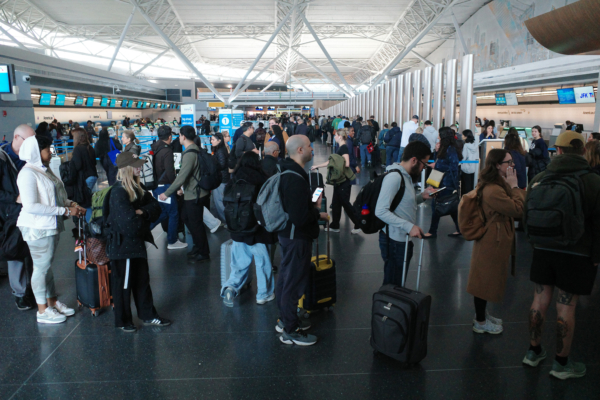
With the peak of Spring Break travel approaching, traffic congestion in New York and across the United States is on the rise. Experts warn that this year’s spring break travel may lead to a “chaotic situation,” with long lines at airport security checkpoints and continuously rising gas prices creating a double pressure on travelers planning trips.
Currently, many airports including the three major airports in New York are facing severe shortages of manpower. Data shows that the absentee rate of security personnel has reached as high as 15% to 20%, far higher than the normal level of less than 2% in the past, leading to significantly longer wait times for passengers in queues.
Even without any sudden incidents, Spring Break is already one of the busiest travel periods of the year, and this year’s situation is particularly grim. Some travelers have reported a substantial increase in security screening wait times, sometimes even affecting boarding.
On the other hand, people opting for self-driving trips are also facing challenges. With gas prices continuing to rise, fuel prices in the New York area are approaching nearly $4 per gallon, coupled with congested road traffic, the cost of long-distance driving has also increased.
Furthermore, during this year’s Spring Break period, the U.S. is expected to see record-breaking numbers of travelers, further intensifying the burden on airport and highway systems. Analysis by The Guardian points out that the combination of increased flight demand, rising energy prices, and manpower shortages has made this year’s Spring Break travel environment exceptionally complex.
Due to the significantly higher risk of security delays this year, Gothamist suggests that passengers traveling by air, especially on domestic flights, should arrive at the airport at least 2-3 hours in advance; for international flights, passengers should arrive at least 3-4 hours early.
It is recommended for passengers to avoid checking baggage as much as possible, as carrying only carry-on luggage can reduce the hassle of lining up in long queues (checked luggage requires queuing for check-in and baggage drop-off), thus lowering the risk of missing flights.
It’s best to avoid peak flight times. Friday afternoons to Sundays, as well as the morning hours of 7-10 a.m., are the most crowded times for air travel. Opt for the first morning flight or evening flights.
Pay attention to flight changes. With unpredictable spring weather, flight delays or cancellations occur frequently, so it’s advisable to enable real-time notifications from airlines.
Use expedited clearance tools like TSA PreCheck/Global Entry or Mobile Passport Control whenever possible.
Allocate “buffer time” while transferring flights, leaving at least 1.5-2 hours to avoid “tight schedule” scenarios.
For travelers driving, it is recommended to check gas prices and road conditions in advance, using apps like GasBuddy to find the lowest fuel prices, and try to avoid peak out-of-city times in major cities like Friday afternoons in New York City.