
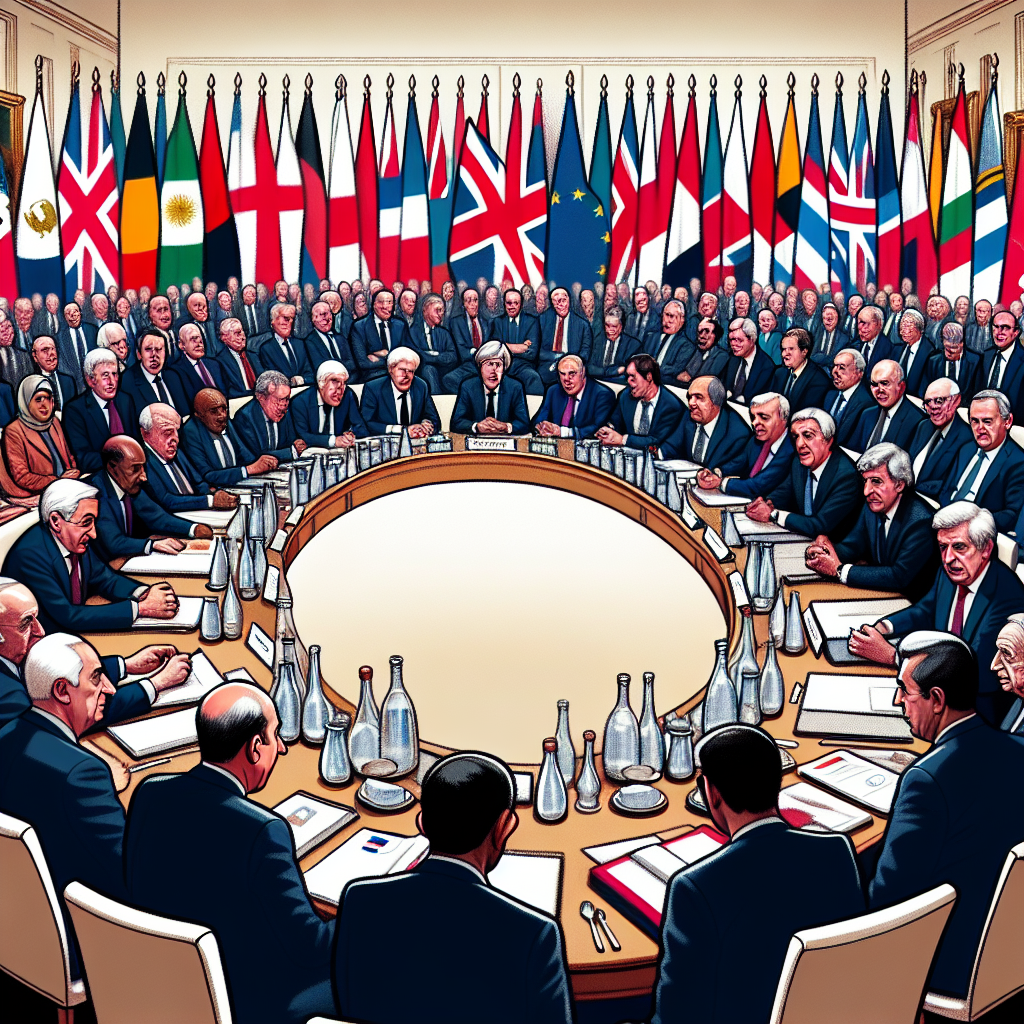
On Thursday (April 2nd), British Foreign Secretary Yvette Cooper convened a meeting with representatives from over 40 countries to discuss taking joint action to reopen the Strait of Hormuz and prevent Iran from “holding the global economy hostage.”
Participants included representatives from France, Germany, Canada, the United Arab Emirates, India, as well as international maritime organizations and the European Union.
British Foreign Secretary Cooper chaired the online meeting and expressed concern that Iran’s blockade of this crucial waterway was “affecting families and businesses worldwide.”
“We have seen Iran hijack an international shipping route to hold the global economy hostage,” Cooper said in her opening remarks.
The day before the meeting, U.S. President Trump stated that the Strait of Hormuz might naturally reopen, but countries relying on the waterway have a responsibility to ensure its passage.
According to a press release from the British Foreign Office, the meeting on Thursday discussed several areas for coordinated action, including:
1) Increasing international diplomatic pressure on Iran;
2) Exploring coordinated economic and political measures such as sanctions;
3) Collaborating with international maritime organizations to ensure the release of thousands of ships and sailors stranded in the Strait of Hormuz and resume shipping;
4) Forming joint arrangements to enhance market and operational confidence.
The Strait of Hormuz is one of the world’s most crucial energy chokepoints, transporting approximately one-fifth of the global oil supply. Iran has effectively blocked this key maritime route. With energy prices soaring, reopening the strait has become a top priority for governments around the world.
European officials indicated that the focus of the first meeting held on Thursday was which countries are ready to join the proposed alliance and diplomatic and economic solutions that could be used to persuade Iran to open the Strait of Hormuz.
While no concrete agreements were reached at the meeting, there was consensus among participants that Iran should not be allowed to charge transit fees for ships using the waterway, and all countries should have the freedom to navigate through it.
The next round of talks is set to take place next week, where military planners will discuss potential mine-clearing operations and various options for providing security forces for commercial shipping.
President Trump had previously urged countries to send troops to ensure the passage of shipping through the Strait of Hormuz. Initially, European countries rejected this request. However, increasing concerns about rising energy costs potentially impacting the global economy have prompted some countries to attempt to form alliances to protect their interests.
European diplomats stated that the alliance-building process is in its early stages, led by the United Kingdom and France, with the United States not participating.
Guillaume Vernet, a spokesperson for the French Armed Forces, stated in a press conference on Thursday that the process would be phased and could only begin after hostilities have ceased.
Vernet added that ultimately, coordination with Iran would be necessary to provide security for ships, though this is currently unlikely. He also mentioned negotiations have been initiated regarding which military assets could be provided.
“We need to gather a sufficient number of warships and have the ability to coordinate in the air and at sea, as well as share intelligence,” he said.