
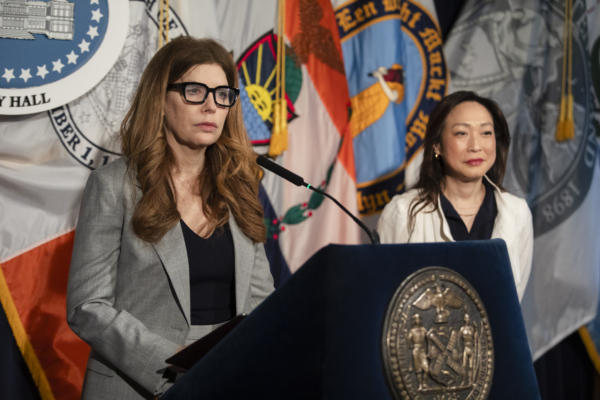
On April 1st, the New York City Council released its “response” to Mayor Mamdani’s preliminary budget proposal for the new fiscal year, essentially rejecting the mayor’s attempt to fill the budget deficit by raising property taxes and lobbying the state legislature for a wealthy tax. The City Council advocates for raising $6 billion through cost-saving measures, increased revenue, and emphasizes the importance of maintaining essential investments in key services, including the New York City public libraries.
According to the announcement, the City Council presented an alternative budget plan for fiscal years 2026 and 2027, providing necessary resources to fund priority expenditure items without increasing homeowner and tenant taxes, cutting funds for key services, or tapping into the city’s reserves.
Mayor Mamdani’s proposed budget plan for the new fiscal year had a $5.4 billion shortfall. His plan involved increasing property taxes by 9.5% to generate $3.7 billion in revenue (if a “wealthy tax” was not imposed, property taxes would not increase), with the remaining portion to come from emergency funds.
However, the proposal to “increase property taxes” faced opposition from many council members including Council Speaker Manning, Asian-American Councilor Huang Youxing, and Zhuang Wenyi.
In the City Council’s alternative budget plan, options to raise property taxes were discarded. Instead, they aimed to save $3.5 billion through “reassessing government revenues and expenditures,” $2 billion through “increasing efficiency and reforms,” and nearly $500 million through “revenue enhancement.”
Under the “increasing efficiency and reforms” category, the City Council specifically highlighted conducting open bidding and audits for all Department of Education contracts. This proposal received a positive response from Council Member Huang Youxing, a member of the City Council’s Finance Committee.
“This budget discussion clearly indicates the need for serious consideration of New York City’s financial management issues,” Council Member Huang stated in a statement to the media. “We should conduct thorough audits of all agencies, especially the Department of Education, and carefully scrutinize non-bid and unnecessary contracts before requesting taxpayers to pay more.”
The City Council also retained projects and services abandoned in the mayor’s proposal, totaling $1.1 billion. This includes $30.7 million allocated to support the operation of three library systems, as well as funding for cultural institutions, domestic violence legal services, and other reserved items.
The City Council reiterated that their priority projects include expanding the “Fair Fare” program and establishing $3,000 college savings accounts for every family.
“We cannot in good conscience meet the city’s financial needs by burdening homeowners or renters, tapping into emergency reserves, or cutting necessary projects,” Council Speaker Manning emphasized in a statement. “We have provided a clear alternative plan to put New York City back on track and directly invest in its residents.”
On April 1st, Mayor Mamdani responded negatively to the City Council’s budget alternative plan.
“Speaker Manning’s initial budget proposal would lead to cuts of billions of dollars in agency budgets, forcing the city government to reduce public services,” Mamdani stated in a release to the media. “Rebudgeting savings already identified, overestimating revenues, and exaggerating debt reduction savings do not help eliminate the deficit.”
Mamdani believed the Council’s proposal only called for one action – canceling the small class size in public schools without including the “wealthy tax,” deeming it impractical.
“It refuses to address the deeper structural imbalance between the City of New York and the State of New York, as well as the refusal to increase taxes on New York’s wealthiest residents and most profitable businesses,” Mamdani remarked. “Any plan claiming to bridge this gap without substantial new income is unrealistic.”