
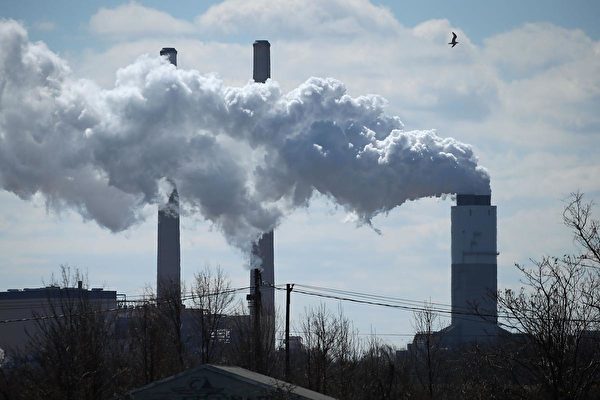
Amidst the escalating tensions in the Middle East, the Italian government has chosen to delay its plans to phase out coal-fired power plants by 13 years, as a precautionary measure for energy security. Despite Italy’s previous commitment to achieving net zero emissions, the decision to postpone the closure of coal plants was made on Tuesday, March 31st, considering the current risks in the region.
Shell CEO Wael Sawan had previously warned in March that certain Asian regions were already experiencing fuel crises due to the ongoing conflicts in the Middle East, with the possibility of this crisis spreading to Europe by April.
On March 31st, the Italian Chamber of Deputies passed a bill (expected to receive comprehensive approval) that extends the deadline for shutting down coal-fired power plants by 13 years, pushing the elimination timeframe from the end of 2025 to 2038.
Among the four existing coal-fired power plants in Italy, three are controlled by the multinational energy company Enel Group. Over the past five years, a significant portion of Italy’s coal-fired power facilities with an original installed capacity of around 8 gigawatts have been gradually phased out or placed in standby mode in line with the nation’s decommissioning plans.
In light of the energy supply crisis triggered by the conflicts in the Middle East, the Italian government aims to slow down its net zero emissions policy. Italian Minister for European Affairs Tommaso Foti stated in a commentary to ANSA on March 28th, “All energy sources must be fully utilized at least in the short term.”
According to a report from the EU Commission in 2024, following the Chernobyl nuclear disaster during the Soviet era, Italy held a referendum in 1987 to gradually phase out nuclear energy generation, with the initial plan to completely eliminate coal-fired power generation by the end of 2025 in order to advance the net zero goals.
Italian Minister of Energy Gilberto Pichetto Fratin stated in March that if the Middle East conflicts lead to an energy crisis, he would consider restarting some coal-fired power plants. He emphasized the need for these plants to serve as reserve energy sources to protect the country, despite his reluctance to reactivate them.
Italian Minister of Defense Guido Crosetto expressed deep concerns in an interview with Repubblica on March 30th, stating, “I think every day about the potential consequences of this war. I must understand the things that keep me awake at night because I need to be prepared for the economic and daily life impacts we may face.”
Meanwhile, the EU Commission has called on member states to reduce their usage of oil and natural gas. European Commissioner for Energy and Housing Dan Jorgensen emphasized on March 31st that in the face of “market fluctuations” resulting from the crisis in the Middle East, EU members should coordinate actions to ensure the supply of oil and refined oil products.
Jorgensen urged energy ministers to avoid measures that could increase fuel consumption and to consider ways to promote fuel efficiency, especially in the transportation sector.
Last week, Slovenia became the first European country to implement fuel rationing at gas stations due to shortages and increased demand, subsequently deploying the military to assist in the transportation of fuel supplies.
Slovenian Prime Minister Robert Golob announced that individual gas stations would now have restrictions on fuel purchases, with a daily limit of 50 liters (13 gallons) for private cars and 200 liters (53 gallons) for priority users like businesses and farmers.
According to the Slovenian Press Agency STA’s report in late March, the fuel shortages in Slovenia were partly attributed to panic hoarding and cross-border fuel buying sprees prompted by the war in the Middle East.