
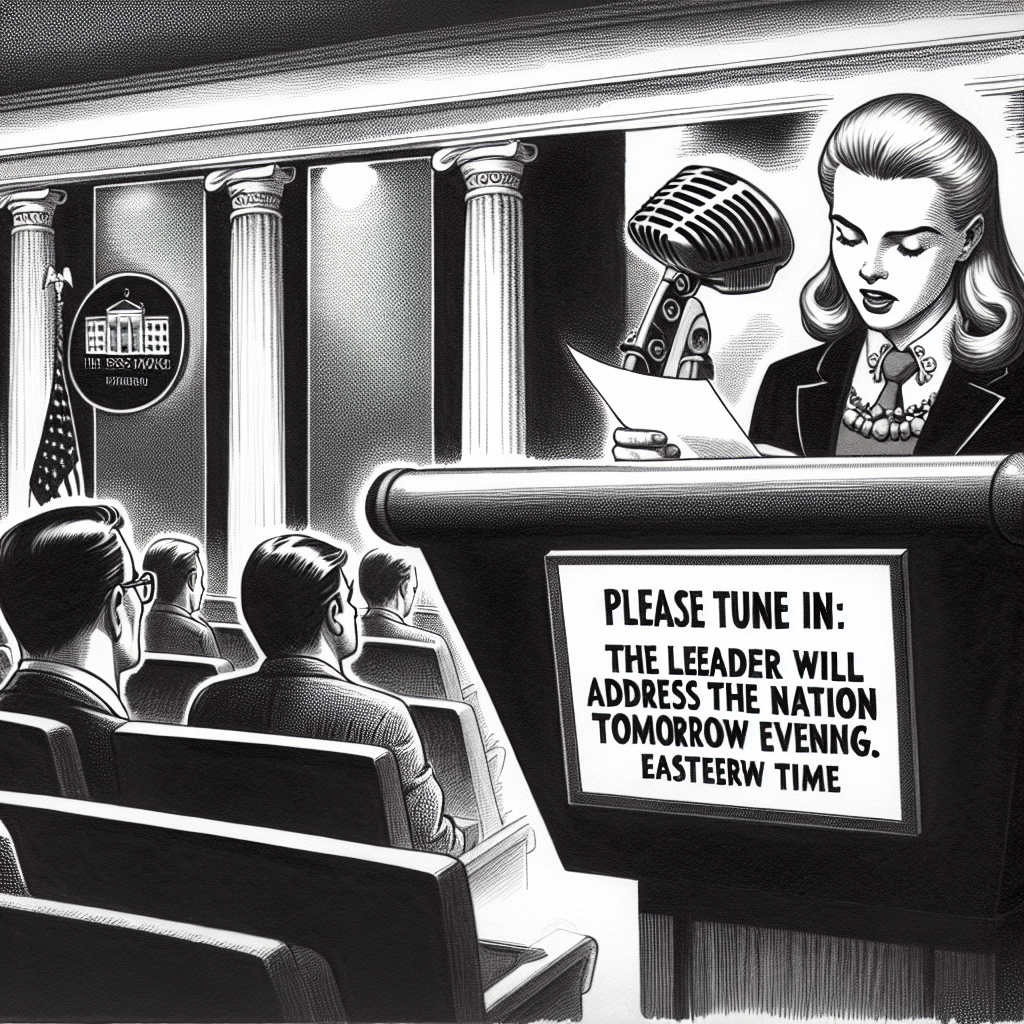
The White House press secretary, Karoline Leavitt, announced on Tuesday (March 31) that the U.S. President Trump is expected to deliver a national address on the Iran conflict on Wednesday evening at 9 p.m. Eastern Time.
Leavitt issued a statement on X stating, “Please tune in: President Trump will address the nation tomorrow night at 9 p.m. ET to provide important updates on the Iran issue.”
Currently, Washington is focused on ending the conflict with Iran and ensuring that Iran is unable to rebuild its nuclear threat. President Trump’s national address on Wednesday evening is expected to provide more details on the specific troop withdrawal schedule and subsequent regional security arrangements.
Earlier, Trump revealed during an interview at the White House that the military objectives in Iran have been largely achieved, and the troops are expected to withdraw within “two to three weeks.”
Trump told reporters that the U.S. military is currently “not hindered at all on the battlefield,” emphasizing the heavy blows Iran has suffered.
“Look at what’s happening in Iran. I mean, we’re not hindered at all, everything has been bombed out,” Trump said. “We have hit them very hard. Last night, we destroyed a significant amount of missile manufacturing facilities.”
On Monday, the U.S. military used bunker busters to bombard the central city of Isfahan in Iran, hitting a large ammunition depot, severely damaging its missile manufacturing facilities. Iran’s enriched uranium is believed to be stored in the underground facilities there. In the “Operation Midnight Hammer” in June last year, the U.S. military also bombed a nuclear research center in Isfahan.
In his Tuesday address, Trump played down the idea of needing to reach an agreement through negotiations to end the war. It is believed that this implies the U.S. may directly declare victory and end military operations.
Trump said Iran now wants to reach an agreement more than he does, but he reiterated that the necessity of an agreement has been significantly reduced due to the effectiveness of the military strikes.
“Iran doesn’t have to make a deal. It’s a new regime. They’re easier to deal with,” Trump said.
“When we feel that they have been set back to the stone age for a long time and can’t produce nuclear weapons, they don’t need to make a deal with me,” Trump added. “By then, with or without an agreement, we will leave. It’s not relevant now.”
Trump also mentioned that he is inclined to transfer the responsibility of securing the Strait of Hormuz to other countries.
Despite the President’s optimism about the withdrawal of troops, sources indicate that the U.S. is still considering deploying ground special forces for short-term missions lasting several days to seize Iran’s enriched uranium within the country to prevent the material from being turned into nuclear weapons in the future.
The conflict has entered its second month. Despite Israel claiming to have destroyed Iran’s nuclear enrichment capabilities and eliminated its intelligence minister, the economic costs of the war continue to emerge. In March, Brent crude oil prices saw the largest monthly increase on record, with over 40 energy facilities in the Middle East damaged.