
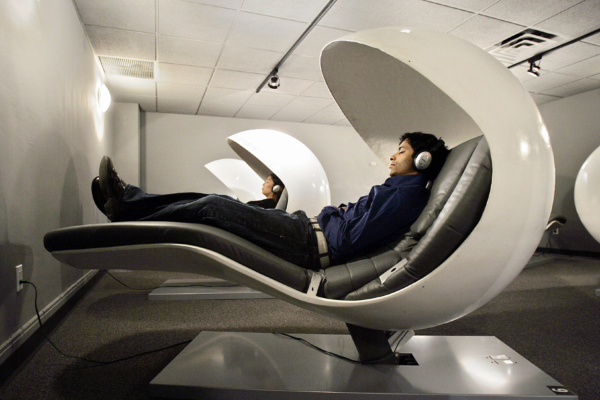
In the high-pressure work environment, an increasing number of New York’s Generation Z office workers are finding unexpected ways to “escape” the traditional “nine-to-five” routine. Some individuals are sneaking off to movie theaters to nap during lunch breaks, others are seeking solace in fitting rooms to shed tears, and there are even those who rent sleep pods to briefly disconnect from reality. Media outlets believe that this phenomenon has recently gained popularity on social media platforms, reflecting the younger generation’s different attitudes towards work stress and mental health.
According to the New York Post, a TikTok user shared their experience of spending $15 to nap in a Manhattan movie theater, claiming it to be the “perfect nap spot in New York.” Some opt for designated nap pods, fitting rooms at clothing stores, subway stations, or grassy areas in city parks for a quick break.
Aside from napping, “cry breaks” have also become part of the daily routine for some Generation Z individuals. Some young people find fitting rooms to be the “safest place to let it all out” due to their high level of privacy. Others specifically choose churches, museums, or coffee shops as places to release stress.
These types of behaviors are widely shared on platforms like TikTok, gradually forming a new urban culture.
In response to skepticism from outsiders labeling these behaviors as “too dramatic,” experts hold different views. Dr. Sanam Hafeez, a neuropsychologist from Forest Hills, Queens, points out that in high-pressure work environments with a lack of rest, the body’s nervous system will “demand recovery,” making brief rest or emotional release (such as crying) a physiological need.
Studies show that even a 10 to 20-minute nap can improve decision-making and focus.
Unlike older generations who believed in “toughing it out,” Generation Z is more willing to express stress, set boundaries, and prioritize mental health.
Experts suggest that this generation is not creating problems but rather refusing to ignore them. This shift may be changing the overall workplace culture.
Generation Z typically refers to individuals born between 1997 and 2012, currently ranging from 14 to 29 years old.
Growing up alongside the internet and social media, Generation Z is considered “digital natives.” Their main characteristics include early exposure to the internet and smartphones, placing greater importance on emotional expression, mental health, and work-life balance. They resist excessive overtime and a “hustle culture,” often sharing personal updates through social media and tending to be night owls.
The popular saying circulating on the Mainland Chinese internet, “Post-2000s are reshaping the workplace,” doesn’t seem to be just a joke. Surveys indicate that many in Generation Z even request companies to provide rest spaces like nap rooms or recreational areas during job interviews, demonstrating their high value on “workplace comfort.”