
Russian authorities are vigorously pushing forward with their efforts to disconnect the country’s internet from the world wide web. The scope of mobile network disruptions continues to expand, with the popular international instant messaging platform Telegram being completely blocked. In response to these actions, there has been a surge of public discontent, leading to rare protest gatherings in various locations.
According to a report by The Guardian on Tuesday (March 31st), data from the Open Observatory of Network Interference (OONI) shows that since March 20th, Telegram has faced widespread disruptions on over 500 different networks across Russia.
Analysts from Amnezia VPN, a tool for bypassing internet censorship, note that this recent wave of restrictions has affected over ten regions including Moscow and St Petersburg, surpassing previous levels in terms of the scale and technological capabilities of the disruptions.
Earlier in March, the head of the Russian telecommunications company Rostelecom declared that WhatsApp was “dead” and that Telegram would soon follow suit, to be replaced by the government-controlled messaging application Max. Critics have warned that Max could potentially be utilized for mass surveillance purposes.
Researcher Arturo Filastò from the Open Observatory of Network Interference stated that compared to internet shutdowns implemented by the Iranian authorities, Russia’s actions are “much more covert.” One reason for this is attributed to the more decentralized nature of Russia’s internet infrastructure and the relatively independent management of networks by various service providers.
Earlier this month, mobile internet in the center of Moscow was completely shut down, causing widespread disruption as people were unable to access banking services or make phone calls. Retailers across Russia have reported a significant increase in sales of pagers and paper maps.
In response to criticism, the Kremlin has consistently justified the internet shutdowns citing the need to prevent unmanned drone attacks from Ukraine. However, analysts argue that such reasons are not credible.
Amnezia analysts have warned that, “based on our projections, internet shutdowns in Moscow may become more or less routine,” suggesting that Russian authorities are testing ways to maintain economic operations under strict restrictions.
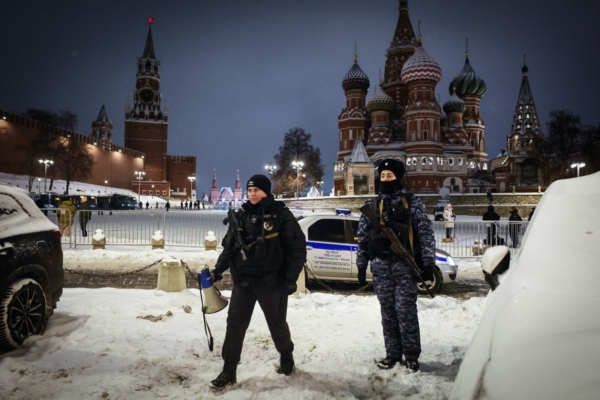
On Sunday (March 30th), spontaneous protests against internet restrictions took place in various parts of Russia. According to the protest monitoring organization OVD-Info, at least 25 individuals were arrested across the country, with 18 of them in Moscow.
Activist and political strategist Dmitry Kisiev disclosed that activists in 17 regions had previously submitted protest permit applications to local authorities, all of which were rejected.
IT expert Alexander Isavnin told NBC News that Putin aims to make every Russian citizen feel isolated, describing Russia as a “digital concentration camp.”
Former presidential candidate Boris Nadezhdin stated that his application for a protest with a limit of 10,000 attendees in Moscow was denied by authorities citing COVID-19 restrictions. He emphasized their protest slogans are clear: “Give us back the internet, give us back Telegram, we don’t need your MAX.”
Interestingly, discontent has spread to circles close to the Kremlin. Pro-government journalist Anastasia Kashevarova warned on Telegram that the wall of distrust between the people and the government is rising higher and higher, and public uprising is the fastest way to destroy Russia.
Well-known Kremlin loyalist Ilya Remeslo suddenly turned against the authorities this month, criticizing them for stifling internet and media freedom, subsequently being sent to a psychiatric hospital.
Instagram influencer Victoria Bonya, with nearly 13 million followers, publicly questioned whether President Putin is aware of what is happening in the country.
In a rare move, the pro-Kremlin newspaper “Moskovsky Komsomolets” published a critical editorial questioning whether the authorities are treating the people as if they are not worthy of any explanations.