
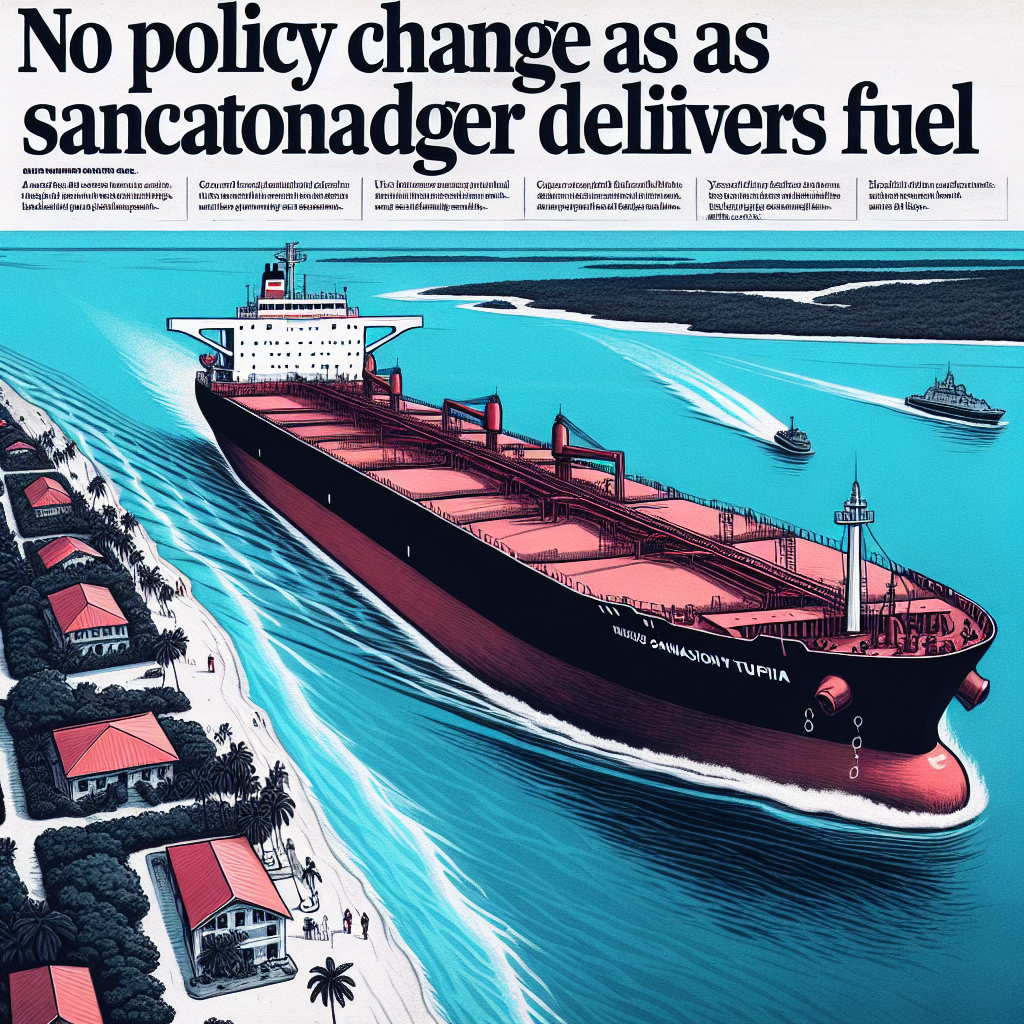
The White House said on Monday (March 30) that despite allowing a sanctioned Russian oil tanker to deliver fuel to Cuba for humanitarian reasons, the US policy towards Cuba remains unchanged.
“This is not a policy change. There has been no formal shift in the sanction policy,” White House Press Secretary Karoline Leavitt told reporters. “As President Trump stated last night, we allowed the ship to reach Cuba to meet the humanitarian needs of the Cuban people.”
She added that if any vessel violates US sanctions policy by traveling to Cuba in accordance with applicable laws, the US reserves the right to detain it.
After the capture of Venezuelan President Nicolas Maduro on January 3, the US cut off Venezuelan oil exports to Cuba. President Trump subsequently warned that any country shipping oil to Cuba would face punitive tariffs.
According to Cuban President Miguel Diaz-Canel, Cuba has not received oil shipments for three months, worsening the energy crisis and forcing the country with a population of 10 million to implement strict gasoline rationing, with the power grid on the brink of collapse.
A State Department official told Reuters on Monday that the US Embassy in Havana received a fuel supply last week and the Cuban government assured Washington that it would fulfill its obligations under the Vienna Convention on Diplomatic Relations. Earlier reports from The Washington Post indicated that Cuba had once refused a request from the US Embassy to import diesel for generators due to fuel shortages, but this fuel supply entering the embassy is seen as a sign of easing tensions between the two sides.
Trump expressed sympathy for the energy needs of the Cuban people and sent a signal on Sunday. He told reporters, “If there is a country right now that wants to send some oil to Cuba, I have no objection, whether it’s Russia or not. They (the Cuban people) need to survive.”
Russia announced on Monday that an oil tanker named “Anatoly Kolodkin” carrying about 730,000 barrels (100,000 metric tons) of crude oil had arrived near Cuba, expected to enter the port of Matanzas near Havana on Monday night or Tuesday (March 31) morning.
Experts had anticipated that prior to Trump’s backtrack, as the “Kolodkin” vessel itself is under sanctions and the US oil embargo on Cuba is ongoing, the US Navy and Coast Guard could intercept the ship before it reaches the port.