
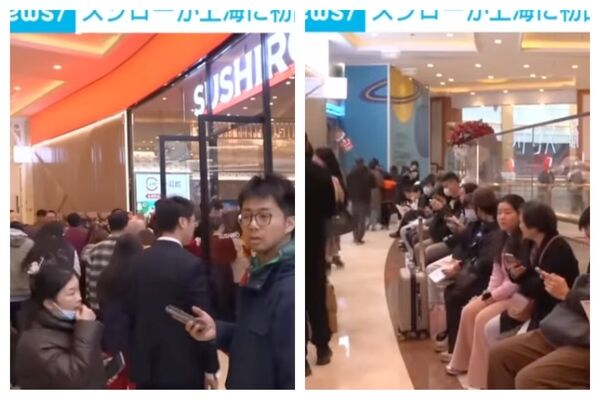
Despite the high-level diplomatic tensions between China and Japan, the enthusiasm for Japanese brands among Chinese consumers, especially the younger generation, is on the rise. In various cities in China, Japanese sushi restaurants are booming. In a sushi restaurant in Beijing, there are long queues every weekend, with some young customers waiting for up to 6 hours to be seated.
Last November, Japanese Prime Minister Sanae Takai emphasized in parliament that “what concerns Taiwan concerns Japan,” causing an uproar in the Chinese Communist Party.
The CCP took countermeasures to pressure Takai to retract his remarks through diplomatic and public opinion pressure, but Takai held a firm stance. Sino-Japanese diplomatic relations were tense between 2025 and 2026.
However, there has been no intense anti-Japanese sentiment or behavior among the Chinese populace, and Japanese restaurants like Sushi Siro have not been affected at all.
A special report in the Hong Kong newspaper “Ming Pao” on March 29 described a scene in Beijing where the restaurant called out number 1327, but the queue had already surpassed 2400. The waiting area was full, with some customers bringing laptops to work while waiting. The staff mentioned that this busy scene occurs every weekend, and customers can only queue in person to get a spot.
It was reported that most of the customers waiting were young people, with some being students. One customer said they had visited this Sushi Siro more than 10 times, with the longest wait being 6 hours. A female customer, who identified herself as a fan of Japanese anime, said she would not boycott Japanese cuisine because of the tense China-Japan relations.
Due to the high demand, some customers even pay for scalped reservations. Sellers mention that scalped reservations on weekdays outside weekends cost 45 yuan.
Many customers mentioned that the high cost performance is the reason they keep coming back; compared to many Japanese restaurants with an average price in the hundreds, Sushi Siro is affordable. The long queues are not exclusive to Beijing, as several Sushi Siro restaurants in Guangzhou suspend online reservations during peak dining hours, and the new store in Zhuhai saw a similar queue when it opened.
The report cited mainland Chinese media pointing out that the popularity of Sushi Siro is due to filling the market gap for mid-range Japanese cuisine, offering both affordable dining and a sense of high-end Japanese cuisine ritual.
Sushi Siro entered the Chinese mainland in 2021. As of February 24, the official platform shows that there are 75 stores in China. According to the financial report of the parent company FOOD & LIFE COMPANIES, the net sales of Sushi Siro’s overseas business from October to December 2025 reached 42.878 billion yen, an increase of 54.4% year-on-year.
The report mentioned that although the Chinese government has taken measures such as prohibiting the export of dual-use items to Japan and banning the import of Japanese seafood and beef, attempting to compel Prime Minister Sanae Takai to retract his remarks, it seems that the Chinese side has not implemented a massive boycott of Japanese goods in the same way as during tense periods in Sino-Japanese relations in 2005 and 2012. At that time, Japanese automobile and electronics brands were targeted for boycotts, with some stores even forced to suspend operations.