
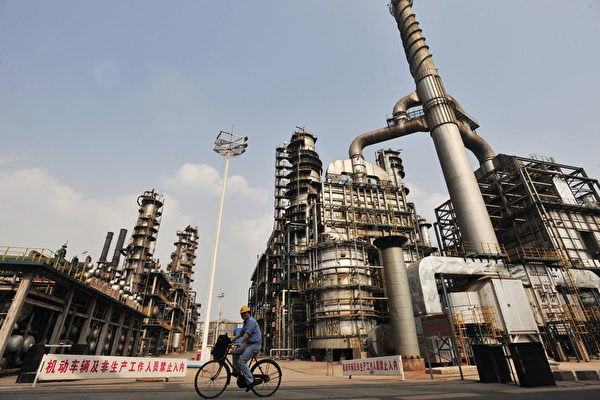
On March 29, the Chinese Ministry of Finance announced on its official website that in 2025, the proportion of core profits contributed by state-owned enterprises to the government significantly increased, with resource-based enterprises such as tobacco and petroleum contributing up to 35%. This news quickly became a hot topic on March 29. Industry experts believe that this move by the authorities is aimed at bridging the fiscal deficit.
According to the “Explanation of the 2026 Central State-Owned Capital Operation Budget” released by the Chinese Ministry of Finance on March 29, state-owned wholly-owned enterprises (non-financial) will be categorized into four groups based on the percentage of post-tax profits collected. The first category includes tobacco and petroleum, electricity, telecommunications, coal, and other resource-based enterprises, with a collection rate of 35%.
The second category consists of non-resource-based enterprises such as colored and black metallurgy, mining, transportation, electronics, trade, and construction, with a collection rate of 30%. The third category includes military enterprises, research institutes undergoing transformation, China Post Group Co., Ltd., China National Railway Group Co., Ltd., Beidahuang Farm Reclamation Group Co., Ltd., central cultural enterprises, and enterprises under central departments, with a collection rate of 20%.
Policy-oriented enterprises fall under the fourth category and are exempt from contributing state capital gains.
Compared to the 2014 notice released by the Chinese Ministry of Finance titled “Notice on Further Increasing the Proportion of Central Enterprises’ State Capital Income,” the current increase in profit contribution to the government is significant. In 2014, the profit collection rates for central wholly-owned enterprises were divided into five brackets, ranging from 25% for the first category to exemption for the fifth category.
According to “21st Century Economic Report,” the increase in profit contribution to the government in 2025 has led to central state-owned capital operating income from enterprises contributing profits amounting to 375.077 billion yuan, a year-on-year increase of approximately 78.5%. The purpose of this move by the authorities is to alleviate fiscal imbalances.
Deng Shulian, a government budget expert and professor at Shanghai University of Finance and Economics, analyzed in the report that in recent years, fiscal revenue growth has been weak while rigid expenditures continue to rise, exacerbating fiscal imbalances. By increasing the proportion of state capital income contributed, the available financial resources can be directly increased to remedy the fiscal deficit.
The “Explanation of the 2026 Central State-Owned Capital Operation Budget” also indicates a 4.8% decrease in 2026 central state-owned capital income budget compared to the previous year, with profit income decreasing by 22.844 billion yuan, a 6.1% decline. Among the four categories of enterprises, tobacco and petroleum enterprises saw a 5.4% decline in income contribution in 2026, non-resource-based enterprises in the second category experienced a 7.8% decrease, and military enterprises and others in the third category saw a 9.8% reduction in income contribution in 2026.