
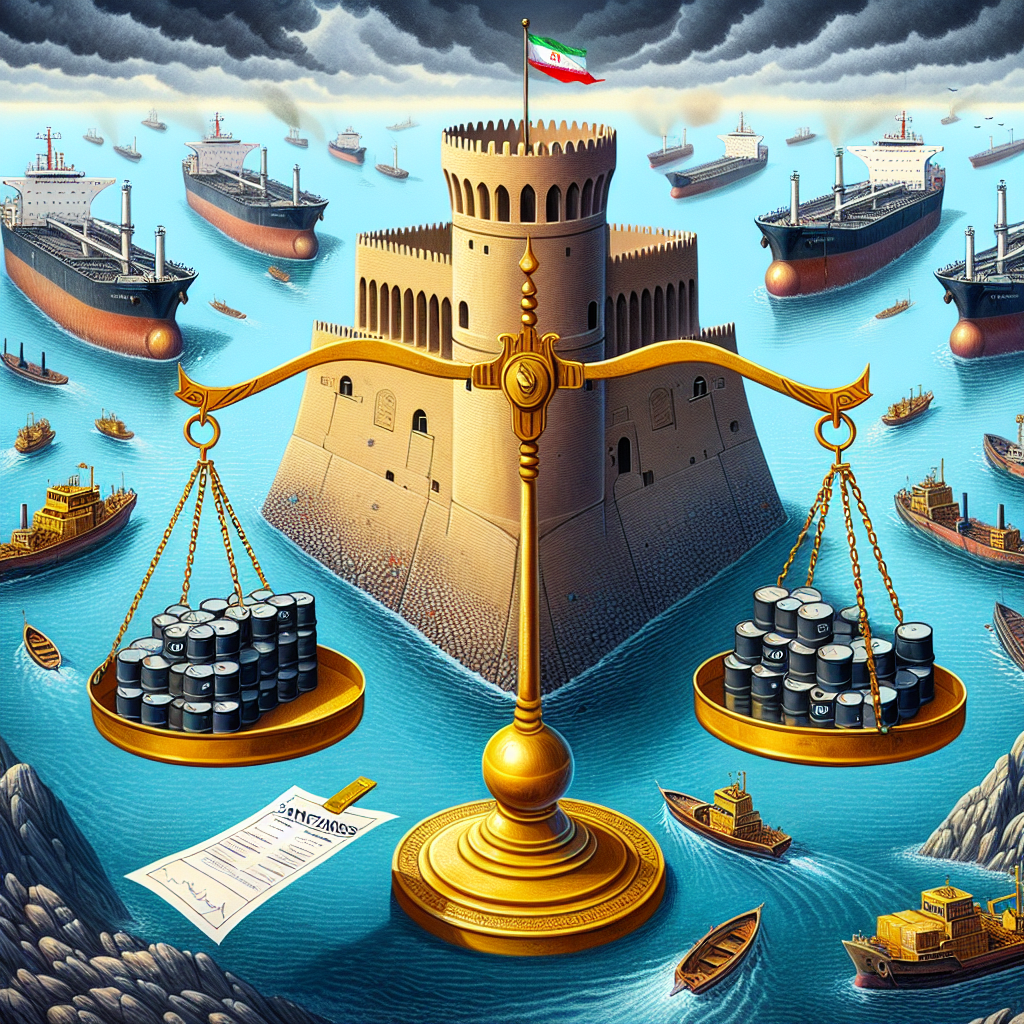
In response to the pressure on oil supply caused by the Iran’s blockade of the Strait of Hormuz, the U.S. Treasury Department has recently issued a series of targeted sanctions waivers to stabilize the oil market. However, these policies are redirecting the sanctioned cheap crude oil destined for China towards India.
U.S. Treasury Secretary Beasant, in an interview with NBC’s “Meet the Press” program on March 22nd, discussed the lifting of sanctions on oil stranded at sea. He stated that this oil will not go to China but will flow to other Asian countries.
On the same day, Mike Waltz, the U.S. ambassador to the United Nations, explained further the issue of the flow of sanctioned oil in an interview with Fox News. He mentioned that the Trump administration is working to suppress rising oil prices by allowing the sale of Iranian oil stranded at sea. The crude oil that was primarily shipped to China can now be rerouted to other countries such as India, Bangladesh, or elsewhere. The existing financial sanctions remain effective, ensuring that Iran does not receive any funds from selling oil.
On March 20th, the U.S. Treasury Department issued a short-term authorization to sell currently stranded Iranian oil at sea for a period of 30 days. Secretary Beasant announced that by temporarily releasing these existing supplies, the U.S. will quickly deliver around 140 million barrels of oil to the global market, expanding the global energy supply and helping alleviate the temporary supply pressure caused by Iran.
According to a report by Iran International based in the UK, India is the only flexible key buyer able to take over. India’s largest publicly traded company, Reliance Industries, purchased 5 million barrels of Iranian crude oil at a price $7 higher than Brent crude. It is reported that Indian refining companies such as Indian Oil Corporation (IOC), Bharat Petroleum Corporation Limited (BPCL), and Hindustan Petroleum Corporation Limited (HPCL) are also planning to resume purchases.
The report also cited Homayoun Falakshahi, head of crude oil analysis at Kpler, mentioning that Iranian crude oil is usually not sold before reaching Asian discharge ports (such as Singapore or Malaysia). With many crude oil barrels already produced but waiting for buyers, releasing these supplies by lifting sanctions will immediately impact the supply. He added, “Now with India entering as a competitive buyer, the price of crude oil for China is likely to rise.”
In fact, India’s entry breaks China’s near-monopoly on purchasing sanctioned Iranian crude oil, reshaping the pricing landscape.
On March 5th, the U.S. Treasury Department announced a 30-day temporary waiver for India, allowing Indian refining companies to purchase Russian crude oil and petroleum products.
On March 12th, the Treasury Department issued an extended version, granting a 30-day temporary authorization for countries to purchase Russian crude oil and petroleum products stranded at sea. Indian refining companies remain the primary beneficiaries of this policy.
This move by the Trump administration effectively strengthens the relationship between the United States and India.
On February 20th, India officially joined the “Pax Silica” program, becoming part of the U.S.-led supply chain initiative. This initiative aims to reduce America’s reliance on China in the semiconductor and artificial intelligence production sectors.
“We want to ensure the security of our own supply chains. We see India as a partner to help us reduce supply chain risks and achieve diversification,” said Jacob Helberg, the U.S. Deputy Secretary of State.