
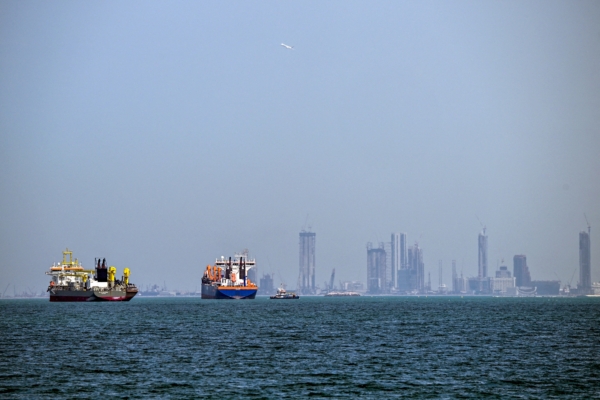
The ongoing repercussions of Iran’s blockade of the Hormuz Strait continue to garner attention. The United Nations announced on Friday (March 27) that it is establishing a task force responsible for devising a mechanism to ensure the smooth flow of trade through the Hormuz Strait.
The new Hormuz Task Force will be led by United Nations Deputy Secretary-General Jorge Moreira da Silva. Drawing on other UN initiatives to address shipping issues in the Hormuz Strait, including the “Black Sea Food Initiative” aimed at increasing Ukraine’s agricultural exports following the Russia-Ukraine conflict and the UN 2720 Mechanism developed for Gaza.
The United Nations warns that trade disruptions caused by Iran’s war could exacerbate global food shortages and escalate humanitarian crises.
UN Secretary-General spokesperson Stephane Dujarric stated in a release, “With the unfolding of conflicts in the Middle East and heightened risks, the interruption of maritime trade in the Hormuz Strait could have cascading effects, impacting humanitarian needs and agricultural production in the coming months.”
“Immediate action must be taken to mitigate these consequences,” Dujarric added, emphasizing that, “The task force will now engage with all relevant member states to discuss how to implement this work. We hope for full support from all relevant member states.”
The UN and other experts warn that disrupted fertilizer transport and surging energy prices could trigger a new wave of food price hikes in some vulnerable countries, possibly leading to setbacks lasting for years just as these nations were gradually recovering from a series of global shocks.
With the breakdown of US-Iran nuclear negotiations, the US and Israel launched joint military actions against Iran since February 28 to eliminate Iran’s nuclear threat. Iran subsequently blocked the Hormuz Strait, rendering this critical strategic waterway nearly stagnant and causing a sharp increase in global oil prices.