
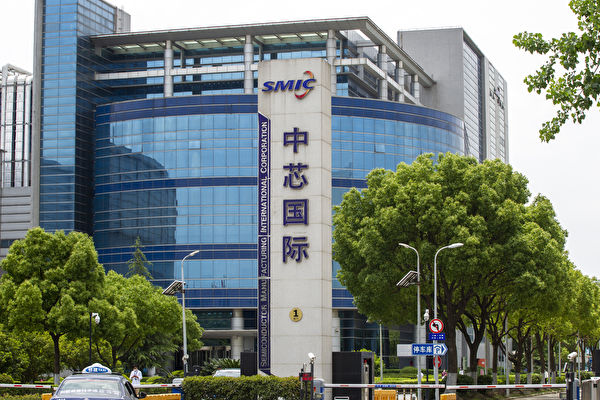
On Thursday, March 26th, according to two senior U.S. government officials who spoke to Reuters, China’s largest chip manufacturer, SMIC (Semiconductor Manufacturing International Corporation), has been supplying chip manufacturing equipment to the Iranian military. This move undoubtedly confirms the well-known relationship between the Chinese Communist Party and its ally, Iran.
Despite not publicly taking sides in the Middle East conflicts, the Chinese Communist Party has consistently portrayed itself through its propaganda system as advocating for dialogue between Iran and the U.S. However, it is widely known that China and Iran have close ties, with China exporting domestic surveillance systems, missiles, radars, and other technology to Iran in exchange for large quantities of cheap oil and natural gas.
One official mentioned that SMIC began shipping these tools to Iran approximately a year ago, stating, “We have no reason to believe that this has stopped.” The official added that this cooperation “almost certainly includes semiconductor technical training” by SMIC.
Another official pointed out that this equipment has been provided to Iran’s “military-industrial complex” and can be used for any electronic products requiring chips. However, it is currently unclear what role this chip manufacturing equipment has played in Iran’s ongoing conflicts.
These two officials requested anonymity for disclosing previously undisclosed information from the U.S. government. They did not specifically clarify whether the equipment originated from the U.S., but if true, sending this equipment to Iran likely violates U.S. sanctions.
The explanation of “providing technical training” seems to shed some light on recent Chinese evacuations from the region.
At the outbreak of the Middle East conflicts, the Chinese government claimed to have assisted in the evacuation of over 10,000 Chinese citizens in Iran and the Middle East region. However, media outlets discovered that the actual evacuation numbers drastically differed from the Chinese government’s official figures, with a significant proportion of evacuees being employees closely related to Chinese companies.
These individuals were not ordinary tourists or expatriates but mainly technical personnel responsible for engineering, equipment installation, energy, mining, or military-related fields. This phenomenon further confirms that the Chinese government has indeed deployed a large number of technical and engineering personnel in Iran.
No responses were immediately received from SMIC, the Chinese Embassy in Washington, or the Iranian UN representative’s spokesperson to Reuters’ request for comment.
Earlier, Reuters revealed that Iran was on the verge of reaching an agreement with China to purchase anti-ship cruise missiles, coinciding with the impending strikes by the U.S.-Israel coalition on Iran, with the U.S. already deploying a carrier battle group near the Iranian coast. However, China insists that its dealings with Iran are merely standard commercial trade.
In 2020, SMIC was blacklisted in trade, restricting its access to U.S. exports. The reason being the U.S. discovered close ties between the company and the Chinese military, alleging assistance to the military’s weapons development, although the company has consistently denied these accusations.
Furthermore, after discovering SMIC’s production of 7nm chips for Huawei’s Mate 60 Pro phone, the U.S. government strengthened its ban on SMIC in 2024. This included restrictions on the company’s access to advanced chip manufacturing equipment from top U.S. suppliers like Lam Research, KLA, and Applied Materials, further undermining China’s advanced semiconductor manufacturing capabilities.
(This article is based on reporting by Reuters)