
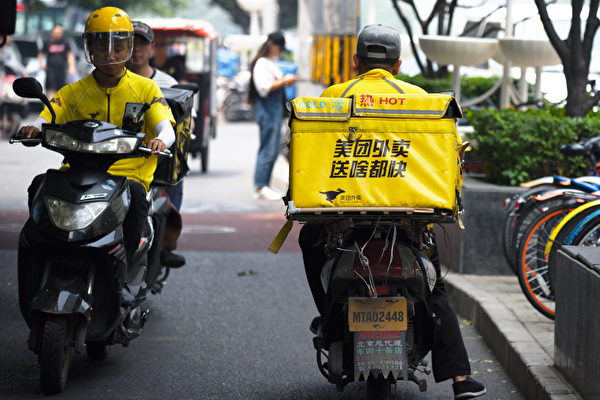
Under the context of industry competition, Chinese lifestyle e-commerce platform Meituan recorded a loss of 23.4 billion yuan in 2025.
On March 26, Meituan released its financial performance for the fourth quarter and full year of 2025. The announcement showed that the company’s annual revenue reached 364.9 billion yuan, an 8% year-on-year increase. However, due to intense competition in the instant retail sector, the company’s performance shifted from profit to loss, with a net loss of 23.4 billion yuan for the full year and an operating loss of 17 billion yuan. The core local life service segment, which had a profit of 52.4 billion yuan the previous year, turned into a loss of 6.9 billion yuan.
This shift occurred against the backdrop of a booming food delivery and instant delivery market in China. In February 2025, JD Group aggressively entered the food delivery business, while Alibaba Group integrated resources to strengthen instant retail. Multiple platforms, including Meituan, Taobao Flash Sale, and JD Food Delivery, engaged in fierce competition around users, merchants, and delivery riders. These platforms generally adopted strategies such as heavy subsidies, rider incentives, and commission waivers to attract traffic and supply, leading to a typical “burn money for market share” situation and directly increasing operational costs.
According to the financial reports disclosed by various companies, there were almost no winners in this competition. Alibaba’s related e-commerce businesses saw a 46% year-on-year drop in profit by the end of 2025; JD, including its food delivery business, incurred an operating loss of 46.6 billion yuan for the whole year, and Meituan recorded a loss of 23.4 billion yuan. Overall, while platforms continued to expand, profitability generally declined.
The impact of price wars is beginning to spread downstream to the industry chain. A survey conducted by the market research institution Xi’an Consulting in February 2026 revealed that over 39% of more than 2,000 catering businesses nationwide had switched to lower-cost raw materials, 30% had increased pressure on suppliers to reduce prices, and another 20% had increased the proportion of low-cost dishes. Under sustained pressure from low-price competition, many merchants could only maintain operations by cutting costs, leading to challenges in the quality and stability of food and service.
Many industry insiders believe that a competition model driven by subsidies is unsustainable in the long run. Some financial commentators pointed out, “Platforms relying on subsidies to attract users in the long term not only erode their own profits but also squeeze the survival space of merchants, affecting the overall service quality.” Some catering practitioners also said, “As prices continue to be pushed down, we can only save costs by reducing expenses on ingredients and labor, ultimately affecting consumers.”
An analysis by mainland media “Financial Headlines” suggests that Meituan’s 23.4 billion yuan loss in 2025 is both the cost of the “food delivery war” and the tuition fee for strategic transformation. When the model of burning money for growth reaches its limit, whether Meituan can find a new growth path in the wave of “anti-inducement” will determine the future destiny of this local life giant.