
The United States and Israel have launched a joint military operation against Iran. After a period of unusual calm in the Taiwan Strait, the People’s Liberation Army of China resumed its provocations against Taiwan starting from March 14th and 15th. Official media in China even targeted Taiwan for purchasing military equipment from the United States, launching a cognitive warfare campaign claiming “American-made weapons are unreliable.” Experts believe that based on the results of the U.S. military’s actions against Iran, there is a significant gap between Chinese-made and American-made equipment, with China deliberately creating controversy.
According to a report by Reuters on the 25th, Taiwan, as one of the world’s major potential conflict hotspots, is facing increasing military pressure from Beijing. The report cited an anonymous senior Taiwan national security official who said that Beijing is trying to create a sense that when the United States shifts troops and redirects military forces from the Indo-Pacific region to the Middle East, it is a time to create tension and instability.
The allies of the United States in Asia have also issued warnings that the conflict with Iran may weaken defenses against China. However, the aforementioned sources noted that the U.S. military’s cross-regional military resource deployment has been balanced, so the Iranian conflict is unlikely to create a window of opportunity for Beijing to attack Taiwan.
Researcher Shen Mingshi from the Institute for National Defense and Security Research in Taiwan analyzed that in response to the U.S. military’s actions against Iran, China is trying to create a public opinion vacuum in the Indo-Pacific region, coordinating with military aircraft or ships conducting exercises in the Taiwan Strait to test Taiwan and the U.S.’ response. However, from an international perspective, China is currently aiming to ease tensions with the U.S. and theoretically would not deliberately escalate the conflict in the Taiwan Strait to avoid U.S. pressure.
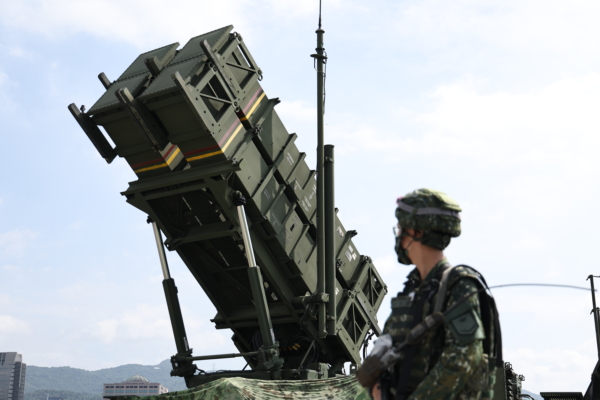
Shen Mingshi mentioned that currently, besides the deployment of the THAAD system in South Korea and Patriot missile interceptors to the Middle East, there have been no movements in the navy or air force forces in the Indo-Pacific region. Forces stationed in Guam or Hawaii have also not shown any signs of mobilization. The U.S. military has not been bogged down by the conflict with Iran and is not distracted from other necessary priorities.
Veteran military commentator Mark told the media that the outside world is overestimating China’s strength. Currently, China is facing internal economic downturns, internal military conflicts, and the “purging” of senior officers on a large scale, leaving Xi Jinping essentially unable to focus. China’s resurgence of military provocations against Taiwan is merely a show of strength to save face for themselves.
A spokesperson for the U.S. State Department also stated that the U.S. military’s ability to respond to threats globally remains “strong,” and the U.S. is committed to maintaining peace and stability in the Taiwan Strait.
According to a memorandum from the Taiwanese government reviewed by Reuters, Taipei authorities remain vigilant in the face of Beijing’s cognitive warfare against Taiwan using the Middle East conflict. For example, after the outbreak of conflicts, videos generated by artificial intelligence (AI) surfaced on the internet, claiming that Taiwan faces a “devastating” energy supply crisis.
On the 25th, the Taiwan Affairs Office of China claimed that improving infrastructure is a benefit of “unification,” proposing a “rapid transportation link,” including the “Beijing-Taipei Expressway.” Previously, China proposed that if Taiwan agrees to be ruled by Beijing, it will provide energy security guarantees.
China is also spreading the rhetoric that “American-made weapons are useless” through the conflict in Iran. Liu Kuangyu, a researcher at the Taiwan Research Institute of Chinese Academy of Social Sciences, claimed that Taiwan’s radar stations may face a fate similar to American equipment reportedly destroyed during the Iran attack. However, the U.S. has not confirmed any such attacks by Iran. On the contrary, China’s air defense equipment failed during the strikes in Iran, leading to widespread ridicule.
Mark stated that looking at the results of U.S. military actions in Venezuela and Iran, the gap between Chinese-made and American-made equipment is significant, and China lacks confidence in its own weapons, merely creating topics intentionally.
Shen Mingshi mentioned that China’s various distorted propaganda may have some influence on those who were originally skeptical of the U.S., but it will not have a substantial effect on those who are well-informed. China’s attempt to undermine unity in Taiwan will backfire, enhancing the vigilance of regional countries to strengthen cooperation and defense against Taiwan.