
On Thursday (26th), Venezuelan dictator Nicolas Maduro, who was arrested by the United States, will appear in court again in New York facing multiple criminal charges including drug terrorism.
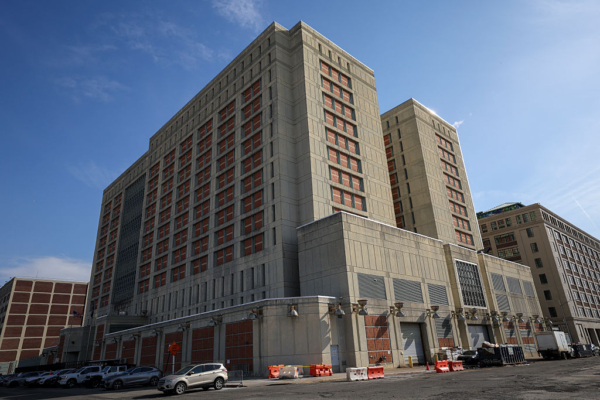
On January 3rd this year, the 63-year-old Maduro was arrested in Caracas by the U.S. special forces and appeared in court in New York on January 5th for the first time. Maduro is currently detained at the Metropolitan Detention Center in Brooklyn, New York.
According to the indictment by the U.S. Department of Justice, Maduro is charged with four serious crimes, including conspiring to engage in drug terrorism, conspiring to import cocaine, illegal possession of firearms and destructive devices, and conspiring to possess the aforementioned weapons. Maduro has pleaded not guilty to all charges.
Records from the U.S. federal courts show that since the “Drug Terrorism Act” was enacted 20 years ago to combat drug smuggling related to terrorism, there have been only four cases of convictions—two of which were later overturned due to credibility issues with witnesses.
This highlights the core challenge the U.S. prosecutors may face in the Maduro case: persuading the jury that the evidence from cooperating informants is sufficient to prove a “knowing” connection between the accused drug crimes and terrorism.
Alamdar Hamdani, partner at the law firm Bracewell and former federal prosecutor in Houston, stated: “The lesson from these two cases is not that the ‘Drug Terrorism Act’ is ineffective, but that the strictest requirement of the statute—proving that the defendant knew of the crime’s connection to terrorism.”
He added: “This law requires the quality of evidence and the prosecutor’s diligence standards to be rigorous and flawless, not allowing institutional loopholes, misspelled names, or uncritically accepting witness statements.”
Prosecutors have not disclosed who will testify against Maduro in court, but a former Venezuelan general who was indicted alongside Maduro disclosed to Reuters that he is willing to cooperate with the investigation.
Legal experts point out that the government’s charges against Maduro may include testimonies from two former Venezuelan generals—Cliver Alcalá and Hugo Carvajal—indicted with him in 2020.
Although both have pleaded guilty to charges related to dealings with the Revolutionary Armed Forces of Colombia (FARC), they did not agree to cooperate with the investigation during their guilty pleas.
When asked about the veracity of the charges against Maduro, Alcalá stated that he believes there is “some basis” to the allegations and also believes that Maduro has connections with a drug dealer incarcerated in Caracas, but he did not provide specifics.
Alcalá, 64, admitted in 2023 to providing support to the FARC and was sentenced to nearly 22 years in prison, where he is currently incarcerated. He admitted in court to following orders from the former Venezuelan dictator, Hugo Chávez, to supply weapons to the FARC but denied assisting drug traffickers in transporting cocaine.
Carvajal’s case will be sentenced on April 16, and his lawyer declined to comment on whether he would cooperate with prosecutors.
Maduro is also accused of leading a conspiracy in which government officials collaborated with drug trafficking groups, including the FARC, to transport large amounts of cocaine through Venezuela to the United States. The United States designated the FARC as a terrorist organization from 1997 to 2021.
If convicted of drug terrorism, the defendant could face a minimum mandatory sentence of 20 years, which is double the minimum sentence for ordinary drug trafficking; both could potentially face life imprisonment as the maximum penalty.